Everyone’s talking about Hamnet – and whether you’ve read the book, watched the play or the film – or all three like me, you’ll know that it’s a beautiful story about loss and grief, and it feels very relatable to a modern audience. At its heart is the death of Hamnet Shakespeare, the only son of William Shakespeare, who died at just eleven years old in 1596. But did you know that there was a big debate among historians about this very subject – whether parental love is a historical constant (meaning that we have always felt deeply about our children) or a cultural invention (meaning that we learned to feel this way)?
Holy Trinity Church, Stratford-upon-Avon, where Hamnet Shakespeare was buried on 11 August 1596.
It all started with a French historian called Philippe Ariès, who essentially turned the history of childhood into a serious field of study. In 1960, he published a book called L’Enfant et la vie familiale sous l’Ancien Régime (translated as Centuries of Childhood). Ariès argued that the concept of “childhood” as a distinct, protected phase of life is a modern invention, that only emerged around the 17th century. Children were understood as “mini” adults and, from the time they were around 7, they mixed with the adult world. He suggested that, because of the incredibly high infant mortality, parents were forced to be emotionally distant and not get too attached to their children, who might not live to see their first birthday. This “indifference” would be a defence mechanism: expecting to lose half the children you had would make you not as “emotionally invested” in them. Other historians, like Lawrence Stone in his 1977 book The Family, Sex and Marriage in England 1500–1800 also argued that affectionate, loving family relationships developed late in our history, and that before, colder and more pragmatic family relationships were the norm.
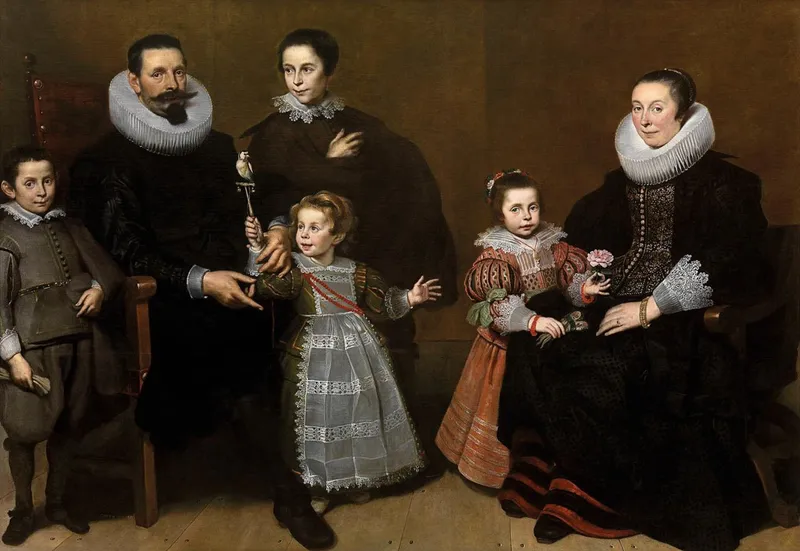
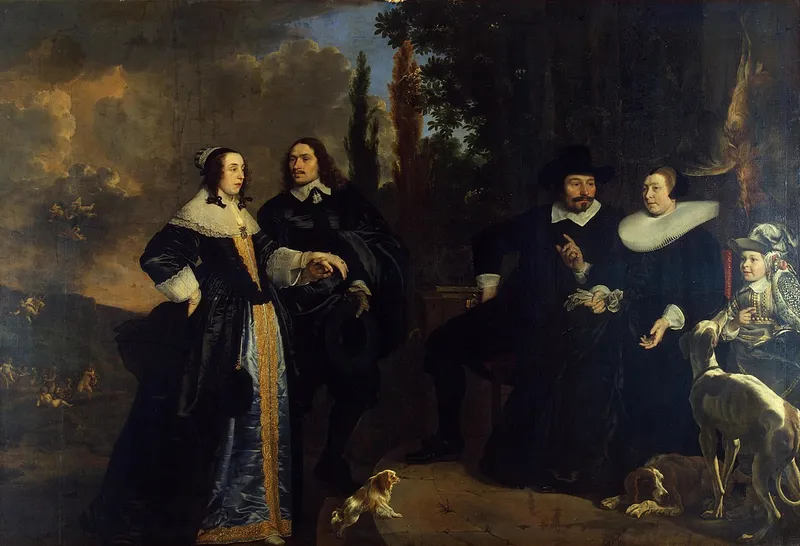
Cornelis de Vos, Family Portrait (c. 1630). Museum of Fine Arts, Ghent.Bartholomeus van der Helst, Portrait of a Family (c. 1652). Louvre, Paris.
You may be thinking – How? How is it possible that people would think this? At least, that’s what I thought when I first heard of this debate at university. And from the 1980s, there was a wave of historians who challenged this idea. They argued that parental love and grief over losing a child were constant throughout history, regardless of child mortality rates. Having said that, the way this grief was and is expressed would look different depending on time, place, and culture. Linda Pollock, in her 1983 book Forgotten Children, criticised Ariès for relying on paintings (which follow artistic conventions) rather than real lives. She focused on different primary sources, and reached a different conclusion. She read diaries and autobiographies from the 16th to the 19th centuries and argued what to me feels much more convincing, that parents have always loved their children, and felt their losses deeply when they died.
The kind of primary source that I usually study – medical recipes – is a good example of that. People exchanged tips on how to treat childhood illnesses, they wrote in their journals how worried they were, they sent letters to each other, worrying about children who were poorly. Other historians, like Nicholas Orme, have shown through material culture (especially things like toys), how children were seen as a special category, different from adults. And Keith Wrightson argued that, although families were patriarchal, they were emotionally close. And again, that’s something that you can see in Hamnet.
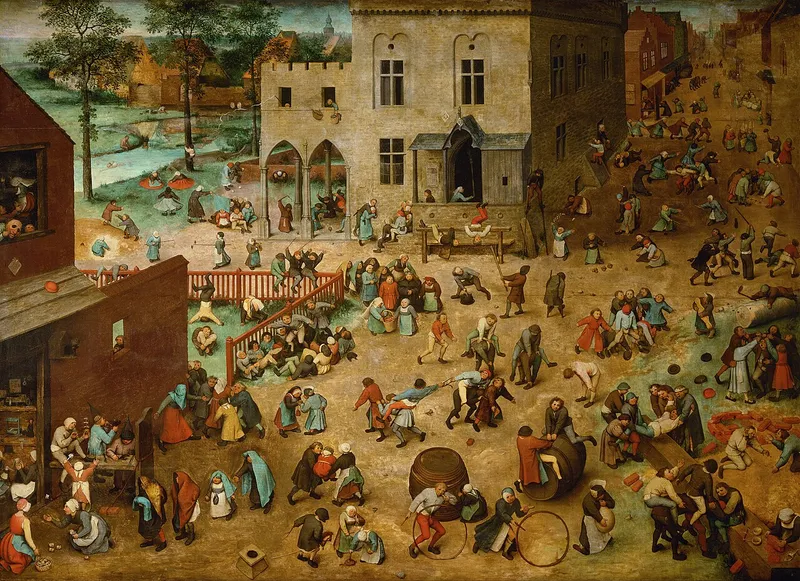
Pieter Bruegel the Elder, Children’s Games (1560). Kunsthistorisches Museum, Vienna.
I think this debate is interesting because historians have understood “indifference” differently where children are concerned. We forget how deeply religious early modern Europe was. Could this “indifference” be religious resignation, instead of lack of affection? In a world where people understood death as God’s will, parents might console themselves thinking things like “The Lord gave, and the Lord has taken away”. That doesn’t mean they weren’t grieving, but rather that they were focusing on the child being in heaven and accepting God’s will.
For instance, the 17th London woodturner Nehemiah Wallington wrote this, when his daughter Elizabeth died in 1625:
The grief for this child was so great that I forgot myself so much that I did offend God in it.
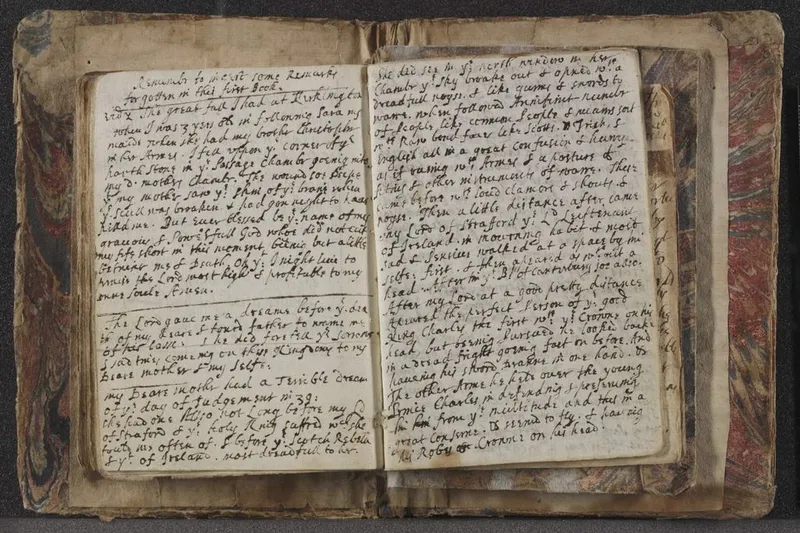
This was not an indifferent father. Alice Thornton, a gentlewoman from Yorkshire, wrote down the physical and emotional suffering of her children’s deaths; she wrote of being heartbroken. And one way that parents dealt with grief was through religion, and trying to accept “God’s will”.
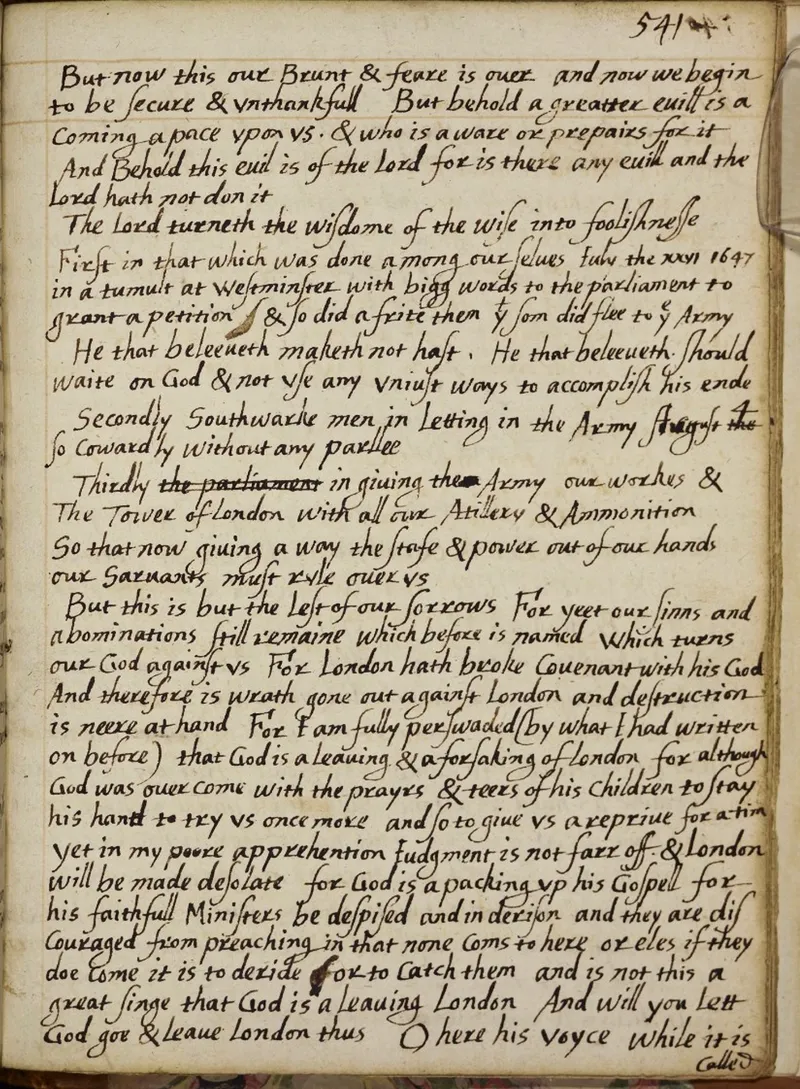
A page from Nehemiah Wallington’s notebooks. (Image credit: John Rylands Library, Manchester)A page from Alice Thornton’s Book of Remembrances (c. 1668). (Image credit: Durham Cathedral Library)
Ariès interpreted this as a lack of feeling. But you could argue that this was a coping strategy for deep pain. The grief was real; the cultural script for expressing it was different. I think that’s a better way of understanding how parents felt when they lost a child. In Maggie O’Farrell’s take on Hamnet and the child’s parents, that’s the disconnect the couple experience, and that’s what Agnes realises later on: that they both were grieving differently.
Bibliography
Philippe Ariès, L’Enfant et la vie familiale sous l’Ancien Régime (1960). Translated as Centuries of Childhood: A Social History of Family Life (1962).
David Cressy, Birth, Marriage, and Death: Ritual, Religion, and the Life-Cycle in Tudor and Stuart England (1997).
Eamon Duffy, The Stripping of the Altars: Traditional Religion in England, c.1400–c.1580 (1992).
Barbara Hanawalt, The Ties That Bound: Peasant Families in Medieval England (1986).
Ralph Houlbrooke, The English Family 1450–1700 (1984).
Nicholas Orme, Medieval Children (2001).
Linda Pollock, Forgotten Children: Parent-Child Relations from 1500 to 1900 (1983).
Edward Shorter, The Making of the Modern Family (1975).
Lawrence Stone, The Family, Sex and Marriage in England 1500–1800 (1977).
Alice Thornton, The Autobiography of Mrs. Alice Thornton, of East Newton, Co. York (1875).
Nehemiah Wallington, The Notebooks of Nehemiah Wallington, 1618–1654: A Selection (2007).
Alexandra Walsham, Providence in Early Modern England (1999).
Keith Wrightson, English Society 1580–1680 (1982).

 Dr Julia Martins