Do you love women writers who write with humour and irony? Who criticise their society in a satirical, tongue-in-cheek way? Do you like a good literary mystery?
Let me introduce you to the elusive Ephelia – yes, that’s Ephelia with an ‘E’, not Hamlet’s Ophelia with an ‘O’. Ephelia was a 17th-century poet & playwright whose identity has puzzled historians and scholars for centuries. Yet, she continues to intrigue us. Why? Because her work offers us a unique view into gender and power dynamics in the Restoration period – she didn’t shy away from talking about sex, men, and politics, as you will soon see.
But who was the woman behind the pseudonym? A very attractive recent hypothesis would make her one of the beauties of her own time, a very clever lady known as a prankster at court, nicknamed ‘the Butterfly’. She was depicted by the most celebrated artists of her time, including Sir Anthony van Dyck.
But what’s Ephelia’s connection to the Stuart court? Or to butterflies? And what does her work say about the turbulent world she lived in? Stick around to find out – this text has everything: political intrigue, a dashing prince of the Civil Wars, and even a rumoured duel between women rivals!
Before we start exploring the legendary Ephelia, my thanks to Dr Maureen E. Mulvihill at the Princeton Research Forum, stateside, whose research inspired and informed this article; she is the scholar who introduced an exciting new hypothesis for Ephelia’s identity. You’re going to hear a lot about that here! So, thank you, Maureen. And if you’re captivated, visit the References list below.
Now, without further ado, let’s try to untangle this literary mystery, shall we?
Part 1. A Taste of Ephelia
Who doesn’t love a famous case in literary detective work? And contrary to the Shakespeare authorship question – the idea that someone other than Shakespeare was behind his writings – in Ephelia’s case we are indeed dealing with a truly pseudonymous writer: a dedicated case of concealed authorship. In 17th-century literature, few figures are as mysterious and intriguing as the Ephelia writer. And few writers were as clever or witty. But reclaiming the identity of Ephelia, a ‘lost’ writer of the Restoration period, and restoring her to her rightful place in the literary canon, is no small task. Since the 19th century, scholars and literary enthusiasts have attempted to unmask the woman behind the pseudonym.
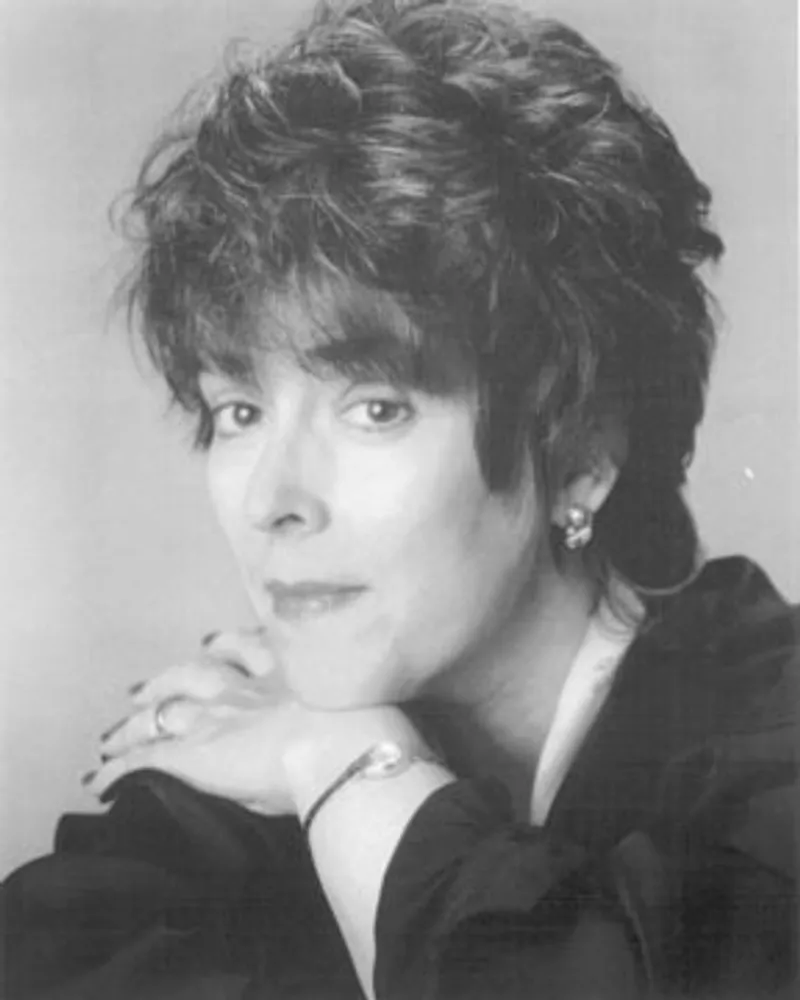
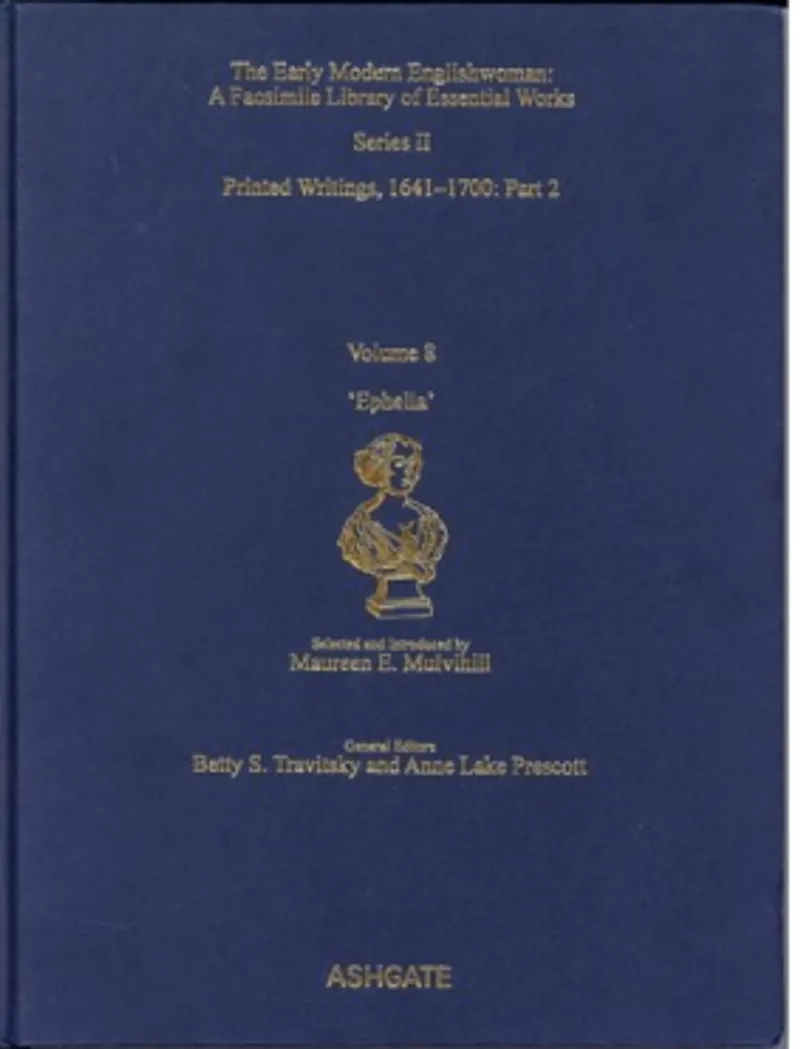
In the 1990s, all known writings attributed to Ephelia, and some new finds, were added to the official literary canon by Dr Mulvihill (here she is showcasing her rare book collection, which includes a valuable first edition of Ephelia’s 1679 poetry book. Her research and her two editions of the poet’s work, in 1992 and in 2003, reopened this fascinating case and excited fresh debate about Ephelia’s identity.
Portrait of Dr Maureen E. Mulvihill.Cover of The Early Modern Englishwoman Part 2. Series 2, Printed writings, 1641-1700. Ephelia / sel. and introd. by Maureen E. Mulvihill
Certainly, I should give you a taste of Ephelia’s busy pen. Listen to this poem; what is Ephelia talking about?
At your Entreaty, I at last have writ / This whimsy, that has nigh nonplused my wit:/ The Toy I’ve long enjoyed, if it may / Be called t’Enjoy, a thing we wish away; / But yet no more its Character can give, / Than tell the Minutes that I have to Live: / ‘Tis a fantastic Ill, a loathed Disease, / That can no Sex, no Age, no Person please: / Men strive to gain it, but the way they choose / T’obtain their Wish, that and the Wish doth lose; / Our Thoughts are still uneasy, till we know / What ’tis, and why it is desirèd so: / But th’ first unhappy / Knowledge that we boast, /Is that we know, the valued Trifle’s lost: / Thou dull Companion of our active Years, / That chill’st our warm Blood with thy frozen Fears: / How is it likely thou shouldst long endure, / When Thought itself thy Ruin may procure? / Thou short-lived Tyrant, that Usurp’st a Sway / O’er Woman-kind, though none thy Pow’r obey, / Except th’Ill-natured, Ugly, Peevish, Proud, / And these indeed, thy Praises Sing aloud: / But what’s the Reason they Obey so well? / Because they want the Power to Rebel: / But I forget, or have my Subject lost: / Alas! thy Being’s Fancy at the most: / Though much desired, ’tis but seldom Men / Court the vain Blessing from a Woman’s Pen.
Have you guessed Ephelia’s subject? This poem is called “Maidenhead: Written at the Request of a Friend”. As you might have noticed, it explores the paradoxical idea of virginity in a patriarchal society. Virginity, or maidenhead, is highly prized but usually fleeting. Ephelia criticises male vanity and how women were pressured to guard their virginity while men sought to conquer it; and, by doing so, diminish its perceived value. Plus, women’s curiosity about it could potentially lead to its loss. This is not a romantic, naive poem written by a young woman longing for love, but a sharp critique of her world. It’s been written by someone who has experienced life, a worldly and intelligent woman. The poem cleverly upends popular poems at that time about “maidenhead” – written by men poets, of course, in the so-called Libertine tradition: it slyly repurposes this entire genre by making it a “female poem”, a piece which now fits quite nicely in Ephelia’s 1679 elegant book: Female Poems…Written by Ephelia.
While Ephelia was no cynic, she had a flair for irony. She also wrote a poem about her love for the mysterious J.G. and why she loved him. No, I shan’t make you listen to me reading her poetry again, but this exercise in irony is well worth it. And this poem was impressively set to music by the distinguished Dr Cecil Armstrong Gibbs. And then it was sung and recorded by the English soprano Georgina Colwell, a Fellow of the Royal Society of Musicians. Have a listen: read between the lines; see what Ephelia is doing here with a traditional love poem of flattery:
Why do I love? Go, ask the Glorious Sun / Why every day it round the world doth run; / Ask Thames and Tiber, why they Ebb and Flow / Ask Damask Roses why in June they blow; / Ask Ice and Hail, the reason, why they’re Cold: / Decaying Beauties, why they will grow Old / They’ll tell thee, Fate, that every thing doth move, / Inforces them to this, and me to Love. / There is no Reason for our Love or Hate; ’Tis irresistible, as Death or Fate; / ’Tis not his face; I’ve sence enough to see, / That is not good, though doated on by me; / Not is’t his Tongue, that has this Conquest won; / For that at least is equall’d by my own: / His Carriage can to none obliging be, / ’Tis Rude, Affected, full of Vanity: / Strangely Ill-natur’d, Peevish and Unkind, / Unconstant, False, to Jealousie inclin’d, / His Temper cou’d not have so great a Pow’r, / ’Tis mutable, and changes every hour: / Those vigorous Years that Women so Adore, / Are past in him: he’s twice my Age, and more; / And yet I love this false, this worthless Man / With all the Passion that a Woman can; / Doat on his Imperfections, though I spy / Nothing to Love; I Love, and know not why. / Since ’tis Decreed in the dark Book of Fate / That I shou’d Love, and he shou’d be ingrate.
How incredible is this?! This is no love poem. It’s sarcastic; it’s an ‘anti-love’ poem. There was a very popular genre of poetry in the Renaissance, in which the poet would catalogue a beloved’s finest attributes. Here, though, Ephelia is turning the convention on its head and depicting her lover as a completely undesirable cad.
Ephelia’s works encompass a wide array of genres – from plays and songs to bold – indeed dangerous — political broadsides and proto-feminist poetry. But I promise you, she’s always clever, self-aware, and witty. Yet, her true identity remained a well-guarded secret of the Restoration era.
What was that world like for a poet like her?
Part 2. Setting the Scene
So, just a brief recap for context – and I do mean brief:
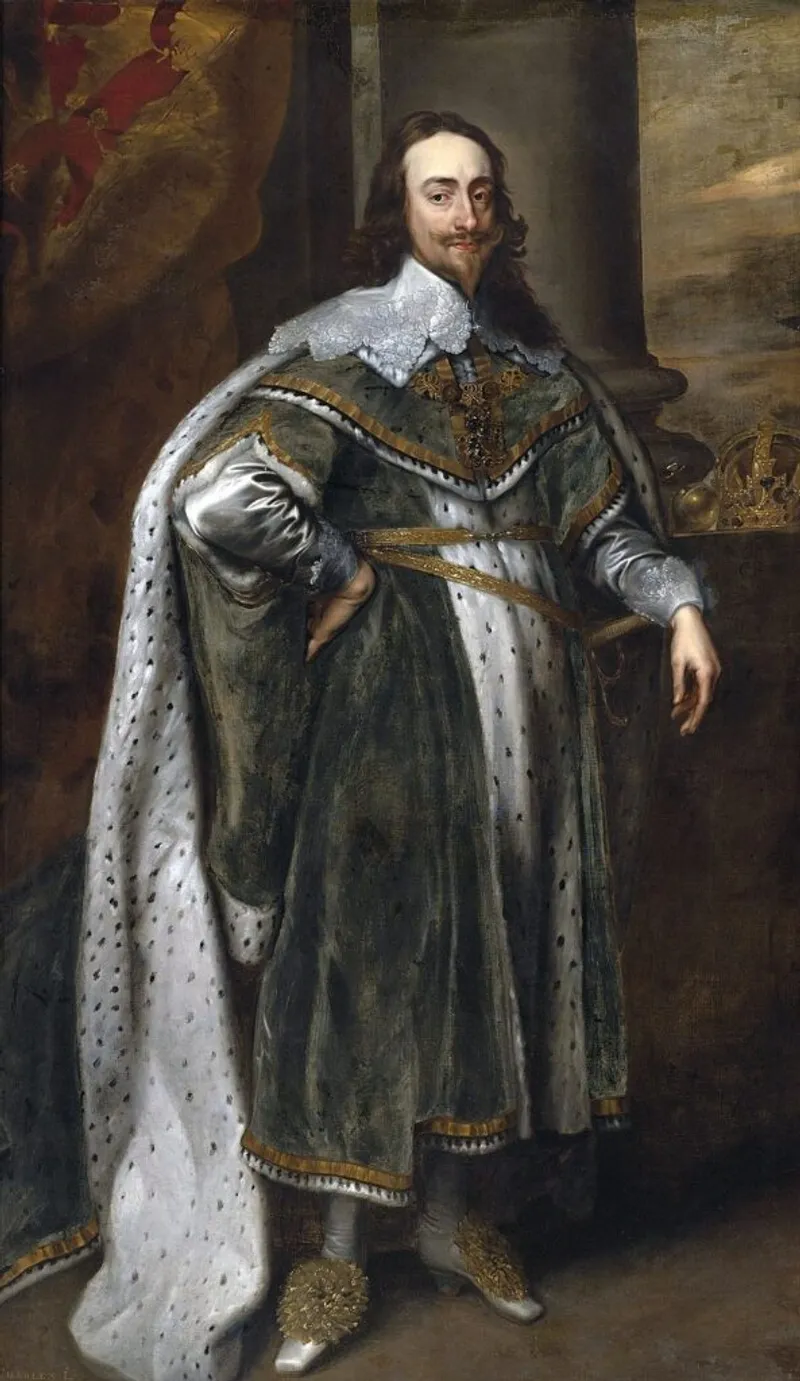
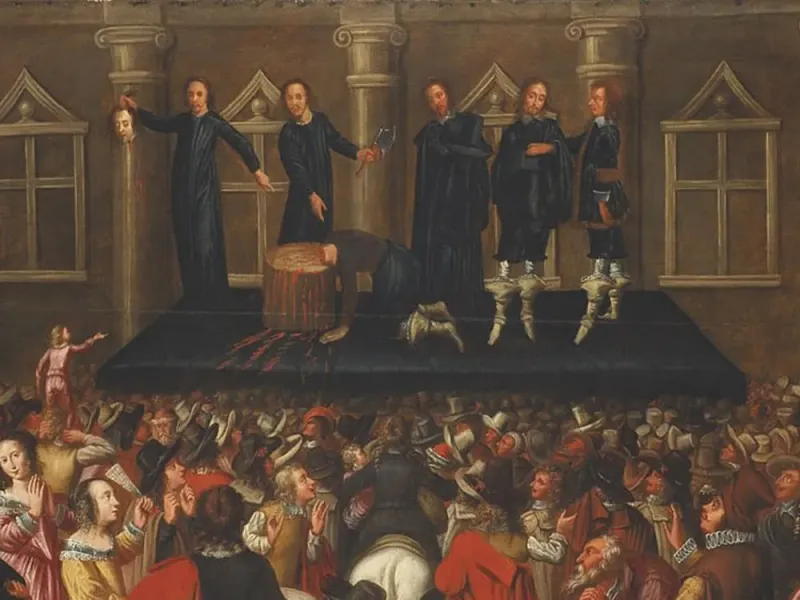
The final years of the reign of Charles I (1625–1649) were a time of crisis, with the English Civil War (1642–1651) plunging the country into chaos. (And I won’t get into the conflict between Royalists and Parliamentarians here, nor the differences between the first, second, and third English civil wars.) Suffice it to say that when Charles I was executed in 1649, the period later known as the Interregnum began, which lasted 9 years, with England being governed as a republic, not a monarchy. (Yes, I’m condensing a lot of big history here, but stick with me.) In 1660, the Commonwealth of England was dissolved and the Stuart monarchy was restored with Charles II (1630-1685). This, of course, is the period know as the Restoration. As you can gather from my admittedly simplified recap, this was a time of significant political turmoil. And Ephelia lived and wrote during the volatile times of the 1670s and ’80s in London: the Popish Plot, for example, and the Monmouth Rebellion – both subjects of her important political broadsheets. But this was also a time of cultural change. Creative women – writers and actresses – happily benefitted from this big transition.
Portrait of King Charles I by Van Dyck.Anonymous Dutch painting depicting the execution of Charles I (1649), a significant event during Ephelia’s time. (Formerly attributed to Jan Weesop)
Under Charles II, theatres reopened, and professional writers were in high demand. The world of literature and the arts was thriving. And experimental science, with the founding of the Royal Society. For someone interested in women’s writing, such as yours truly here, this is an incredible period. This was the time when women writers, such as Aphra Behn (1640-1689) and, of course, Ephelia, started to become more prominent. Aphra Behn deserves her own text, but, if you don’t know her, she was a poet and playwright who wrote about controversial social and political subjects in a razor-sharp style, much like Ephelia. And the work of these early women writers tackles important questions of gender in the heavily male-dominated literary world. There are many connections to be made between these female writers, but perhaps the most important one is the obstacles they faced to being published. Writing about politics in particular could be dangerous, especially for women. Writers such as Elinor James and Aphra Behn were arrested for their political writings; and Elizabeth Cellier was even stoned in the pillory. In Behn’s case, she wrote critically of the King’s illegitimate son – pretty Jamie, the Duke of Monmouth. O, this was not wise! Both Behn and the actress who delivered Behn’s words were arrested.
So, it’s no wonder that Ephelia would choose a pseudonym. Concealed identity avoided the backlash of bold and dangerous writing: an intriguing pseudonym shielded her from legal reprisals – like, public humiliation, even imprisonment in the Tower of London. As you’ll see, Ephelia was also not a fan of the king’s illegitimate son, James Duke of Monmouth, especially as Ephelia was writing during a time when London was caught up in the chaos of succession conspiracy.
The one issue with this anonymity is this: she slipped out of the historical record for a few centuries. Many scholars tried to find her, but no luck…not even a candidate. Still, she was never a cold case. Many women scholars have lent strong attention to Ephelia. Germaine Greer and her graduate students, for example, in their Kissing The Rod anthology (though she wrote she hadn’t found Ephelia, ‘who is a better poet (or group of poets) than she is currently being given credit for’!); and more recently, Helen Ostovich and Elizabeth Sauer, in their excellent collection, Reading Early Modern Women. And then two editions of the collected writings, with new findings, by Maureen Mulvihill.
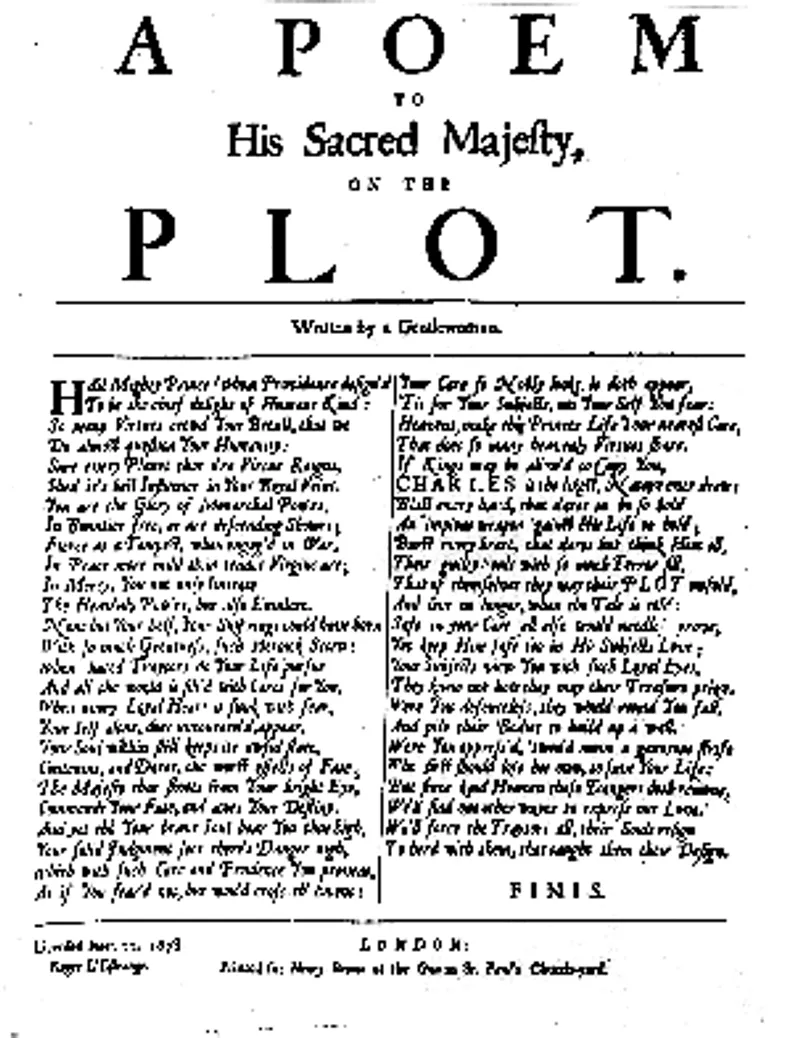
But let’s get back to the conspiracy I just mentioned. Ephelia commented in her writings on hot social and political issues, including the Popish Plot (1678-1681), an entirely fictitious threat involving the assassination of Charles II by Catholics and the take over of Anglican England by the Catholic Pope in Rome. Completely wild and unfounded, yet it resulted in a great panic. And there was also the Exclusion Crisis (1679-1681), which intended to exclude Charles II’s brother, James, the heir presumptive to the throne, from the line of succession, because he was – you guessed it – a Catholic. And again, I know I’m oversimplifying things, but this was a seriously turbulent period and I want to get back to Ephelia rather than talk about political history! But we must address a writer’s political context; and it bears heavily on Ephelia’s body of work. For example, her first publication, in 1678, was precisely called A Poem to His Sacred Majesty, On the Plot. Written by a Gentlewoman; it was later published as Ephelia’s in her book of ‘female poems’ in 1679. But most important of all, this sensitive broadsheet poem, published by the royalist bookseller, Henry Brome, was licensed by Charles II’s Royal Censor: Roger L’Estrange; this is printed at the foot of the broadsheet. Certainly, this “Gentlewoman” had high connections. This poem and its author were effectively legitimized; they were permitted a public presence.
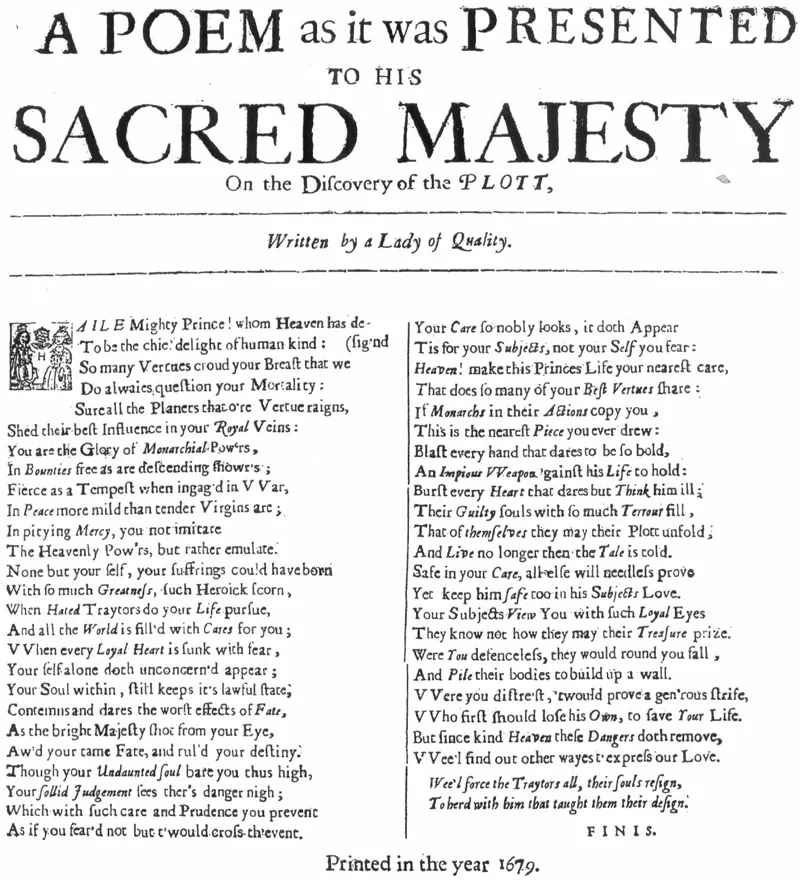
A Poem To His Sacred Majesty. On The Plot. Written by a Gentlewoman. London: Henry Brome, 1678. Licensed brs., Roger L’ Estrange. Wing P2301A. Reprinted with important variants in 1679 octavo, Female Poems.. by Ephelia (second ed., 1682/ manual cancel “1684″) and in 1679 brs. (see caption below). Original 1678 version added to Ephelia corpus by Elaine Hobby, A Virtue of Necessity (1988). ESTC R218925. (ESTC presently being restored.)Printed Presentation Copy of Ephelia’s Broadside to Charles II on the Discovery of the Popish Plot, n.p., 1679. With deteriorated woodcut device (factotum initial “H”); a stand-in ornament depicting two crowned figures: the poem’s author, “a Lady of Quality”, and her addressee, Charles II. For earlier locations of woodcut, see Thumbprints of Ephelia (online, 2001), Appendix D, illus. Added to Ephelia corpus by M. Mulvihill, Ephelia (Ashgate 2003; rptd., Routledge, 2016). ESTC R40072. (ESTC presently being restored.)
Ephelia’s 1678 poem on the Popish Plot was a large-format broadsheet, handsomely printed, and it’s likely that it quickly attracted attention. It was addressed directly to Charles II and written by “a Gentlewoman”, clearly a court insider. And it expressed feelings of solidarity and allegiance to the Stuart monarchy, which was shaken by the Popish Plot. The poem included a prayer for the king’s safety, and described the nation’s allegiance to him in these terms: ’…Were you [the King] defenceless, they [his subjects] would round You fall, / And pile their Bodies to build a Wall…’. Now, there’s true devotion. And if you think that sounds like an exercise in rhetoric and propaganda, well… you’re not wrong. But this poem marked Ephelia’s entry into the literary world. Her works were licensed and published by established, influential people, indicating a powerful network.
Lady Mary Villiers Stuart (1622-1685), the Dowager Duchess of Richmond and Lennox, is identified as Ephelia’s patron in Ephelia’s book of ‘female poems’ in 1679. (Let’s put a pin on Lady Mary, know as ‘the Butterfly’: we’ll flutter back to her soon.)
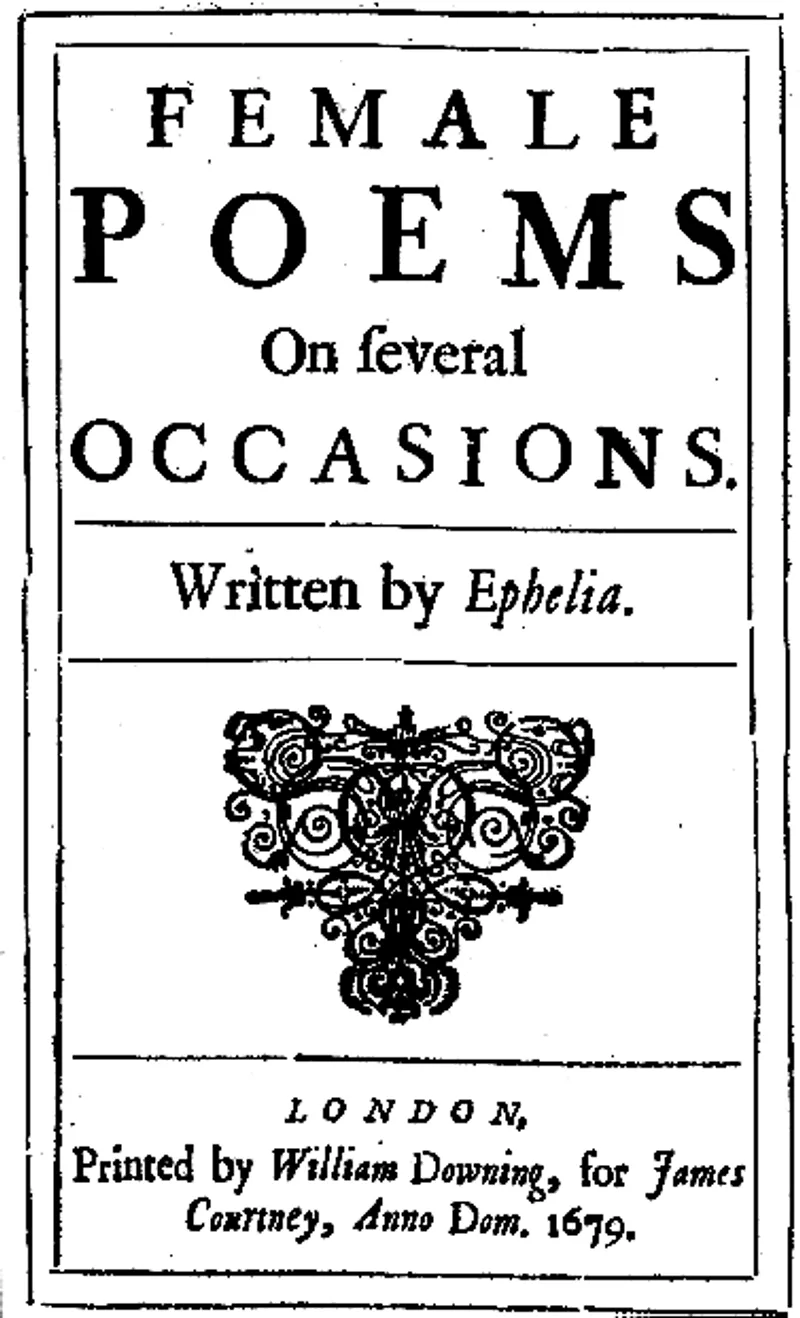
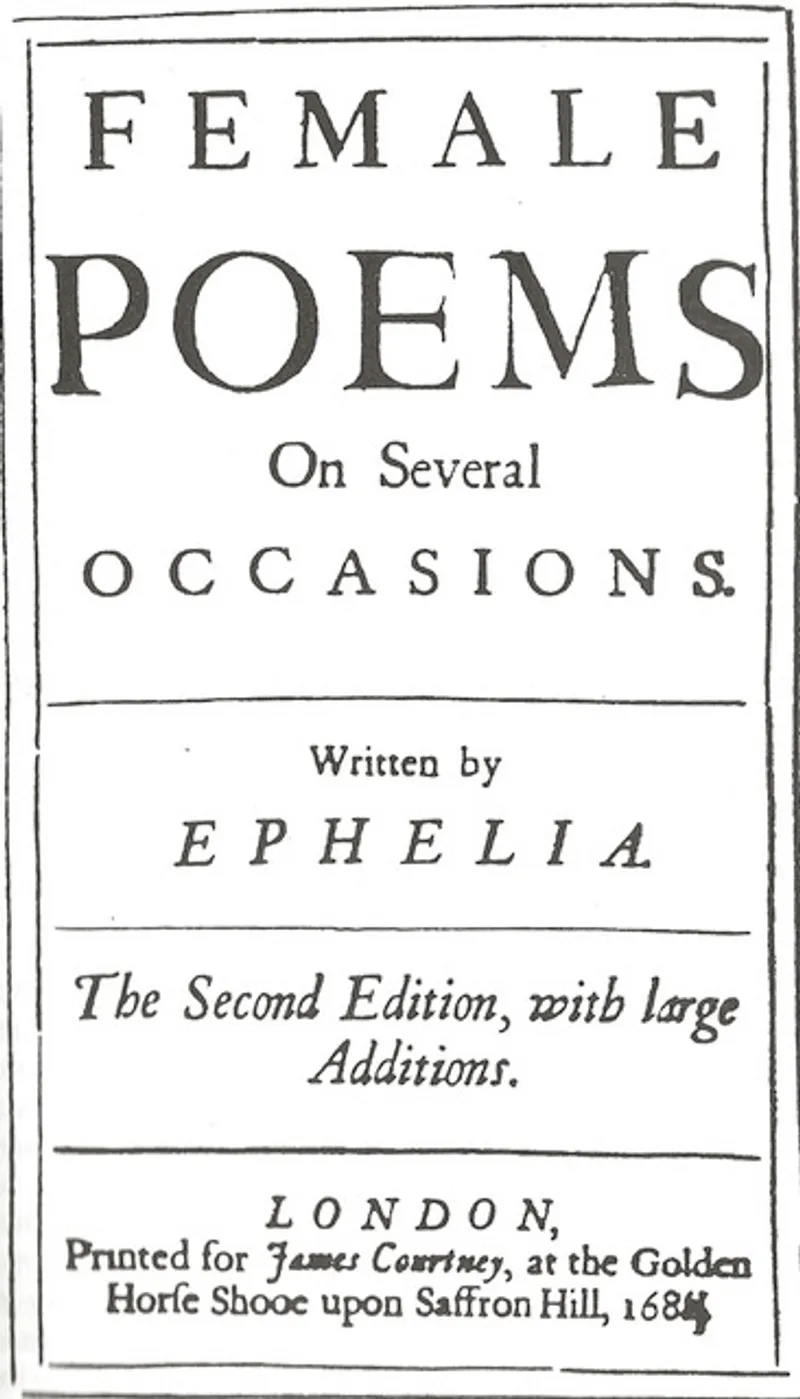
Suffice it to say that, by the following year, 1679, Ephelia’s lovely book, Female Poems on Several Occasions. Written by Ephelia, was printed by William Downing and sold by James Courtney, both respected London bookmen: this was not a case of surreptitious publication. The 1679 collection is our poet’s signature work, and it included everything from love poems to reformatted political broadsides; the book is an engaging ‘self-portrait’ in verse. We observe her talent in conveying complex experiences and emotions, criticising the world around her, and, as always, being witty and irreverent. But we must return to the core question: Who was the person behind the name?
Part 3. Who Was Ephelia?
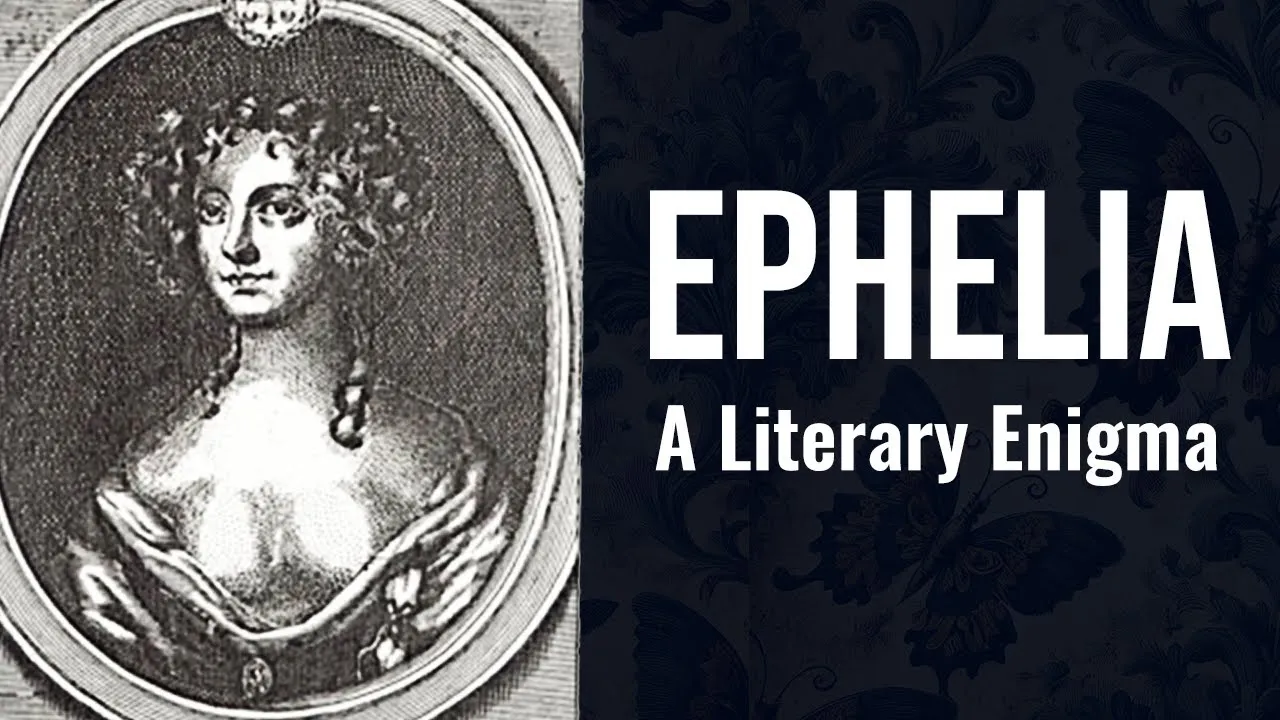
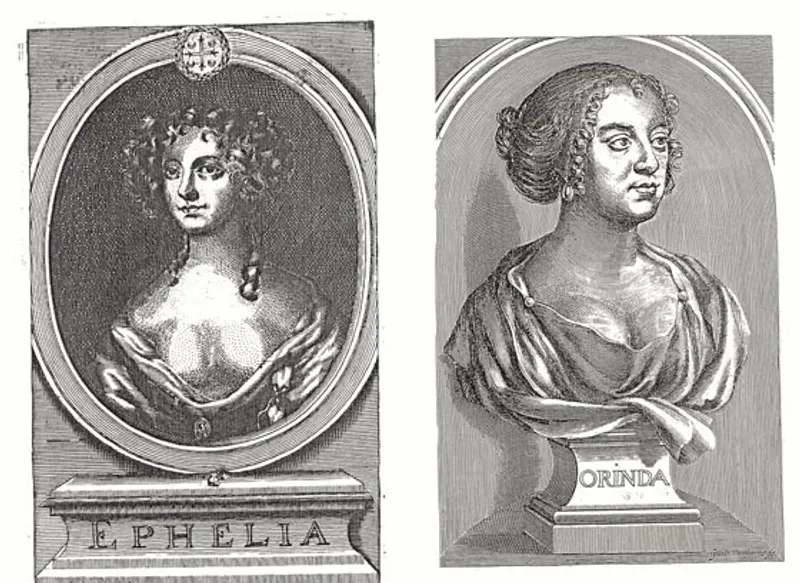
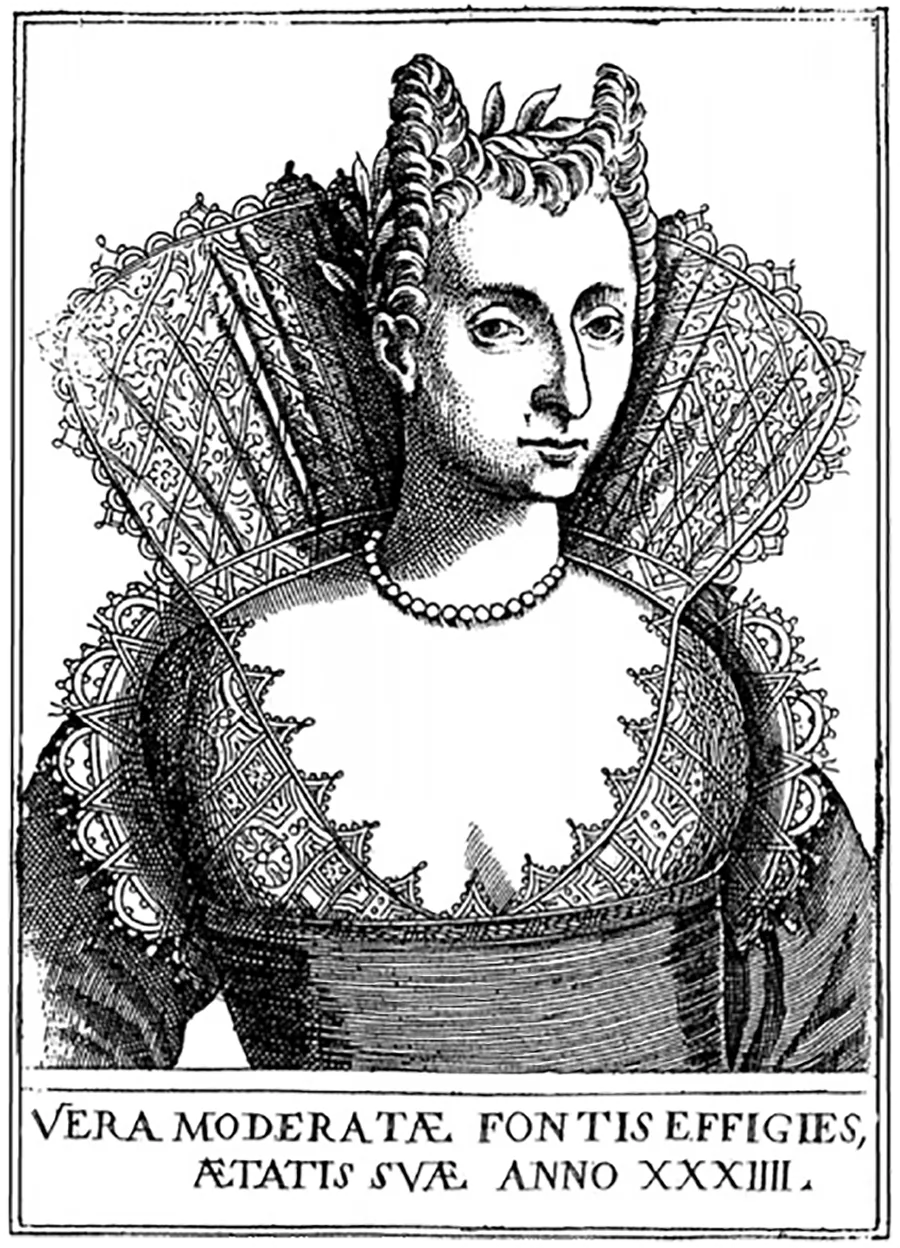
Identifying Ephelia has been a complex puzzle for several centuries. There’s a portrait of a woman in the book, as you can see here, with a very generous cleavage. She’s dressed and styled like most women of the court at the time – take a look at Sir Peter Lely’s Windsor Beauties and you’ll see what I mean – and yet, she doesn’t seem to be any of them. This woman conforms to the beauty standards of the time, taking them to extremes, even, and yet this portrait seems generic. Plus, it’s not signed. But it’s perhaps captivating enough to distract the reader from asking who the writer actually is. Certainly, it must be fictitious, and certainly it’s an amusing parody of exploitive portraits of women at this time, such as the sexualised (and posthumous) rendering of the demure Katherine Philips; Mrs Philips, a gold standard of female propriety during her day, would never have approved of such an image of herself in her very own book.
For a long time, Ephelia was believed to be a male writer (of course, how would a great writer not be a man, right?!), or a clever cabal of anonymous men and women writers. This idea probably comes from the fact that in the over 60 poems in her 1679 book of ‘female poems,’ there are so many different voices and points of view. Was Ephelia a woman of the town, someone from the theatre world, or a member of Aphra Behn’s circle? Her work suggests that she was a highly placed person, who had direct and familiar access to kings, queens, dukes, and duchesses. She writes to royals and nobles at the Stuart court, and to her literary contemporaries, and to lovers and enemies of the monarchy. She was clearly well-connected; she was a court insider.
Scholars have sifted through genealogical records, contemporary references, and physical evidence from surviving copies of her writings, and several hypotheses have been created, such as a certain Joan Philips, who has never been found, suggesting that this name was entirely fictitious. Two recent editors of Ephelia’s verse, Jane Stevenson and Peter Davidson, concluded in their feminist anthology (2001) that no evidence exists of a literary Joan Philips/Phillips in late-17th-century London. Also suggested was an Anne Prowde of Shrewsbury, a member of the literary Milton-Prowde-Phillips line. Most scholars, unable to find a candidate, have just given up, settling on Ephelia as an ‘inaccessible woman writer’, about whom not much can ever be known.
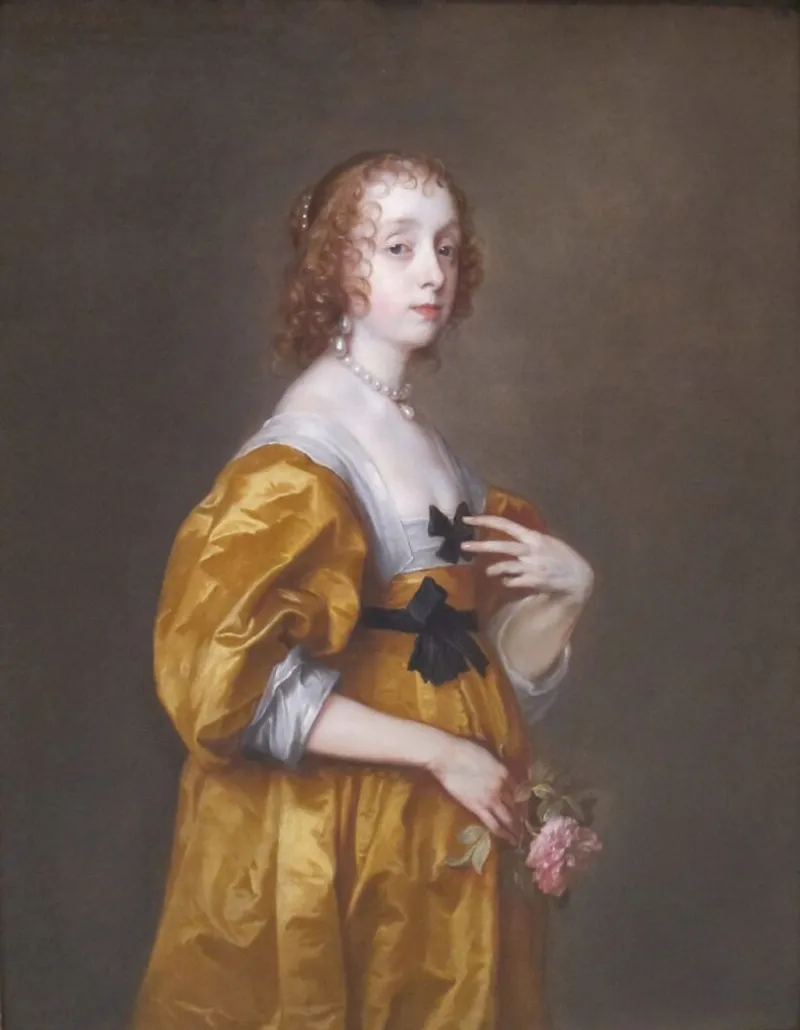
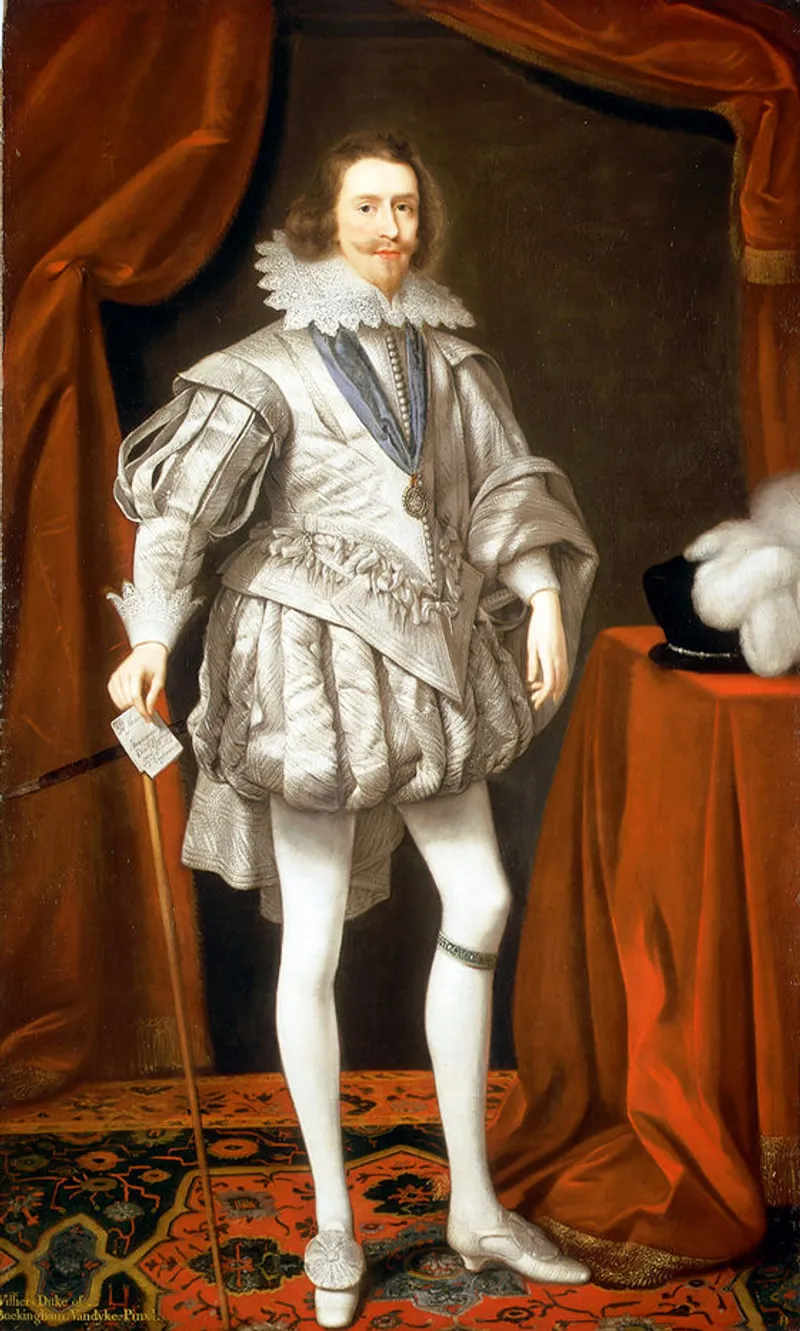
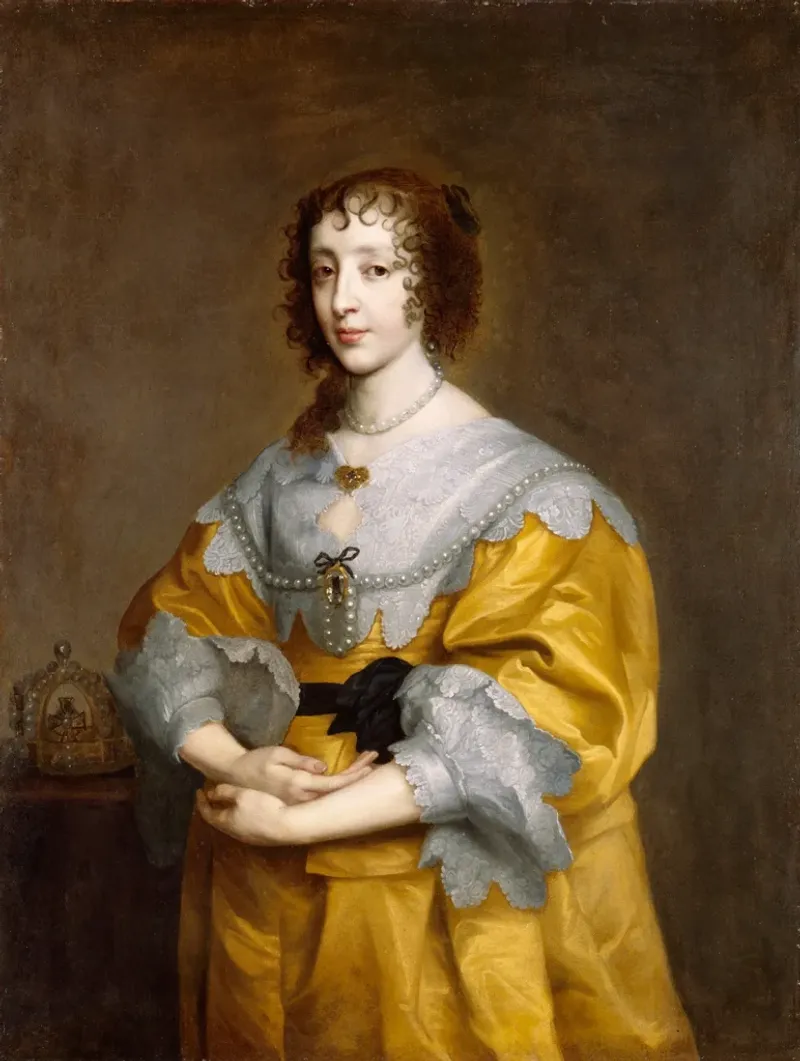
But the most probable, hypothesis, at least in my opinion, is the one developed by the scholar I mentioned earlier, Maureen Mulvihill. She has constructed quite an ingenious and probable case for Ephelia as Lady Mary Villiers, Duchess of Richmond (1622-1685). Now, if you Google that name, the first result you will probably get is Mary Beaumont (1570-1632), the Countess of Buckingham, who was George Villiers’ mother (and George Villiers was the Duke of Buckingham, often referred to as King James I’s lover – plus he was known for his terrific gams). Honestly, just take a look at how pretty he was, in this painting by Rubens. I wouldn’t blame James I at all! In any case, if this all sounds familiar, it’s probably because of the TV series Mary & George, which is a fun watch but is set before Ephelia’s time. Plus it’s not exactly a documentary, let’s put it that way. Now, this George Villiers, who was eventually murdered, by the way, — and that’s a tangent for another time — was young Mary Villiers’s father. The widow, Mary’s mother, the wealthy heiress Lady Katherine Manners, then married an Irish Catholic, infuriating the Protestant King Charles I. So, he took the three children, including Mary, to raise them at the Stuart court in London. This Mary Villiers would later become the wife of James Stuart, Duke of Richmond, making her the new Duchess of Richmond and Lennox. And she is our subject here. Lady Mary was raised as a ward of King Charles I and his French wife, Queen Henrietta Maria, who doted on Mary.
Black-ribbon widow portrait of Mary Villiers, by Van Dyck. Royal Collection: back of canvas bears royal cypher. Sold by Philip Mould Gallery, London, to the Timken Museum of Art, San Diego, CA.George Villiers, 1st Duke of Buckingham, father of Mary Villiers.Queen Henrietta Maria, Consort to Charles I.
Lady Mary was very much a court insider, she was privately educated and known for her wit and charm – not to mention her beauty. And of special interest here, she was a clever prankster, well versed in the arts of court intrigue. As we know from the Dictionary of National Biography‘s profile of Mary Villiers by Freda Hast, a French ambassador to the Stuart court judged Mary Villiers ‘the most delightful and amusing woman in the world’.
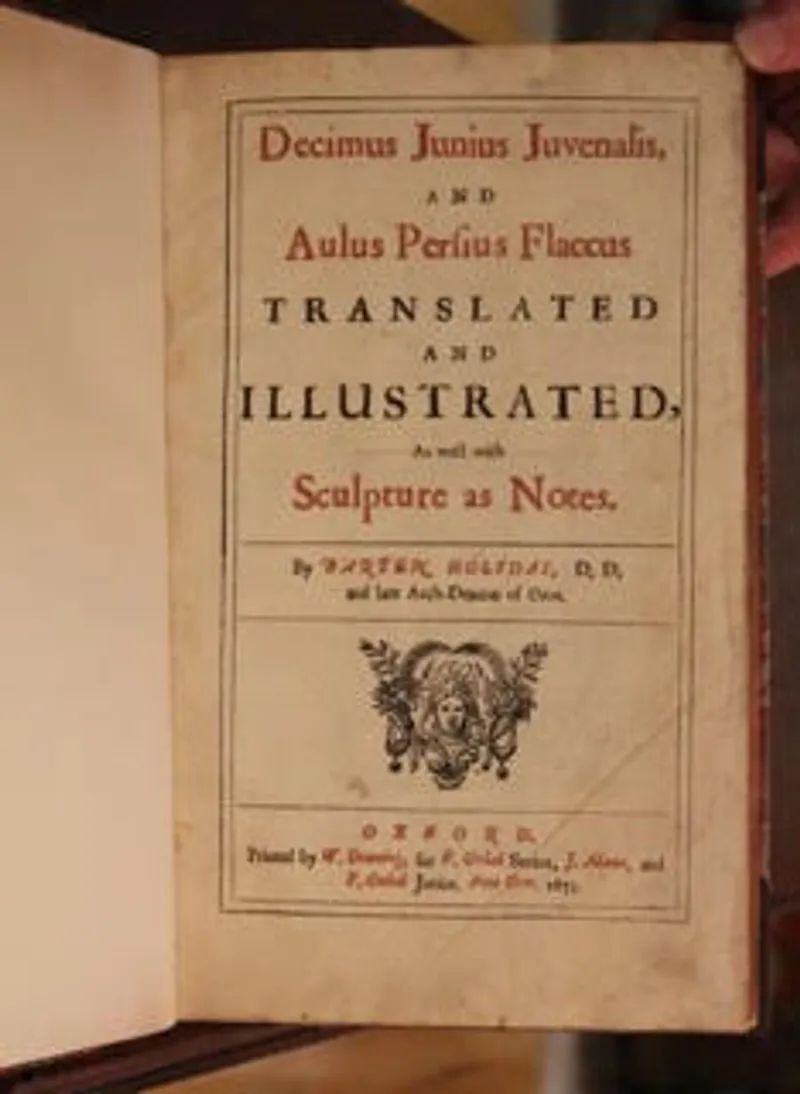
Just to give you an idea, her nickname was ‘Butterfly’. As the story goes: As a teenager, and already a widow from her first marriage to one of the sons of the powerful Earl of Pembroke, Mary played a prank on the King in the royal gardens. She hid away in a large basket; and when found out, was promptly called ‘the Butterfly’. This amusing episode of Villiers family lore is set out by Madame d’Aulnoy, in her court memoirs, published in Paris in 1695. On the title page of Ephelia’s Female Poems, published in 1679, you can see a butterfly-shaped device or vignette, placed directly under the poet’s pseudonym : It’s not the printer’s mark, it’s serving a far different purpose. Here’s the mark of Ephelia’s 1679 printer, William Downing, from his Juvenile, 1673 – entirely different from the Ephelia mark, suggesting perhaps specialness and encoded meaning. Might this be the author herself, hiding in plain sight? And there’s more to this Butterfly argument: The name Ephelia may derive from Classical sources, such as ephelis: “spots”. Could the name be alluding to the dappled pattern on butterfly wings? Or perhaps even to… freckles? As some portraits show, Mary was red-haired and may have had freckles as a young girl. All, entirely intriguing clues.
Title-page, Female Poems…by Ephelia (London, 1679) (Wing P2030; ESTC R21721). Priced at one shilling (bound), 1679 (Term Catalogue I:350). 2004 auction price £3360: Brett-Smith Library, Sotheby’s, Lot 219; provenance, Edm. Gosse; buyer Chawton House UK. (Restoration Fall, 2004.)
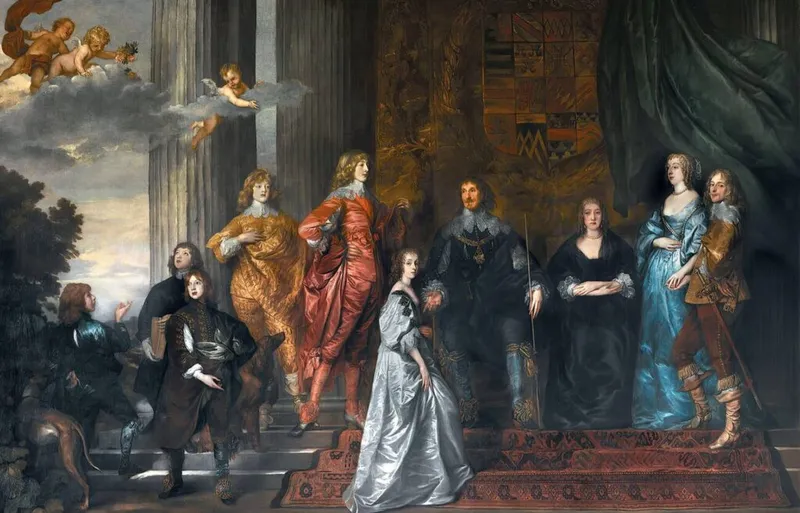
But let’s get back to Lady Mary Villiers. She was married very early, to Charles Herbert, son of the Earl of Pembroke – this was a teen-age wedding. You can see them here in this powerful painting by Van Dyck of the Herbert family at Wilton House, in Wiltshire; the Earl of Pembroke is welcoming Mary into his dynastic family. Charles died quite young, leaving Mary a young widow. But she soon remarried, this time into the royal Stuart line. This new, second husband was a cousin of the king, James Stuart, the Duke of Richmond and later Lennox. James was a key advisor to Charles I during the war, and the couple had two children.
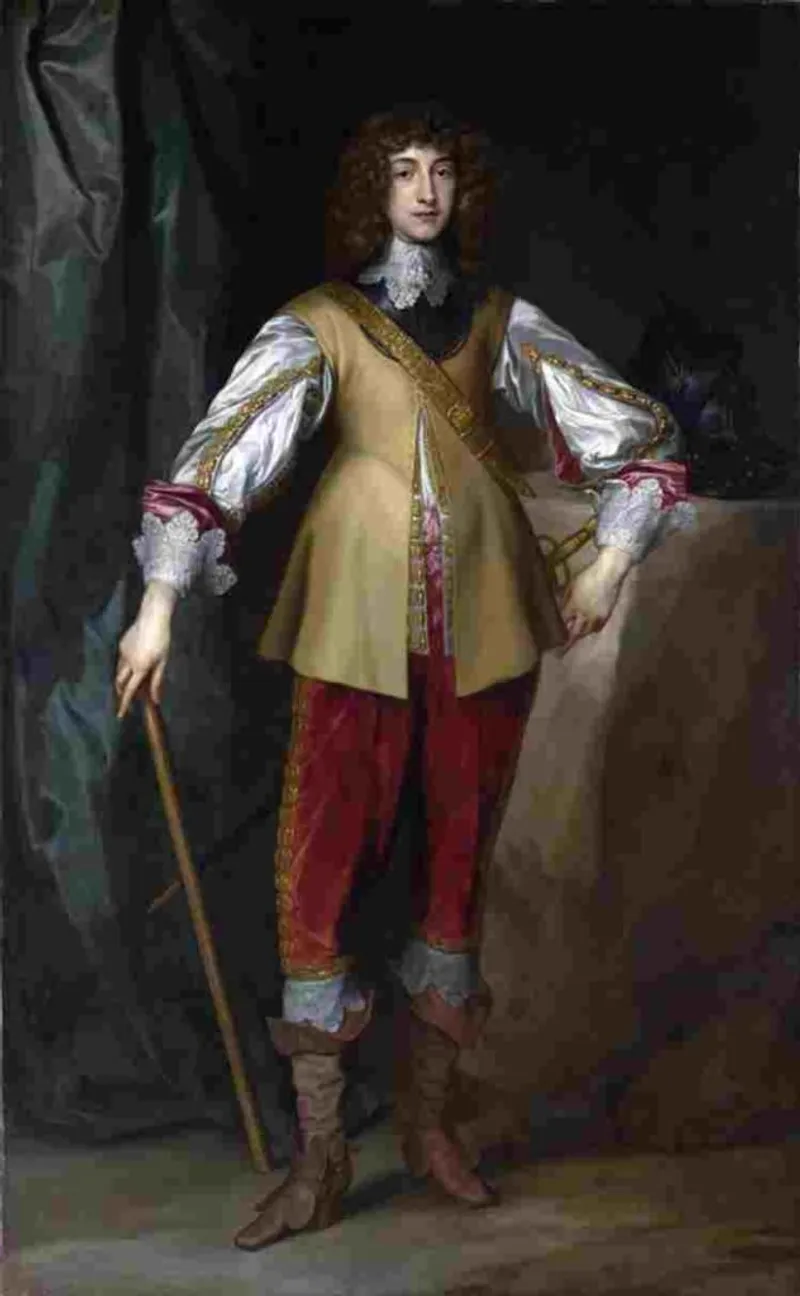
The young Mary Villiers, in bridal attire, being welcomed into the powerful Herbert (Pembroke) family, Wilton House. A monumental three-panel canvas, stitched, by Van Dyck. (Her first of three marriages.)This Van Dyck painting of Prince Rupert of the Rhine highlights his charismatic presence during the Restoration era.
Now … It was during their marriage that Mary was rumoured to be involved with Prince Rupert of the Rhine (1619-1682), the dashing war hero. After James’s death (it was said he died of a broken heart after the public beheading of his beloved Stuart kinsman, Charles I), Mary married a third time. From all reports, this was not an arranged marriage, but a true love-match. She chose the much less prestigious but apparently charming Colonel Thomas Howard, of the respected Howard line of English Catholics. Tom Howard was known as a reckless but rehabilitated libertine and duellist. (Maybe Mary thought that it was high time for her to really have some fun!) Unfortunately for her, though, Thomas also died before her, just like her previous two husbands. Her children, Mary and Esme, predeceased her, too. So… If Mary was the person behind Ephelia, losing her children and her husband would have meant that she had time, in the 1670s and 80s, to dedicate herself to writing: she could reinvent herself as a poet and a playwright. She had been a beauty at Charles I’s court; she had witnessed the chaos of the wars; and she had been a respected duchess at a later Stuart court (that of Charles II). So, she had an insider’s knowledge of many personalities and national crises. She had plenty to say. As a widow in the late 1670s, perhaps her time had finally come.
Now there are many clues that connect Mary and Ephelia, and I won’t go into all of them here (make sure you check out the References below if you’d like to fall into this rabbit hole). But here are two clues which help make the case, besides the Butterfly nickname. For example, Mary Villiers: Lady Duellist.
As the Baroness Burghclere mentions in her 1903 biography of Mary’s brother, Mary was rumoured to have duelled a female romantic rival; and a female enemy of Ephelia’s is prominently mentioned in Ephelia’s poetry-book as “my Rival”. Also, the butterfly vignette on the title-page of Ephelia’s book is flanked by what appear to be swords. Fencing, along with gambling, shooting, and cross-dressing, was a fashionable pastime among court women; it’s likely that the high-spirited Lady Mary would have enjoyed such a diversion.
Besides being known as a witty prankster and a court intriguer, she was closely connected to literary circles. Thanks to recent research, we know that she was the dedicatee of writings by Phineas Fletcher, Leonard Willan, and Francis Lenton; and some of Ephelia’s songs in her 1679 poetry-book were set to music by court composers, such as Moses Snow, William Turner, John Farmer, and others. This is all new and recent findings, by the way. Mary’s personal life, along with her three marriages, her rich friendships, her likely affair with Prince Rupert, her penchant for cross-dressing (also mentioned in recent research), all point to a fluidity in identity, a privileged and unfettered life, and certainly a rich imagination. In Ephelia’s poetry, we can hear this polyvocal persona: a poet who speaks in many different voices. The fact that Lady Mary was well educated (by private tutors, of course) would explain much in terms of Ephelia’s many genres and writing styles and her literary references. Her closeness to the royal family would explain her political broadsides advocating the Stuart monarchy. As a highly placed court insider, Lady Mary could pretty much get away with anything: she had access to everyone and could do … well … whatever she pleased.
You may be wondering: Did any of Mary’s contemporaries associate her with the Ephelia writer? Well, there are some provocative connections. In John Tutchin’s 1685 play, The Unfortunate Shepherd, he mentions anEphelia as a witty city lady with a sharp tongue, who enters the pastoral world of the play in disguise; and this Ephelia is of the royal line. Sounds very much like the Lady Mary I have been describing, doesn’t it?
Other connections: The poet Anne Finch, Countess of Winchilsea, wrote in one of her two poems to anEphelia: “Me, Ephelia, me you court, with all your powerful influence”. Again, sounds like Lady Mary. Other writers, such as John Dunton and Delariviere Manley, refer to theirEphelias as red-haired. And in her own poetry-book, Ephelia describes herself as a butterfly; listen: “Ranging the Plain, one Summers Night, / To pass a vacant hour, / I fortunately chanc’d to light / On lovely Phillis’s bow’r” (27).
If Lady Mary was Ephelia, that means that Mary dedicated her 1679 book to herself - I absolutely love this! Why, it’s the perfect cover! Of course, all of this is circumstantial, not definitive proof, but the clues do add up. Not everyone is convinced: Harold Love published a formal refutation of the Mary Villiers hypothesis, titled “Ephelia” and the Duchess, in The Review of English Studies in 2006. It appears to me very likely that Lady Mary was indeed Ephelia. The more I read while researching for this article, the more I found this hypothesis compelling. I think, as a historian, it’s both intriguing and frustrating when we’re confronted with a case like Ephelia’s. All that scholars can do is to try to piece together existing clues, consider a range of primary and secondary sources, and construct the most probable hypothesis. And who knows, maybe one day in the future a letter or someone’s journal will be found and we’ll know for sure. For now, though, the more I learn about Lady Mary Villiers and the more I read of Ephelia’s work, the more I can see them as the same person. But let’s talk a little bit about her writings, shall we?
Part 4. Ephelia’s Work
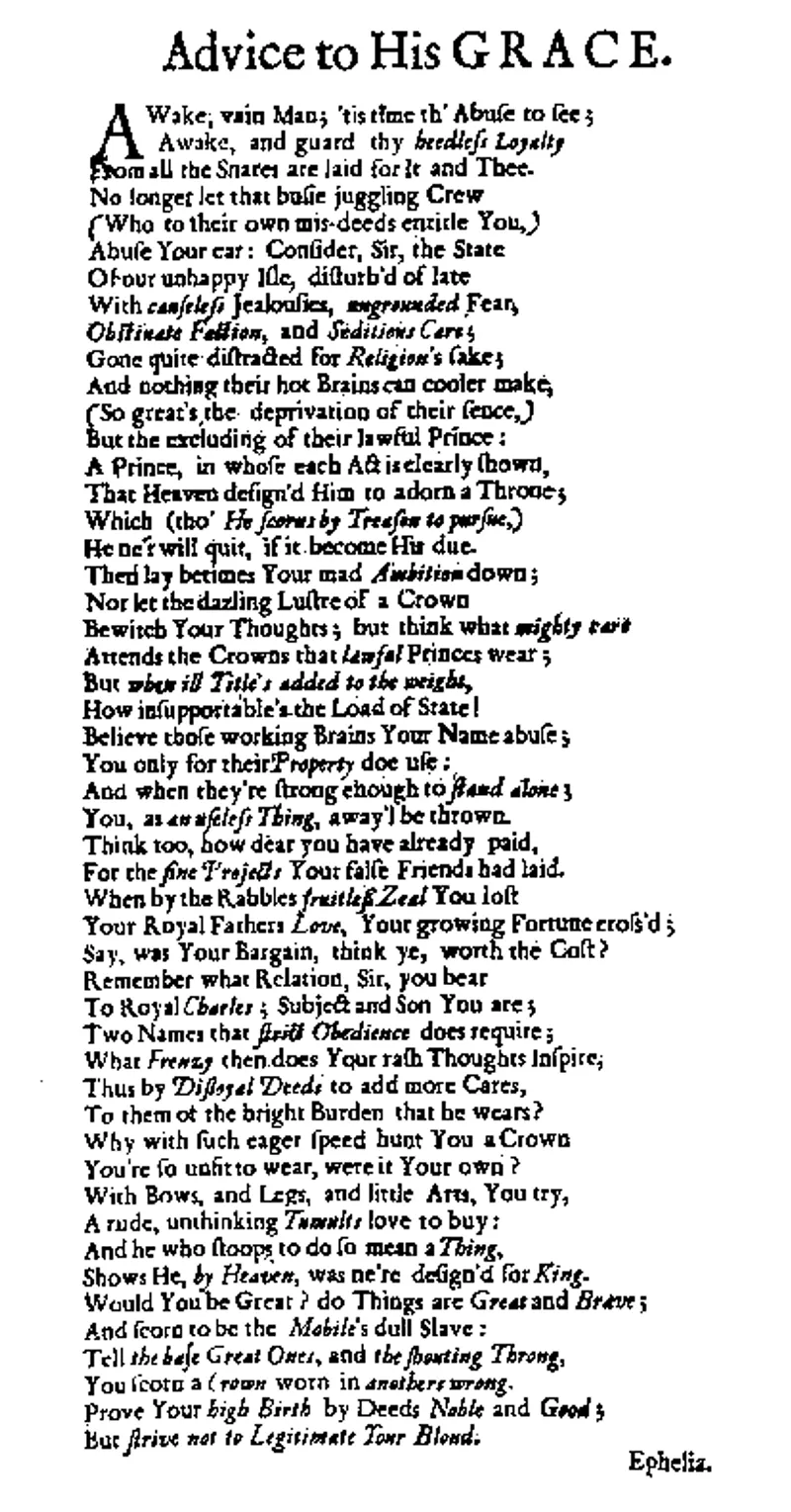
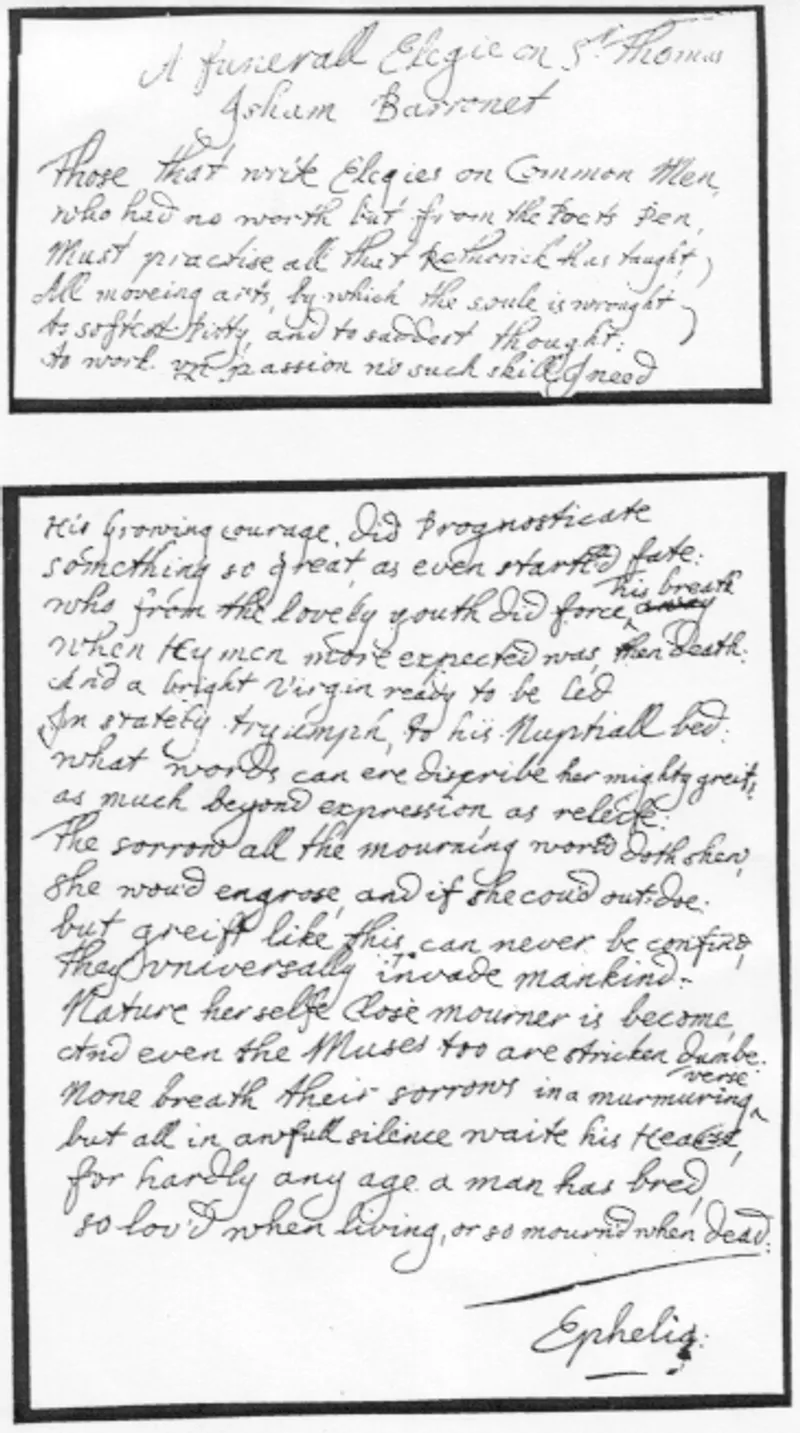
As I mentioned, Ephelia’s work was quite varied. As we know from Dr Mulvihill’s two editions and the updated ESTC records, the corpus of Ephelia’s work, to date, includes five printed writings and one manuscript. Here’s the list: a poem to Charles II on the Popish Plot, 1678; the poetry-book of Female Poems…by Ephelia, 1679; an updated poem to Charles II on the Plot, 1679; a cautionary broadside poem to the Duke of Monmouth, Advice to His Grace,c. 1681; a manuscript elegy, signed ‘Ephelia’, on the death of art collector and Villiers-family associate, Sir Thomas Isham, c1681 (it’s preserved in Nottingham Library’s Portland Collection); and a second edition of the 1679 poetry-book, in 1682, with several unattributed additions (probably an unauthorised edition, explaining the absence of the prominent butterfly device on the title-page).
A Poem To His Sacred Majesty. On The Plot Written by a Gentlewoman. Broadside, London, 1678. Wing P2301A. Reprinted, with a few important variants in Female Poems.. by Ephelia (1679,1682) and, again in a broadside format, in 1679. The expanded second edition of Ephelia’s book was published without the title-page ‘butterfly’ mark, suggesting an unauthorized edition.The Printed Presentation Copy of Ephelia’s (Mary Villiers’s) Broadside to Charles II on the Popish Plot, with a most interesting woodcut device (factotum) (1679); earlier locations of this old, deteriorated ornament, 1660 and 1663.Title-page, Female Poems…by Ephelia (London, 1679) (Wing P2030; ESTC R21721). Priced at one shilling (bound), 1679 (Term Catalogue I:350). 2004 auction price £3360: Brett-Smith Library, Sotheby’s, Lot 219; provenance, Edm. Gosse; buyer Chawton House UK. (Restoration Fall, 2004.)Title-page, Female Poems… (expanded second edition, 1682, with “1684” manual cancel, Huntington Library copy). Title-page ‘butterfly’ vignette omitted, suggesting unauthorized publication.Advice To His Grace. With Printed Subscription, “Ephelia” [ca. 1681] Wing P2029.Excerpts, “A funerall Elegie on Sr. Thomas Isham Barronet” ([August, 1681]). Signed “Ephelia”
Now, if Ephelia was actually Lady Mary Villiers, that means she grew up around the king, Charles II. So she might have felt like an older ‘auntie’ of sorts, who could reprimand the duke so sternly and openly, and with palpable superiority.
She was also a playwright, but it’s likely that only one of her plays was produced – in a dancing school. It was called The Pair-Royal of Coxcombs, and it wasn’t a licensed production. In the play’s Epilogue, in which she addresses her critics, the “severe Gentlemen”, the author calls the play “damn’d”… It’s perhaps unsurprising that this play was censored, as it was a satiric treatment of the king and his brother’s sexual adventures. Apparently, the play was pulled after only one performance. Can you imagine being among that Restoration audience? Imagine all the clapping, the booing, the overall chaos! In the end, Ephelia proudly included some saucy extracts of the play in her 1679 book. She doesn’t seem to have regretted writing it!
Now let’s turn to our poet’s ‘feminism’. Yes, it’s an anachronistic term; we could say ‘proto-feminism’, but what I’m emphasising here is her strong and brave voice: very much a female voice. The gendering of her work alone — using ‘Female Poems’ as the title of her major work — is completely riveting, in my view. Ephelia seems to consciously distinguish her voice as a determinedly female voice, completely different from the sound of her male contemporaries (that ‘brotherhood of the Pen’). Going back to the poem I started this text with, “Maidenhead,” the poem about virginity, I find it fascinating that as a female author she writes in such an assertive, even sexual way, advocating for women. She knows the world of libertines, and she’s comfortable being a part of the conversation, bringing her feminist voice and morals to it. (And the same could be said for her more known and very public contemporary: Aphra Behn.) And while Ephelia clearly had a sense of humour, she was very righteous in her work: remember how critical she was of the king’s illegitimate son.
She also wrote a poem, “To a Proud Beauty,” possibly addressing the king’s mistress, Barbara Villiers, Lady Castlemaine, Duchess of Cleveland, known for her ravenous, high-handed ways. It begins with strong words: ‘Imperious Fool!’. Ephelia then criticises the woman for ‘misusing’ her beauty and sexuality. It’s also telling that Ephelia writes this: “my Fame’s as great as yours is”: again, perhaps affirming the case for Mary Villiers as Ephelia. Another of her contemporaries, the poet Anne Finch, wrote of Ephelia’s fame in Ardelia’s Answer to Ephelia, who had invited her to come to her in the town:
Me, dear Ephelia, me in vain you court
With all your pow’rfull Influence, to resort
To that great Town, where Friendship can but have
The few spare hours, which meaner pleasures leave.
No! Let some shade, or your large Pallace be
Our place of meeting, love, and liberty; ….”
Once more, Lady Mary Villiers would suit that description… Ephelia was versatile: she experimented with a range of genres and voices; she wrote plays, love poems, anti-love poems, political commentary, lamentations, and songs. She was a versatile, flexible writer, and she was clearly talented. She played with literary genres and conventions, adapting them to her goals and making them ‘female’ in her own way. She addressed powerful people, mercilessly criticising them, often in a sarcastic tone. Reading Ephelia, you can feel her confidence in herself and in her place in the world. Not to mention her confidence in her own beliefs and her feminism. She upended traditional conventions by adding a clever, feminist spin. Ephelia seems proud of who she is, of her identity as a woman. Just listen to her poem to “Bajazet”, circulating at the time as ‘Ephelia’s Lamentation’. The poet is voicing an abandoned woman who runs the emotional gamut from sadness and rejection to feminist pride. This woman ends the poem by cursing the man she was so in love with only a few lines earlier:
I cannot live on pity or respect: / A thought so mean would my whole love infect; / Less than your love I scorn, sir, to expect. / Let me not live in dull indifferency, / But give me rage enough to make me die: / For if from you I needs must meet my fate, / Before your pity I would choose your hate.
I told you; once you start reading Ephelia, it’s hard not to fall in love with her writing. Now, let’s talk about her legacy.
Part 5. Ephelia’s Legacy
If you’re interested in the history of women’s writing, it’s very likely that you came across the bold Aphra Behn, who I mentioned several times in this article, and who has become a feminist icon. Ephelia is not nearly as well known. I wonder if things would have been different if she hadn’t chosen a pseudonym – but then again, if she was Lady Mary Villiers, how else could she have published her works? In A Room of One’s Own, Virginia Woolf famously wrote: ‘I would venture to guess that Anon, who wrote so many poems without signing them, was often a woman.’ Woolf is alluding to the fact that so much of women’s work throughout history has been lost; how ‘anonymous’ was often a woman. In Ephelia’s case, it seems clear that the ‘pseudonymous’ author was often a woman, too. Yet, while Ephelia played a big part in the literary world and the emergence of women’s writing in the late 17th century, opening the way for other female writers and having an impact on them, she was relegated to a footnote in history for a long time, despite her contributions to early modern literature. But that changed when some scholars began to dig … and dig … sometimes with results.
The question of authorship hasn’t prevented feminist scholars from including Ephelia in literary and feminist anthologies, from Kissing the Rod in 1988 to Reading Early Modern Women in 2004. Ephelia deserves to be a part of the literary canon, and many colleagues I’ve recently talked to are grateful that the entire case has a new face. Visit Maureen Mulvihill’s website, Thumbprints of Ephelia, if you want to explore more; also see her online Notes to the Key for suggested identities of the concealed personalities in Ephelia’s poetry-book (see References, below).
I realise this whole text may seem impossibly ‘niche’ — but the point is, it really isn’t or shouldn’t be, not within the larger context of new work on this subject. Ephelia should be celebrated along with other writers, male and female. Besides the academic world, Ephelia’s work, her way of presenting the late 17th-century court through a female lens, can be fascinating to so many others, too. In her day, Ephelia’s poetry was set to music by court composers; it’s only fitting that we do the same today and experience something similar to what 17th-century courtiers and court composers enjoyed. So, join me now as I applaud those musicians, like Georgina Colwell and her colleagues, who took on that challenge (clap here). And may there be more.
And while the Mary Villiers hypothesis is entirely interesting, scholars can only do so much with the sources that survive. And that’s where literature comes in. I think it was the wonderful novelist Kate Mosse who said, ‘Fiction takes over when history runs out’. Isn’t that the best way of thinking of historical novels? I’m such a fan of Kate Mosse.
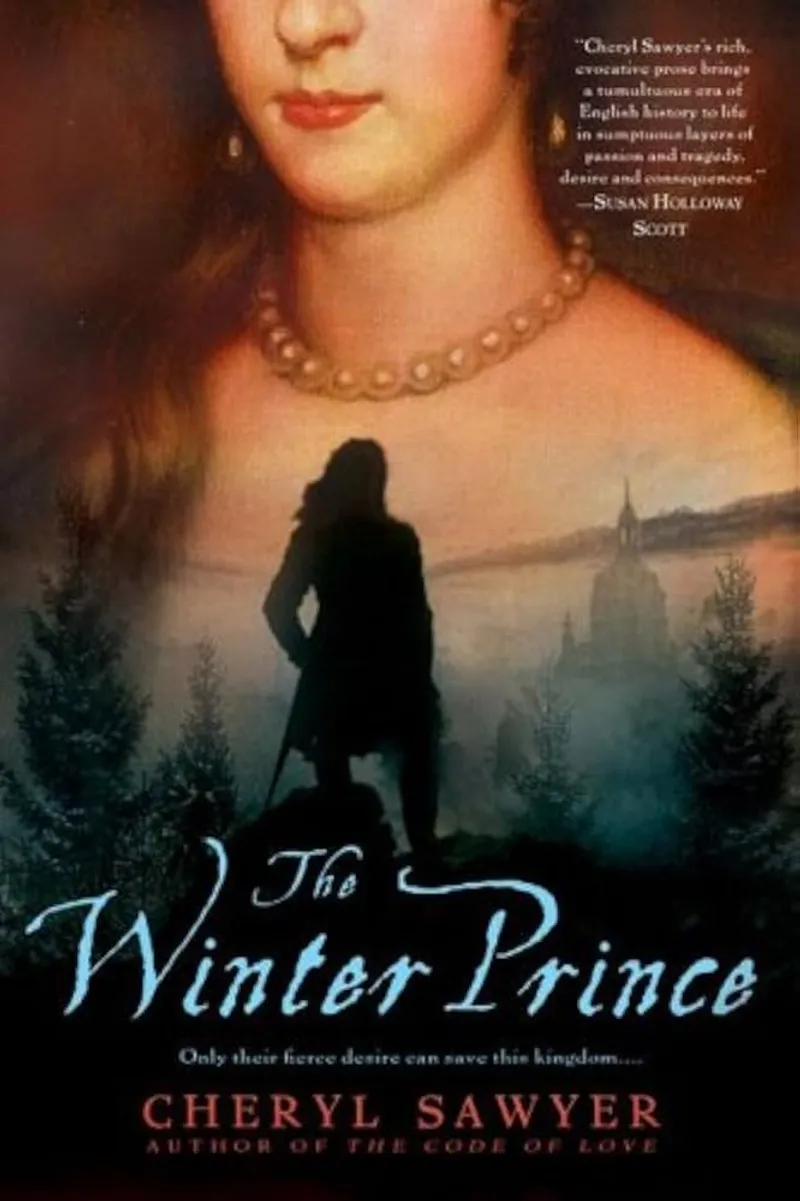
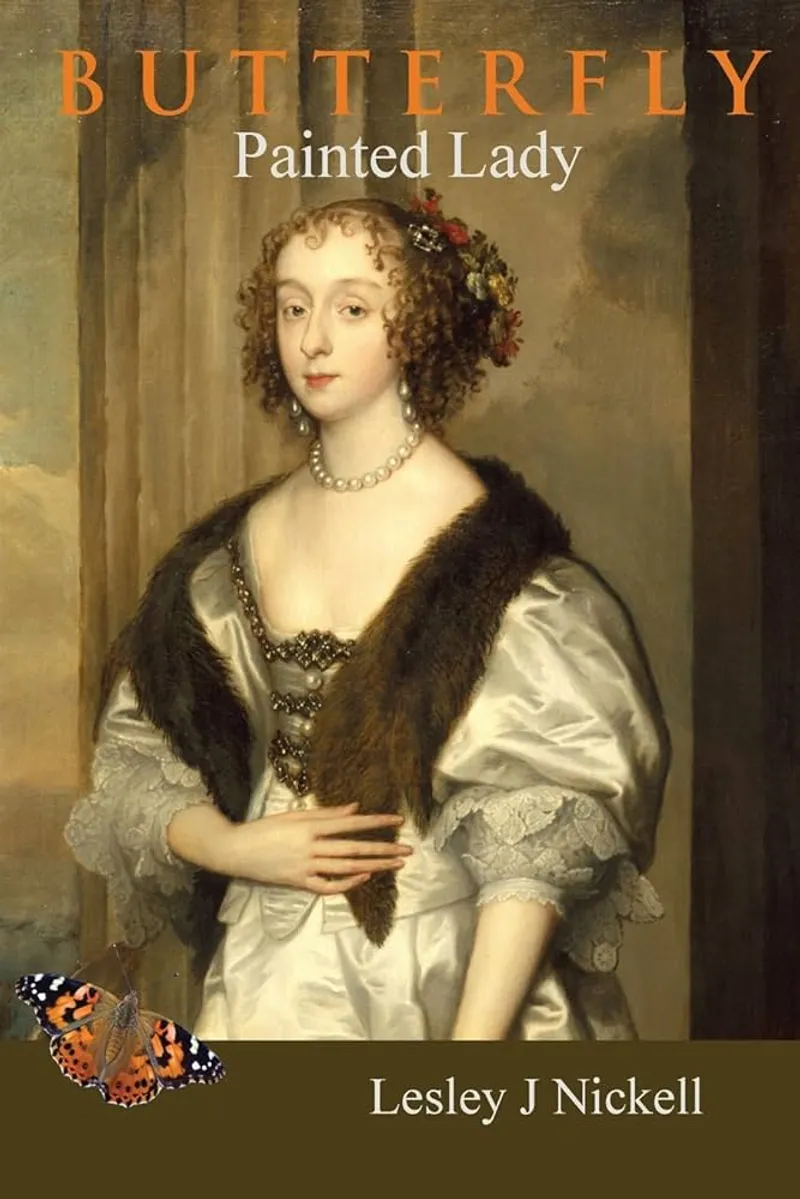
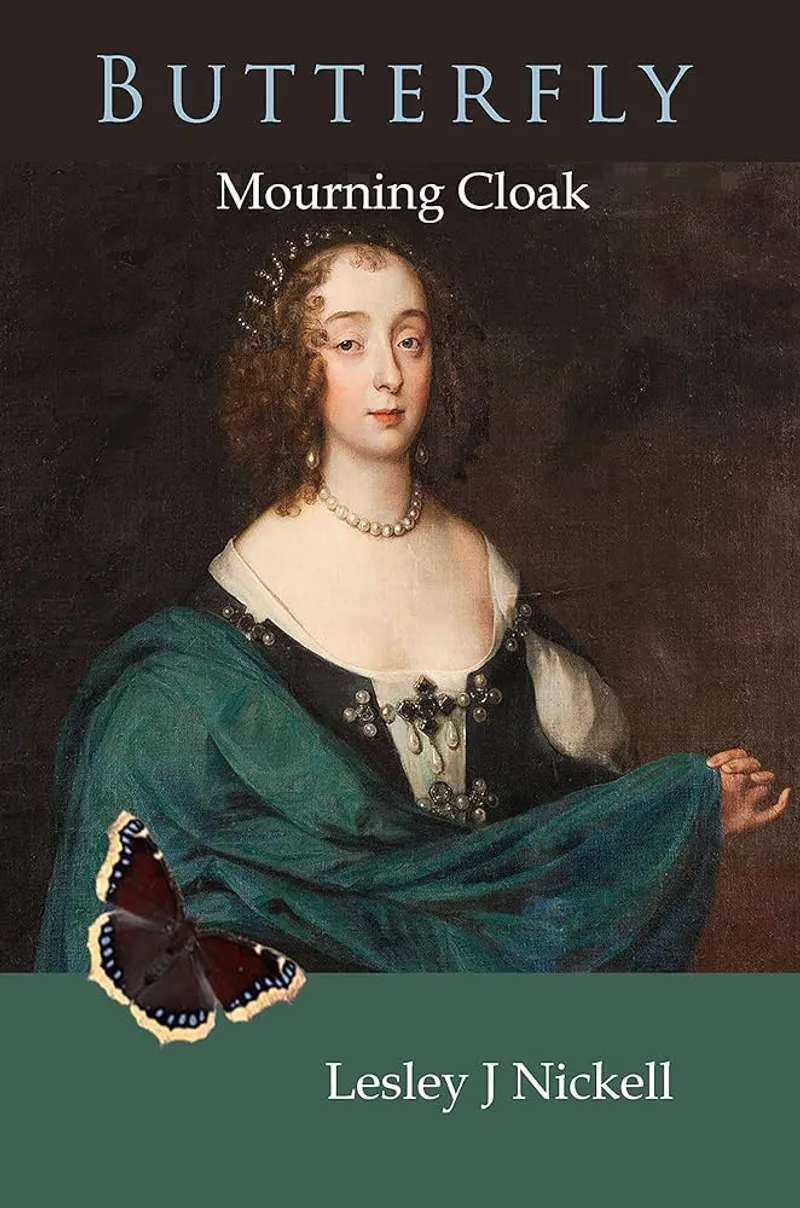
If you like historical fiction, and if you were left intrigued by Ephelia, you’ll be happy to know that the entire subject has inspired three historical novels. Yes, three. There are two ‘Butterfly’ novels by Lesley J. Nickell, and then Cheryl Sawyer’s Winter Prince on the short-lived romance of Mary Villiers and Prince Rupert. The Butterfly books explore Mary Villiers’ life, loves, political intrigues, and the dangerous world of 17th-century England. Personally, I recommend Sawyer’s Winter Prince, and I dare you to read it and not fall in love with Prince Rupert (definitely the Clark Gable of the Restoration). And also Mary Villiers. Honestly! I’m not a big romance reader, but Sawyer’s Winter Prince is a beautiful book about a beautiful story (a sad story, but not without some happy moments).
The Winter Prince by Cheryl SawyerButterfly: Painted Lady by Leslie J. NickellButterfly: Mourning Cloak by Leslie J. Nickell
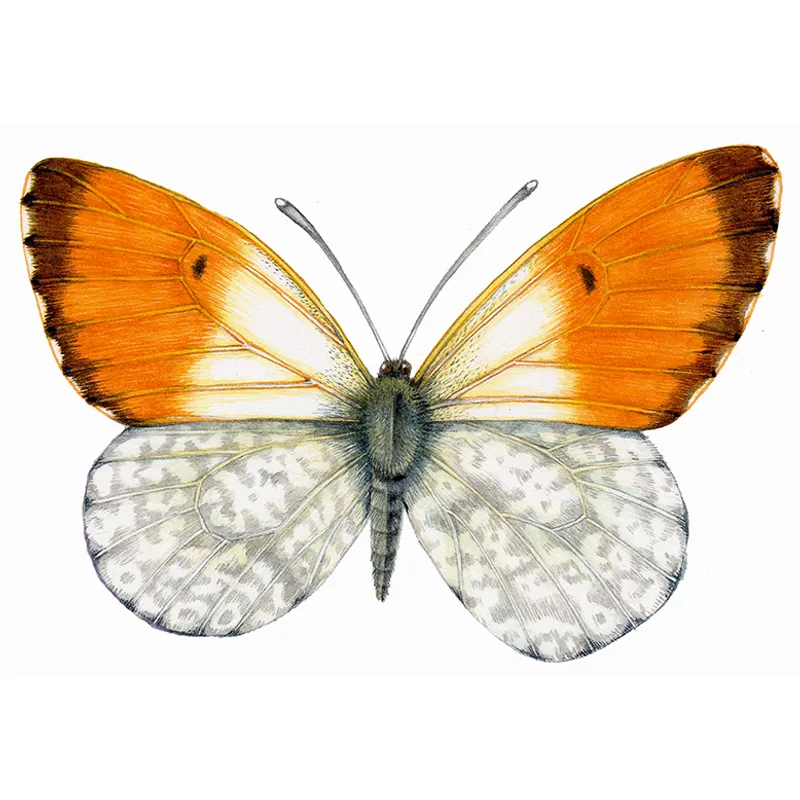
Lastly, as we’re thinking of Ephelia’s legacy, let me leave you with this image. This English butterfly, an orange tip, was found by Dr John Heppner of the McGuire Centre for butterfly & moth research at the University of Florida; it’s now called Ephelia’s Orange Tip, after the ginger-haired Lady Mary Villiers. Now how cool is that?!
An illustration of an orange-tip butterfly.
Now … much more could be said here, but I think I’ve given you a fair picture. If you’re still with me, thank you. I do hope I’ve inspired you to explore Ephelia’s poetry. Thank you and see you next time!
References
Marie-Catherine d’Aulnoy, Memoirs of the Court of Englandin 1675 (1913, 2009) (originally, 2 vols., Paris, 1695).
Susan Barnes, Nora de Poorter, Horst Vey, and Oliver Millar, Van Dyck: A Complete Catalogue of the Paintings (2003).
Keith Botelho and Joseph Campana. Lesser Living Creatures of the Renaissance: Insects & Concepts. 2 vols. Penn State UP, 2025.
Winifred Gardiner, Baroness Burghclere, George Villiers, second Duke of Buckingham, 1628-1687: A Study in the History of the Restoration (1903, 2012).
Sajed Chowdhury, “A Newly Discovered Manuscript Adaption of Ephelia’s ‘The Twin Flame.’” RECIRC (Galway, IR.). Online, June, 2016. On Ephelia-Monmouth connection, with posted Comment by M. Mulvihill.
Georgina Colwell, This Scepter’d Isle: English Romantic Songs (CD; setting of ‘Ephelia’ poem) (1993).
Lara Dodd, “Ephelia.” Palgrave Encyclopedia of Early Modern Women Writers (Online, 2023).
Ephelia, A Poem to His Sacred Majesty, On The Plot. Written by a Gentlewoman (Licensed brs.; London: Henry Brome, 1678).
____, A Poem as it was Presented to His Sacred Majesty on the Discovery of the Plott. Written by a Lady of Quality (Brs.; London? “Printed in the year 1679”). With (stand-in) factotum woodcut initial “H”, figuring two crowned figures representing the poem’s addressee, Charles II, and the poetess, possibly Mary Villiers, Duchess of Richmond, in her ducal coronet.
____, Female Poems On several Occasions. Written by Ephelia (Octavo. With decorative title-page vignette. London: William Downing for James Courtney, 1679).
____, Advice To His Grace (Brs. London? Printed subscription, “Ephelia”. Circa 1680/1681).
______, “A funeral Elegie on Sr Thomas Isham Baronet.” (PwV 336. Two folios. Portland Collection, University of Nottingham Library. Subscribed “Ephelia”. With armorial watermark. As title suggests, written for reading at funeral ceremony, 9 August 1681.)
____, Female Poems On Several Occasions. Written by Ephelia. The Second Edition, with large Additions (Octavo. 1682; manual cancel, “1684”, Huntington copy. London: James Courtney. Printed without first edition’s title-page vignette).
Susan Hrach Georgecink. “Ephelia. Frontispiece, Female Poems…by Ephelia (1679).” Reading Early Modern Women, eds. Helen Ostovich and Elizabeth Sauer (2004).
Germaine Greer, Susan Hastings, Jeslyn Medoff and Melinda Sansone (eds.), Kissing the Rod: An Anthology of Seventeenth Century Women’s Verse (1989).
S.J. Hardman. Van Dyck’s…Mary Villiers. Self-published, Atlanta (1976). Identified butterfly language in one of Ephelia’s songs, in correspondence with Mulvihill, 1990s.
Harold Love, “‘Ephelia’ and the Duchess.” Review of English Studies 58 (2006).
Freda Hast, “Villiers [married name Stuart], Mary, duchess of Lennox and Richmond (1622-1685), courtier”, Oxford Dictionary of National Biography (2004).
Elaine Hobby, A Virtue of Necessity (1988).
Lucy Hughes-Hallett, Scapegoat: The Brilliant Brief Life of George Villiers, First Duke of Buckingham (2024).
Maureen E. Mulvihill, “Writing in the Key of Sound: Sonic Poetics and Early Women Writers.” Music Air website; host, soprano Georgina Colwell, Royal Society of Musicians, UK. Forthcoming.
_____. “Ephelia.” The Literary Encyclopedia (online, UK). Forthcoming.
____, Poems by Ephelia (circa 1679): The Premier Facsimile Edition of the Collected Manuscript and Published Poems. With a Critical Essay and Apparatus (NY, 1992. Illus.).
Lesley J. Nickell, Butterfly: Painted Lady (vol. 1) (2013).
_____, Butterfly: Mourning Cloak (vol. 2) (2017).
Helen Ostovich and Elizabeth Sauer, Reading Early Modern Women: An Anthology of Texts in Manuscript and Print, 1550-1700 (2004).
Cheryl Sawyer, The Winter Prince (2007).
Jane Stevenson and Peter Davidson (eds.), Early Modern Women Poets: An Anthology (2001).
 Dr Julia Martins