Explore the people, events, and ideas across centuries of history.
Showing 131 entities and 82 articles
Was Julius Caesar born by caesarean section? Debunk the persistent myth and discover the real history of sectio in mortua—cutting the dead woman.
Discover the ancient Greek theory of the 'wandering womb'—an animal inside an animal, moving through the body in search of moisture.
Tortured under Roman persecution for refusing marriage, Saint Agatha became one of Sicily’s most venerated saints — and inspired one of its most unusual desserts.
Frankincense treated wounds and plague. Myrrh eased childbirth pain. Long before the Magi, these resins were among the ancient world's most valued medicines.
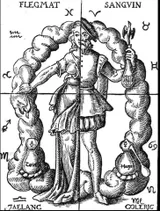
Blood, phlegm, yellow bile, and black bile — the four humours formed the foundation of Western medicine from ancient Greece to the 18th century.
Did a Germanic spring goddess really give Easter its name? What the historical sources actually say about Eostre, and how her story was reinvented over centuries.
St Augustine and Thomas Aquinas didn't consider early abortion equivalent to murder. How medieval Canon Law drew distinctions the modern Church has abandoned.
From groaning cakes to birthing stools—discover how 17th-century English families prepared for childbirth before hospitals and modern medicine.
From oysters to artichokes—discover how early modern aphrodisiacs were believed to enhance fertility, not just pleasure, linking lust to reproduction.
Learn about the six non-naturals—air, food, sleep, exercise, evacuation, and emotions—that shaped preventive medicine for centuries.
Centuries before modern pregnancy tests, physicians examined urine colour, sediment, and even mixed it with wine. The strange science of Renaissance uroscopy.
Explore how medieval theology imagined Mary's miraculous, painless childbirth—skipping labor entirely to preserve her virginal purity.
Discover eaglestones—ancient 'pregnant' geodes believed to protect women during childbirth, from Greek antiquity to 19th-century England.
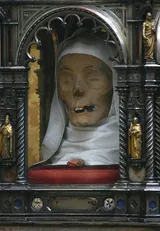
Discover 'holy anorexia'—how medieval women like St Catherine of Siena used extreme fasting as spiritual devotion, often to the point of death.
Did Renaissance Italy rediscover exercise? Explore Girolamo Mercuriale's 'lost art' and how ancient Greek fitness was revived in the 1500s.
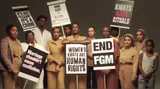
Explore FGM's hidden Western history—from medieval 'corrective' surgeries to Victorian clitoridectomies performed until the 1960s in America.
After the Black Death devastated Italy, ornate birth trays celebrated motherhood and encouraged childbirth—discover their art, ritual, and symbolism.
Hypocras was served at royal banquets and prescribed by physicians. The history of the spiced wine that blurred the line between medicine and pleasure.
Explore how fat bodies were pathologized from ancient Greece to the Renaissance, linking fatness to infertility and moral failure.
Lady Macbeth asks to be 'unsexed' to commit murder—explore how Shakespeare linked femininity, menstruation, and violence in early modern England.
After her husband's murder, Caterina Sforza seized a fortress and confronted the conspirators alone. The story of her political survival against the odds.
Caterina Sforza left behind over 450 recipes for medicines, cosmetics, and poisons. What her alchemical notebook reveals about Renaissance women and power.
Discover Renaissance hair care—from dove droppings for hair loss to sun-bleaching on Venetian rooftops for that coveted golden blonde.
Explore the mysterious disease of virgins that shaped medical control over young women from the 1550s to 1920s through marriage and motherhood.
Debunking the myth that Renaissance people were dirty—discover how Italians bathed, used perfumes, and maintained bodily hygiene.
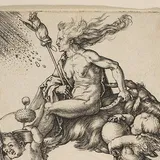
Why are witches always old women? Explore how menopause, humoral theory, and misogyny shaped the witch stereotype from medieval times to today.
In 1503 Switzerland, Hans Spiess was forced to touch his wife's corpse—if it bled, he was guilty. Discover the medieval bier ordeal trial.
Discover green sickness, the mysterious ailment that affected young women from the 1550s to 1920s—diagnosed by paleness, fainting, and virginity.
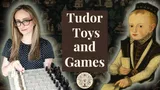
From wooden dolls to hobby horses and brutal games—discover how Tudor children played, learned, and grew up in 16th-century England.
Explore how intersex people challenged binary categories for centuries—from medieval medicine to early modern legal debates about gender and sex.
Discover 'secrets of women'—early modern medical recipes for conception, menstruation, and childbirth, hidden in the mysterious feminine body.
Discover why we eat soup first and cheese last—the humoral theory and Renaissance medicine shaped our modern meal structure.
Discover Tudor mince pies—filled with meat, spices, and symbolism, shaped like mangers to honor the Nativity. A recipe for Christmas past.
Uncover Isabella Cortese, the enigmatic 16th-century alchemist whose bestselling book challenged tradition and championed women's knowledge.
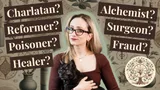
Leonardo Fioravanti was called a Charlatan, a Poisoner, a Reformer, a Prophet, a Miracle-Worker, a Saviour, an Alchemist, and a Fraud.
Meet Isabella Cortese, the Renaissance alchemist who told readers to stop studying old texts and follow her practical recipes instead.
He publicly burned Galen, dosed patients with mercury, and got exiled from Basel. The life and legacy of early modern medicine's most controversial figure.
Discover Renaissance spa culture—from fertility baths in Naples to Leonardo Fioravanti's water cures that challenged traditional medicine.
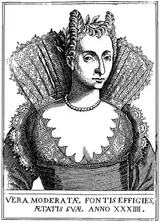
In 1600 Venice, Moderata Fonte imagined seven women debating 'the woman question'—why do inferior men dominate women, and can it change?
Uncover Della Porta's infamous 16th-century witches' ointment recipe—hallucinogenic herbs, erotic visions, and Inquisition censorship.
Elizabeth I's white lead makeup and red wigs weren't vanity — they were political tools. How the ageing queen managed her image in an era that feared decay.
Discover dangerous Renaissance recipes for faking virginity—blistering pills, leeches, and lead paint sold to women facing ruin without wedding-night blood.
Most wealthy mothers didn't breastfeed their own children. The history of wet nursing, and why it sparked fierce moral debate for centuries.
From 14th-century St Albans Abbey to modern bakeries—discover the mystical origins, superstitions, and traditions behind hot cross buns.
From straw sacks to feather beds—how Renaissance sleeping arrangements revealed wealth, status, and inspired The Princess and the Pea.
Discover how Paracelsian medicine revolutionized 17th-century diet advice, empowering people to trust their bodies over doctors' rules.
Benedetta Carlini claimed visions, performed miracles, and married Christ in a ceremony. Then investigators uncovered her sexual relationship with another nun.
Discover how Renaissance physicians believed plants revealed their healing powers through shape, color, and resemblance to body parts.
Meet Louise Bourgeois, the 16th-century French royal midwife who championed calm, gentle childbirth—centuries before modern birthing philosophy.
Discover how Elizabethan children nursed until age three, using wormwood to wean—Shakespeare's Romeo and Juliet reveals extended breastfeeding practices.
In early versions, Little Red Riding Hood ate her grandmother's flesh and escaped the wolf—explore menopause, aging, and female wisdom.
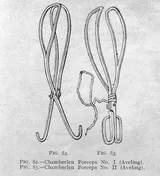
Discover how the Chamberlen family's secret obstetrical forceps revolutionized childbirth and transformed midwifery into modern obstetrics.
Elizabeth Joceline's heartbreaking 1622 letter to her unborn child—a testament to maternal love and the perils of early modern childbirth.
Discover 16th-century recipes to 'restore' menstruation—from roasted apples with nutmeg to herbal remedies that blurred the line with abortion.
The story of Prince Rupert's poodle 'Boy' being feared as a devil by Parliamentarians is a myth — created by Royalist propagandists as a joke that spectacularly backfired.
Percivall Willughby despised 17th-century midwives—but were his brutal accusations true? Explore what really made a good midwife in 1600s England.
From Versailles courtiers to Black dandies and salonnières—discover how history's original influencers shaped culture through self-fashioning.
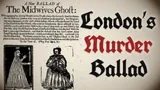
Discover the haunting 1680 ballad of a murdered midwife's ghost—sensationalized news set to music, recorded by Samuel Pepys himself.
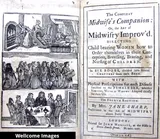
Jane Sharp's 1671 midwifery manual celebrated midwives as essential—yet centuries later, they still fight for respect and recognition.
Sor Juana's love poems to the Vicereine of New Spain are intense, intimate, and still debated by scholars centuries later.
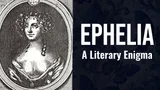
Uncover Ephelia, the mysterious 17th-century poet who challenged gender norms with bold, erotic verse—was she Joan Philips or someone else entirely?
Meet Sor Juana Inés de la Cruz, the 'worst nun in history'—who chose the convent over marriage to build a library and defend women's right to learn.
Discover how 18th-century sex workers and madams manufactured virginity repeatedly, using astringents, blood, and performance to deceive clients.
Bram Stoker wrote Dracula as blood transfusion was becoming real medicine. How the novel reflects Victorian fears about science, sexuality, and women's bodies.
From wandering wombs to shell shock: how medicine kept finding new words for what it could not explain about women.
Did parents in the past love their children? Explore the historical debate on parental love and grief that Hamnet brings to life so powerfully.
From a 17th-century warrior to a modernist painter — five Brazilian women whose contributions were overlooked for centuries.
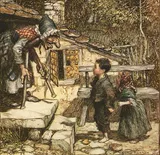
From Hansel and Gretel to foundling hospitals—explore the complex history of child abandonment and why 'unnatural mothers' weren't always villains.
Meet Anita Garibaldi, Clarice Lispector, and three more remarkable Brazilian women who shaped history but remain largely unknown outside Brazil.
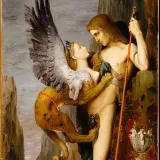
Discover how Freud used Greek myths like Oedipus to unlock the unconscious—and why ancient stories became the foundation of psychoanalysis.
Read Hannah Cullwick's 1863 diary—a Victorian maid-of-all-work reveals the exhausting reality of Christmas below stairs.
From ancient Greece to Victorian Gothic, menstruation and female sexuality were cast as monstrous. How Medusa and the vampire reflect centuries of fear.
Explore cultural history—not just the history of culture, but how people made meaning of their world through symbols, rituals, and everyday life.
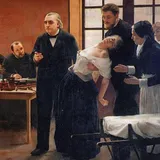
Meet Blanche Wittmann, the 'queen of hysterics' at Charcot's Salpêtrière Hospital, where medical demonstrations became theatrical spectacles.
How Andersen's childhood, class shame, and strict Lutheran faith shaped his darkest fairy tale.
Charlotte Perkins Gilman wrote The Yellow Wallpaper as a response to the rest cure. The real medical context behind one of literature's most unsettling stories.
Discover how Latin American scientists pioneered mosquito transmission theory and disease eradication—decades before European recognition.
Tarsila do Amaral's Abaporu became Brazil's most iconic painting. The story of the Anthropophagic Movement that 'devoured' European art and made it Brazilian.
What can the massacre of cats by eighteenth-century Parisian printing apprentices tell us about how cultural history works? From Robert Darnton to Saidiya Hartman, this is a guide to the field.
From Virginia Woolf's lament to second-wave feminism—discover how gender history emerged to challenge incomplete narratives and rewrite the past.
Explore Brazil's military dictatorship (1964-1985), the story of Eunice Paiva, and the cultural resistance that shaped the film I'm Still Here.
Two Brazilian historians explore Kleber Mendonça Filho's The Secret Agent and Brazil's unfinished reckoning with its military dictatorship.
New articles, videos, and book picks, straight to your inbox.
Monthly. No spam. Unsubscribe anytime.