 Dr Julia Martins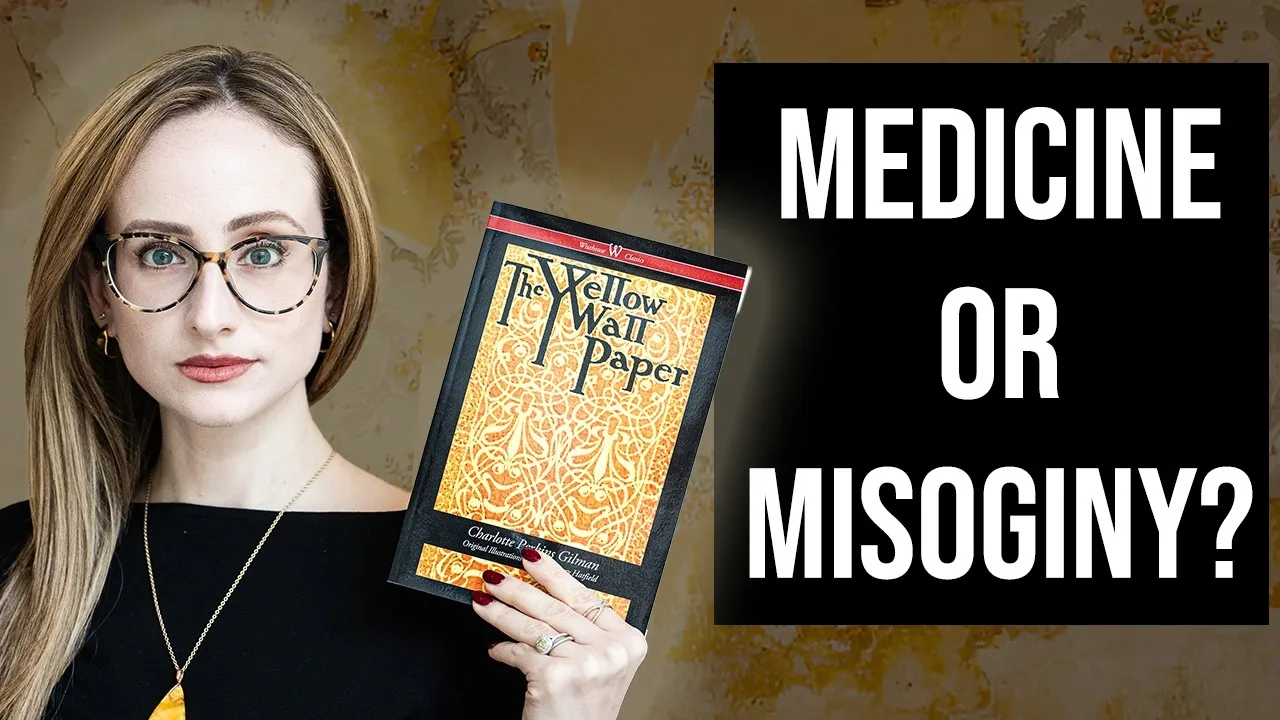
Alone in her sick room in the late 19th century, a woman writes:
I’m sure I never used to be so sensitive. I think it is due to this nervous condition.
— (Charlotte Perkins Gilman, The Yellow Wallpaper, 1892.)
What is going on? Still, she thinks:
I am glad my case is not serious! But these nervous troubles are dreadfully depressing. John does not know how much I really suffer. He knows there is no reason to suffer, and that satisfies him. It is getting to be a great effort for me to think straight. Just this nervous weakness I suppose.
The narrator of this story is being treated by her husband, John, who is a doctor. Victorian medicine had some rather peculiar ideas about women’s mental health. Take, for instance, the notion that intellectual stimulation could damage a woman’s reproductive organs. Or that the ideal treatment for a depressed new mother was to lock her in a room, forbid her from writing or reading, and essentially treat her like a helpless child. Sounds horrifying, doesn’t it?
Yet in the late 19th century, this was cutting-edge medicine. And one real-life woman’s harrowing experience with this “treatment” led her to pen what is now considered one of the most important feminist texts in literature, a chilling story that uses Gothic horror to expose the patriarchal control of women’s minds and bodies.
What happens when medicine becomes a tool for silencing women? What happens when a creative mind is forbidden from creating? And how did a short story about peeling wallpaper become a revolutionary text that continues to resonate with readers more than a century later? Let’s talk about
Part 1: The Woman Behind the Wallpaper
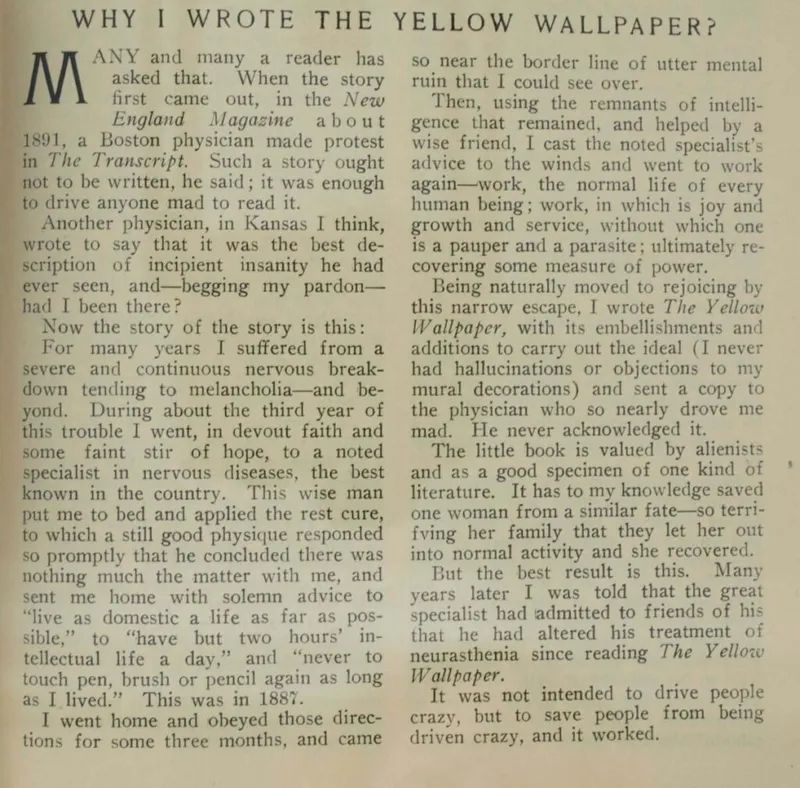
In the mid-1880s, after giving birth to her daughter, Gilman experienced what we would now recognise as severe postpartum depression. In her own words, she suffered from a ‘severe and continuous nervous breakdown tending to melancholia – and beyond’ (Gilman,
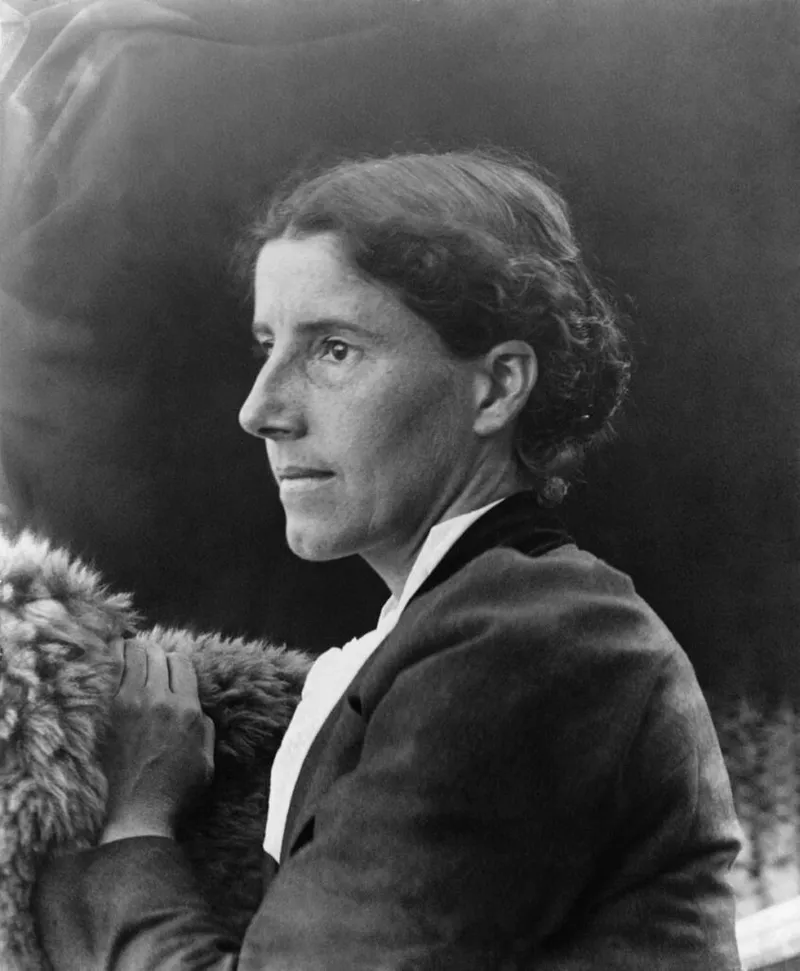
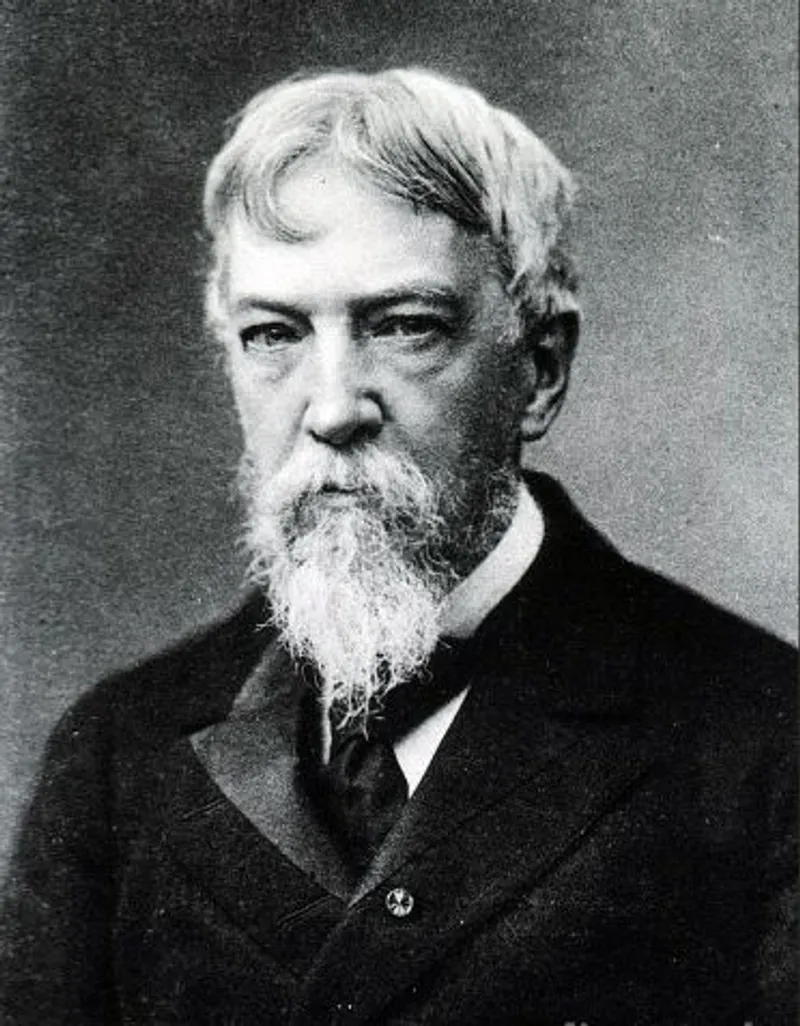
Mitchell’s prescription? The full ‘rest cure’ – a regimen he had developed himself and exported across the Atlantic to eager British physicians. Gilman was, as she later wrote, ‘put to bed, and kept there’, with attendants to feed, bathe, and massage her. Physical nourishment was emphasised while intellectual stimulation was absolutely forbidden.
After a month of this ‘treatment’, Mitchell discharged her with strict instructions:
Live as domestic a life as possible. Have your child with you all the time… Lie down an hour after each meal. Have but two hours’ intellectual life a day. And never touch pen, brush, or pencil as long as you live
— (Mitchell, quoted in Anne Stiles, “The Rest Cure, 1873-1925”).
Never touch pen, brush, or pencil as long as you live! Can you imagine telling Beethoven never to touch a piano again? Or instructing Einstein to avoid mathematics? I mean, really, what medical genius thought that forbidding a writer from writing would improve her mental health? It’s like prescribing starvation as a cure for malnutrition.
Gilman dutifully followed these instructions for three months and later reported that she
came so near the borderline of utter mental ruin that I could see over
— (Gilman, “Why I Wrote The Yellow Wallpaper,” 1913).
Only when she abandoned Mitchell’s regimen and returned to writing did her condition improve. In her own words, she went back to
work, the normal life of every human being; work, in which is joy and growth and service
— (Gilman, “Why I Wrote The Yellow Wallpaper,” 1913).
The story that emerged from this experience was Gilman’s attempt to save others from a similar fate. She even sent a copy to Dr Mitchell himself, hoping he would recognise his misguided approach. While Mitchell never acknowledged receiving the story, Gilman later heard that he had altered his treatment methods – suggesting her literary haunting may have successfully reformed the doctor who had nearly driven her mad.
Part 2: The ‘Rest Cure’
To understand ‘
In the
Physicians on both sides of the Atlantic believed that intellectual strain or independence could destabilise a woman’s mind and reproductive health. American neurologist
Enter Dr
Mitchell’s rationale was that nervous ailments stemmed from depleted ‘nerve force’, and by enforcing absolute rest and nutrition, the body and mind could be replenished. Seems reasonable enough, except for one glaring detail – he applied fundamentally different treatments based on gender. While women were prescribed inactivity and confinement, most men with similar nervous symptoms were encouraged to pursue vigorous outdoor activity in what was sometimes called the ‘West cure’ – essentially, go adventuring to rebuild your nerves. Among the patients Dr Mitchell sent on this treatment of cosplaying a cowboy were the poet Walt Whitman and even the future U.S. President Theodore Roosevelt.
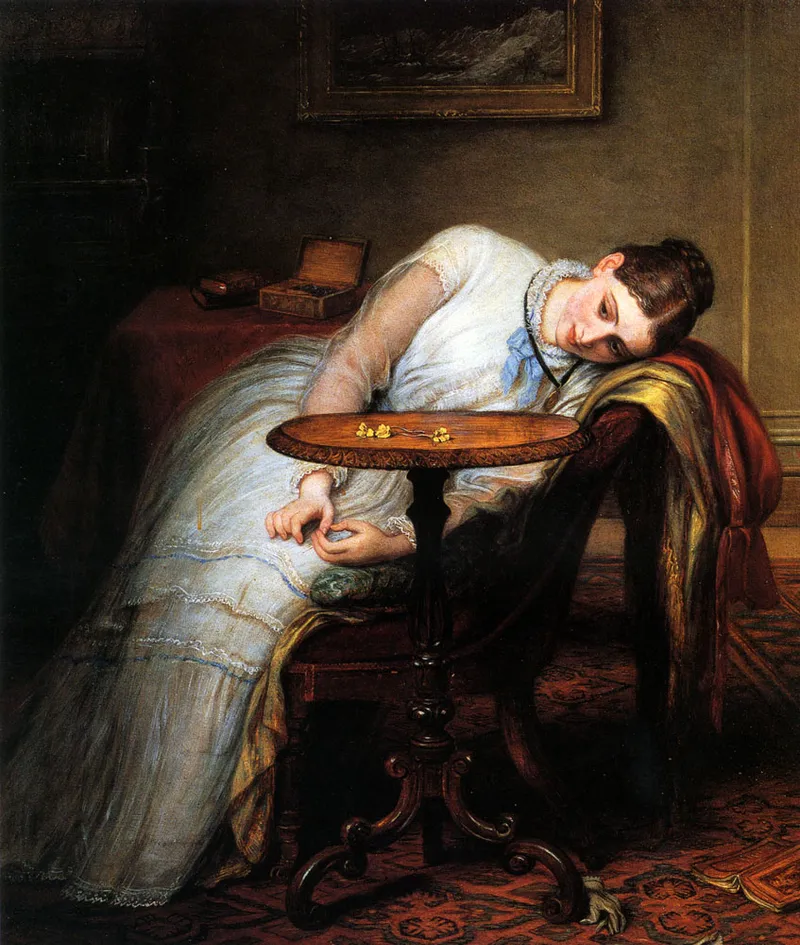
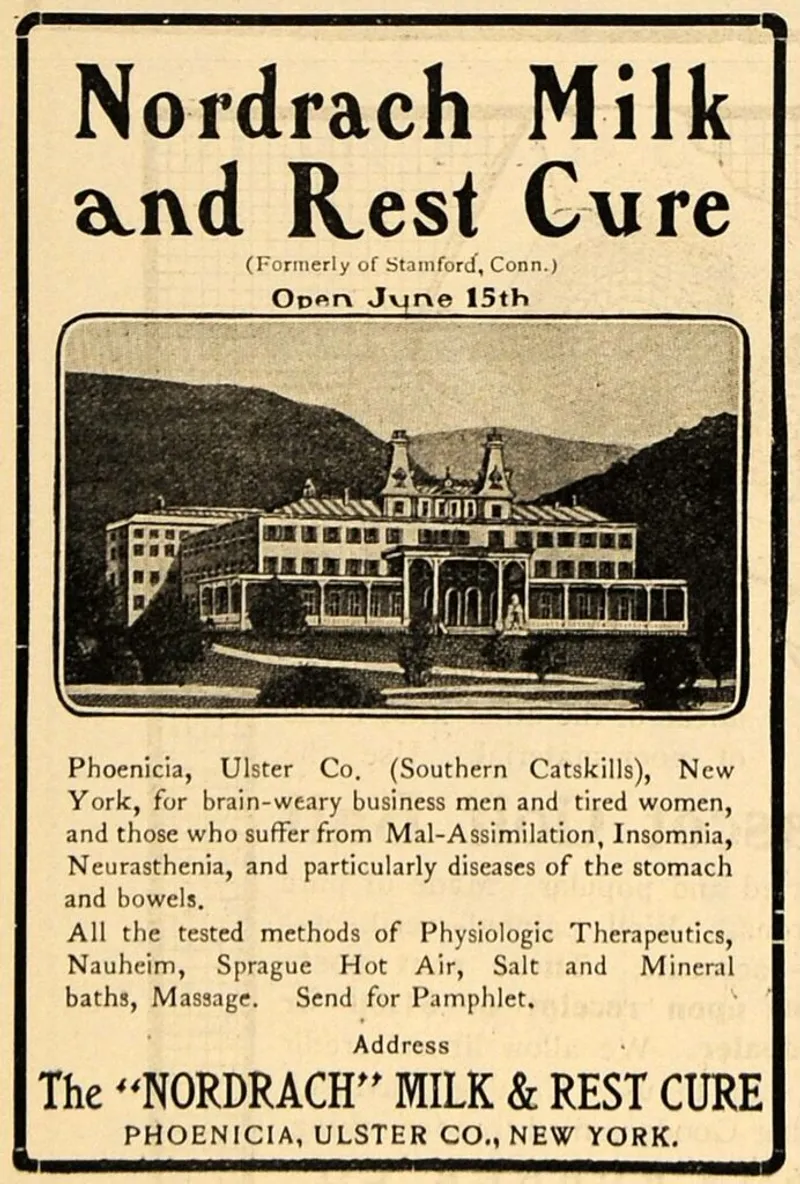
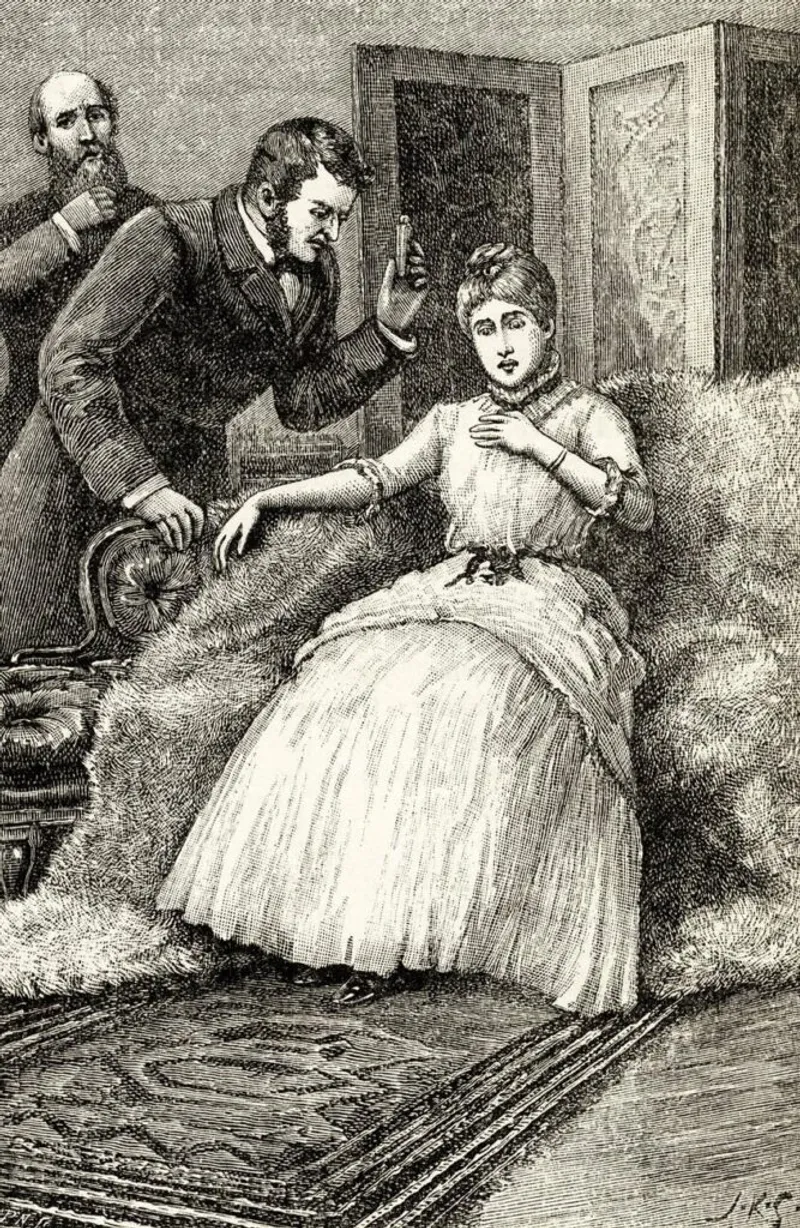
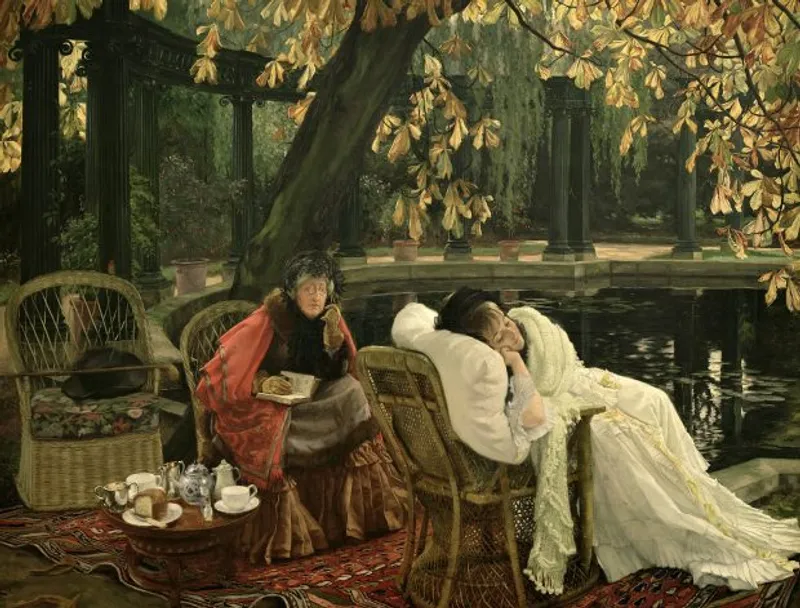
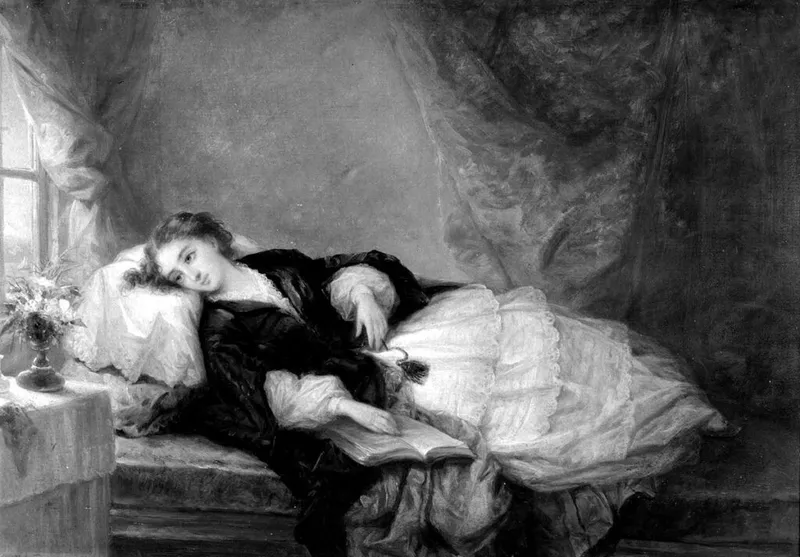
So men got fresh air and adventure; women got locked rooms and force-feeding. I wonder which sounds more appealing? I think we can all agree this double standard seems a tad unfair.
Mitchell’s methods spread to Victorian England in the 1880s, championed by prominent physicians like Dr
Not all patients had negative experiences with the rest cure. American writer
In England,
Perhaps most tragic was the case of
These cases highlight the fundamental problem with the rest cure: it dismissed women’s self-reported symptoms and treated their intellectual and creative needs as pathological rather than essential. Fortunately, by the early 20th century, the rest cure’s popularity waned as Freudian psychoanalysis and more nuanced psychiatric therapies emerged.
Part 3: ‘The Yellow Wallpaper’: Madness as Metaphor
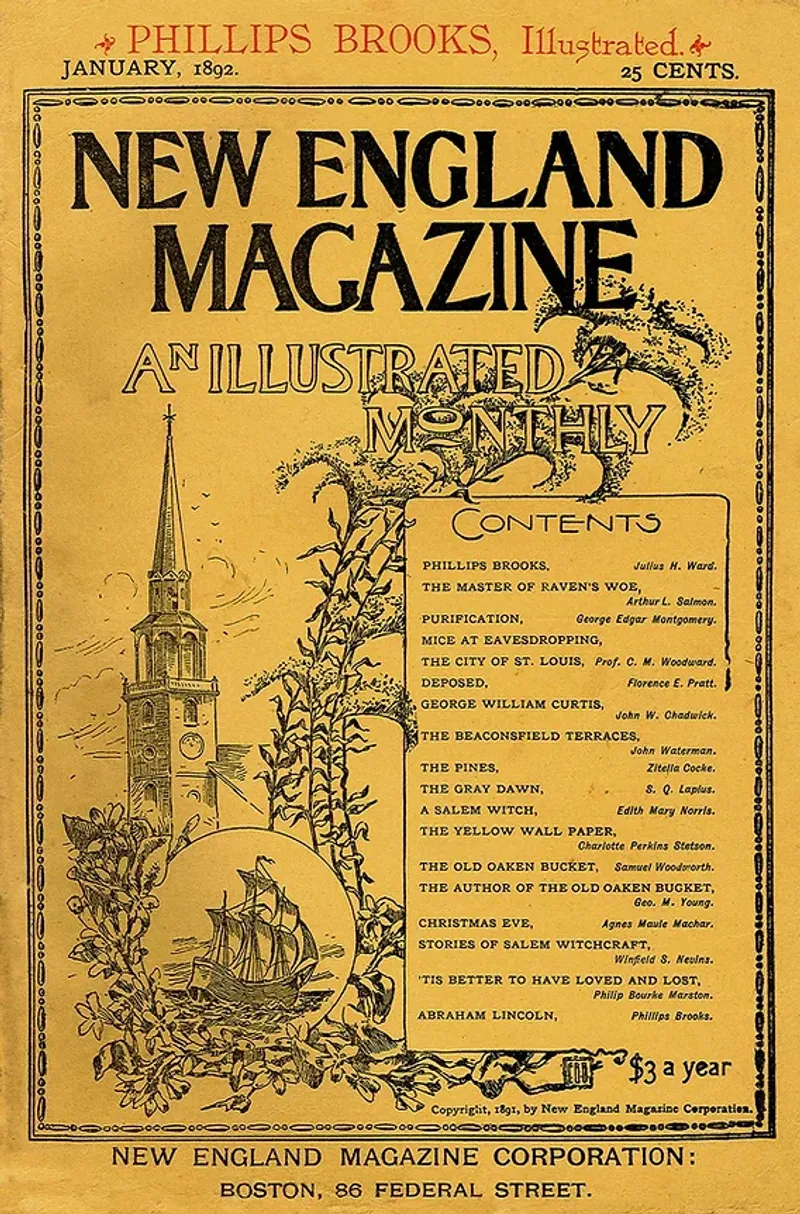
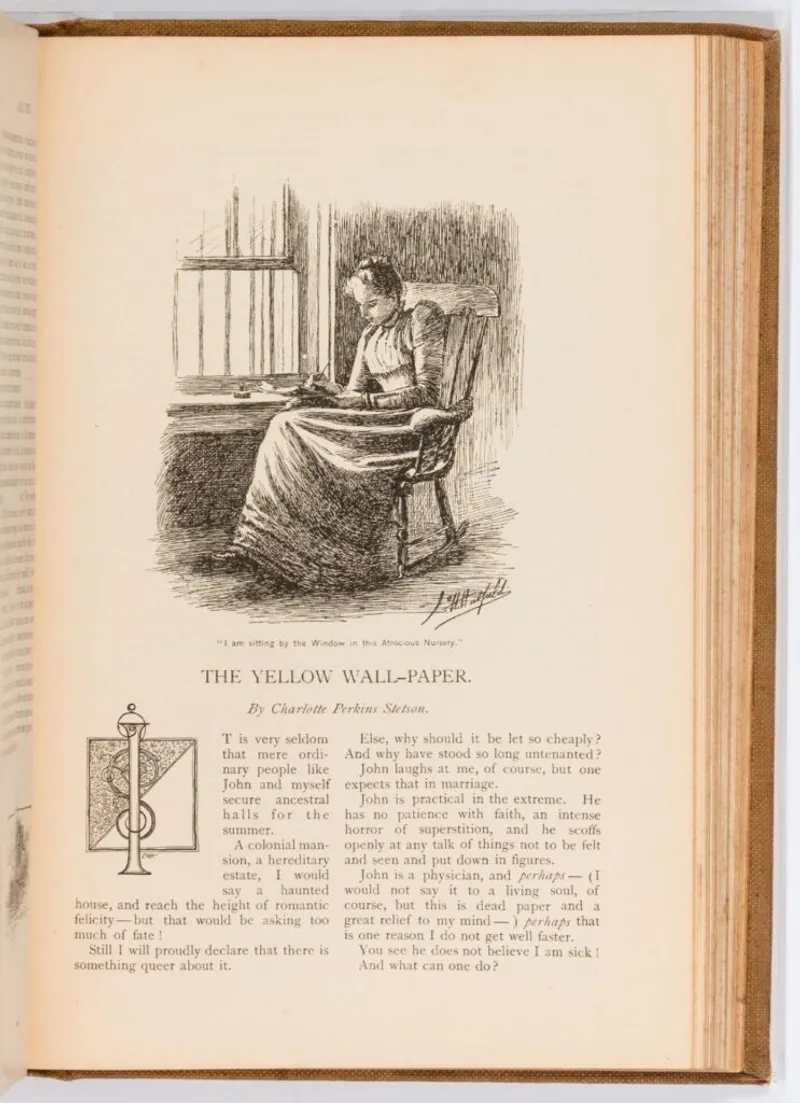
Published in The New England Magazine in January 1892, ‘
If a physician of high standing, and one’s own husband, assures friends and relatives that there is really nothing the matter with one but temporary nervous depression—a slight hysterical tendency—what is one to do?… So I take phosphates or phosphites – whichever it is, and tonics, and journeys, and air, and exercise, and am absolutely forbidden to “work” until I am well again. Personally, I disagree with their ideas…
Forbidden from working or writing and isolated in the room, the narrator becomes obsessed with the room’s peeling yellow wallpaper.
At first, this is how she describes it:
I never saw a worse paper in my life. One of those sprawling flamboyant patterns committing every artistic sin.
The paper is an unsettling sight:
It is dull enough to confuse the eye in following, pronounced enough to constantly irritate and provoke study, and when you follow the lame uncertain curves for a little distance they suddenly commit suicide—plunge off at outrageous angles, destroy themselves in unheard of contradictions.
It is the strangest yellow, that wallpaper! It makes me think of all the yellow things I ever saw – not beautiful ones like buttercups, but old foul, bad yellow things.
The color is repellant, almost revolting; a smouldering unclean yellow, strangely faded by the slow-turning sunlight.
Over the course of the summer, she descends into what we would today understand as psychosis, imagining a woman trapped behind the wallpaper’s pattern and eventually identifying with her. This descent into madness echoes the fears surrounding the wandering womb, which was believed to cause hysteria and psychological disturbance. She thinks:
I really have discovered something at last. Through watching so much at night, when it changes so, I have finally found out. The front pattern does move – and no wonder! The woman behind shakes it! Sometimes I think there are a great many women behind, and sometimes only one, and she crawls around fast, and her crawling shakes it all over. Then in the very bright spots she keeps still, and in the very shady spots she just takes hold of the bars and shakes them hard. And she is all the time trying to climb through. But nobody could climb through that pattern – it strangles so…
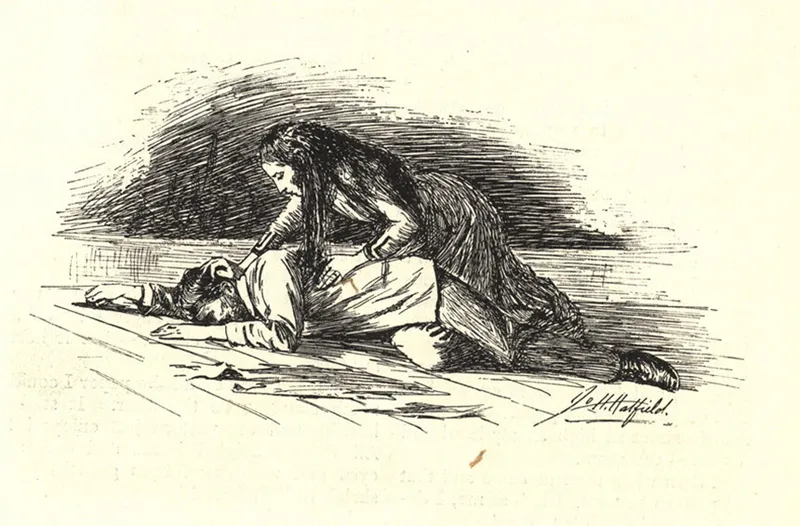
The story’s climax comes when the narrator, in a frenzied state, tears down the wallpaper to ‘free’ the imaginary woman within, and crawls over her husband’s fainted body.
On the surface, it’s a Gothic tale of psychological horror, but Gilman uses it to critique the patriarchal norms of her era. The narrator’s husband, John, embodies the paternalistic medical establishment – he patronises her, calls her a ‘little girl’, laughs at her fears, and silences her voice, all under the guise of ‘helping’ her. She thinks:
It is so hard to talk with John about my case, because he is so wise, and because he loves me so.
He is very careful and loving, and hardly lets me stir without special direction. I have a schedule prescription for each hour in the day; he takes all care from me, and so I feel basely ungrateful not to value it more.
John’s bedside manner is a masterclass in what we might call ‘therapeutic condescension.’ The way he dismisses her concerns reminds me of those people who respond to complex emotions with ‘Have you tried not thinking about it?’ or ‘Just think positive thoughts!’ Some things, it seems, haven’t changed much in 130 years.
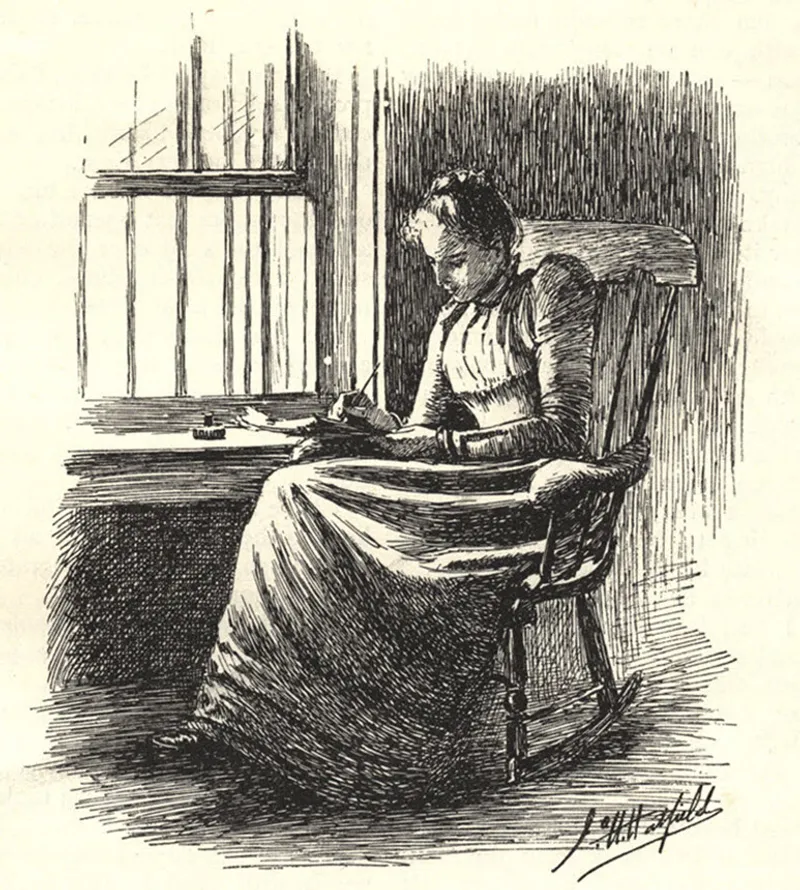
It’s worth noting that the narrator’s ideas for her own recovery – like engaging in activity or socialising – are repeatedly dismissed by her husband/doctor as irrational. I find this particularly revealing: the patient intuitively knows what would help her, but the male authority figure overrules her self-knowledge. It’s a perfect encapsulation of how women’s voices were silenced in both marriage and medicine.
The barred windows and locked room physically manifest the domestic prison many women experienced. The creeping figure behind the wallpaper represents the narrator’s trapped self, struggling to escape patriarchal confines. When she finally tears down the wallpaper and “frees” the woman within, she’s symbolically rejecting the constraints placed upon her, though arguably at the cost of her sanity. ‘I’ve got out at last’, she says to herself, in spite of her husband. ‘And I’ve pulled off most of the paper, so you can’t put me back!’
The symbolism here isn’t exactly subtle, is it? Gilman’s narrative style was innovative for its time. In some ways, the intense, subjective voice and interiority anticipated the stream-of-consciousness techniques of later modernist writers. The creeping pace of the narrative and the rich symbolism create an atmosphere of claustrophobic dread.
One aspect that always strikes me when reading this text is how the narrator’s writing – the very journal we’re reading – is itself an act of rebellion. She writes ‘in spite of them’ and must hide her journal when she hears someone coming. The text we hold in our hands is the evidence of her resistance to medical authority, even as that authority crushes her mind.
Part 4: From Horror Story to Feminist Classic
When ‘
On the other hand, some in the medical community appreciated Gilman’s realistic portrayal of a mental breakdown. One physician wrote to Gilman that it was ‘the best description of incipient insanity’ he had ever seen and inquired whether she had experienced it personally. Despite these comments, the story did not spark a public debate on women’s mental health when it first appeared. It was read as a chilling curio and then largely forgotten in literary circles for many decades.
Isn’t it fascinating how literature works? Gilman writes what’s essentially a medical horror story based on her own trauma, and doctors read it thinking, ‘Hmm, excellent description of madness, jolly good!’ missing entirely that the treatment itself was the villain. The story’s real cultural impact came much later. By the mid-20th century, attitudes had shifted. In the 1930s and 1940s, the story appeared in a few anthologies, but it wasn’t until the 1970s – amid the rise of second-wave feminism – that ‘
The Feminist Press reprinted the story in 1973 with an afterword by scholar Elaine Hedges, explicitly framing it as an essential work of women’s literature. From that point on, interpretation of the story became far more nuanced and politicised. Readers and critics began to see Gilman’s intent: the story was not just Gothic fiction but a searing critique of how society and medicine infantilised and disempowered women.
Since then, ‘
Part 5: Contemporary Echoes
The themes of ‘
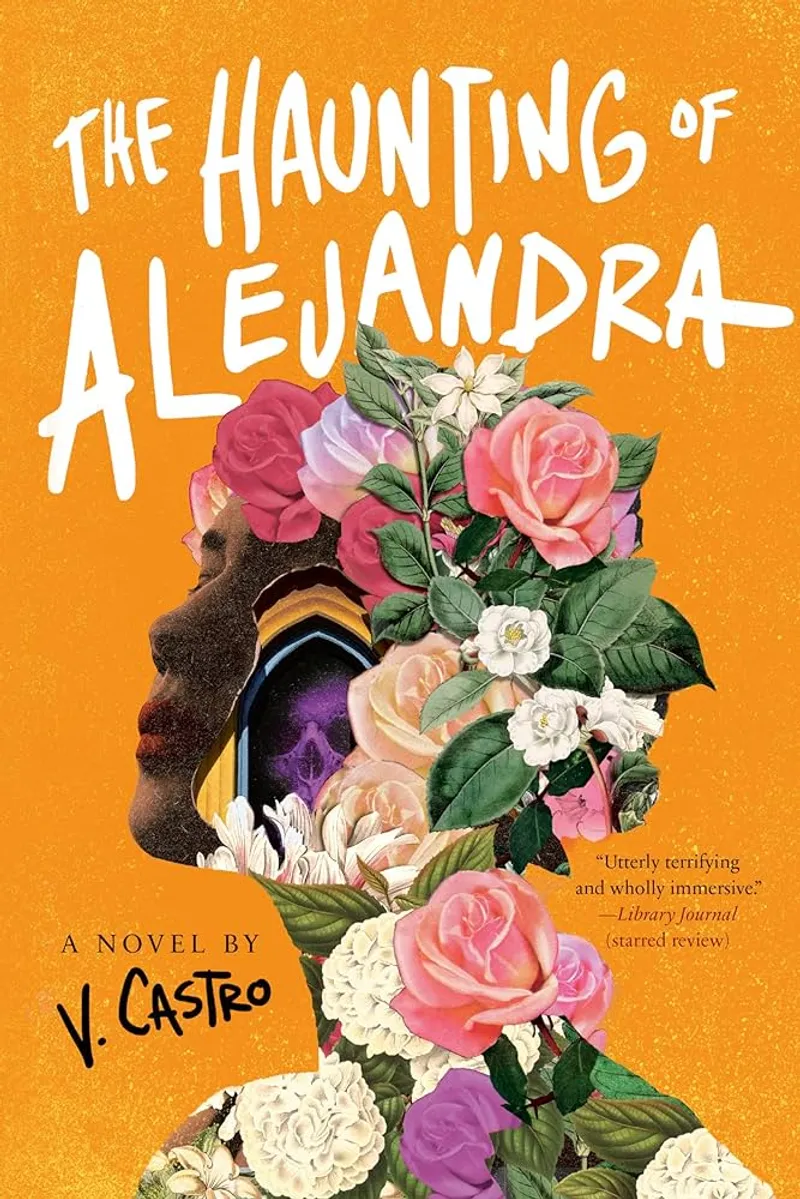
Castro’s novel puts a Mexican-American cultural twist on the template. Alejandra, a mother of three, feels consumed by depression and lost identity after years as an unhappy housewife. She is haunted by La Llorona, the ghostly ‘Weeping Woman’ of Mexican folklore who is said to prey on mothers. This specter whispers dark, intrusive thoughts to Alejandra – essentially echoing her own depressive and suicidal ideation. Much like Gilman’s narrator, Alejandra is initially bound by her domestic role and an unsympathetic husband, and her mental anguish takes the form of a haunting figure only she can see. However, Castro’s story diverges by offering a path to empowerment: Alejandra seeks help from a curandera (a traditional healer) who is also a therapist specialising in generational trauma.
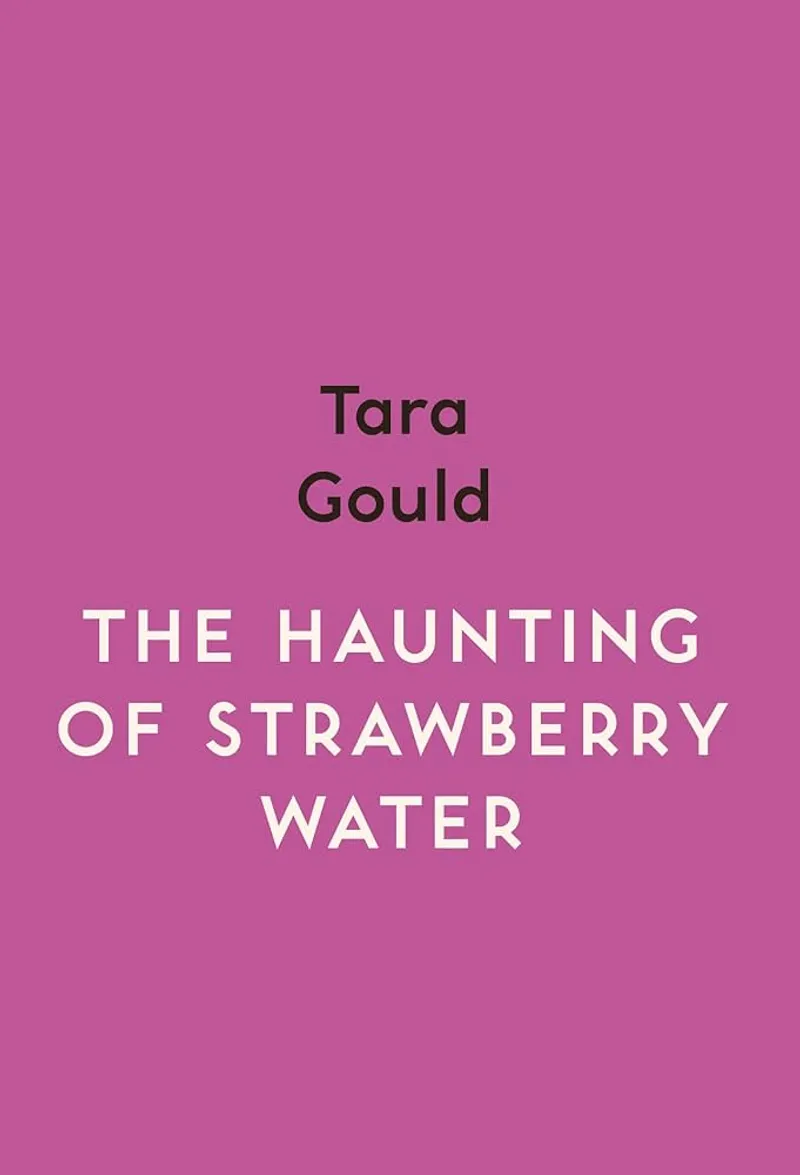
As for Gould’s ‘The Haunting of Strawberry Water’, it is explicitly influenced by ‘
Gould was inspired by her own experience of postnatal depression and the recognition that even today, ‘all too often women are not given enough support during… the immense shock of childbirth’, leading to a silence around their true feelings. This directly channels Gilman’s critique into a modern setting—despite a century of medical progress, new mothers still sometimes find their voices ignored and their distress overlooked.
Both these contemporary works carry forward the legacy of ‘
Conclusion
When
Gilman’s story reminds us that sometimes the most powerful social criticism comes not in the form of political treatises or direct arguments, but through narrative and metaphor. By inviting readers into the deteriorating mind of her narrator, she makes us feel the horror of having one’s voice, creativity, and autonomy systematically stripped away.
Today, while the ‘rest cure’ has been consigned to the dustbin of medical history, many of the attitudes that enabled it persist. Women’s pain and mental health concerns are still frequently dismissed or minimised in medical settings. Mothers experiencing postpartum depression still face expectations to be blissfully happy with their new role. And creative expression is still sometimes viewed as a luxury rather than a necessity for mental wellbeing. This leads us to a question worth contemplating: what ‘yellow wallpapers’ exist in our own society? What patterns of control and dismissal might future generations look back on with horror, wondering how we could have been so blind?
References:
V. Castro, The Haunting of Alejandra (2023).
Elinor Cleghorn, Unwell Women (2021).
Charlotte Perkins Gilman, The Yellow Wallpaper (1892).
_____, ‘Why I wrote The Yellow Wallpaper’, 1913.
Tara Gould, The Haunting of Strawberry Water (2020).
Asti Hustvedt, Medical Muses: Hysteria in Nineteenth-Century Paris (London, 2011).
Hilary Marland, Dangerous Motherhood: Insanity and Childbirth in Victorian Britain (2004).
Anne Stiles, ‘Go rest, young man’, Monitor on Psychology 43(1), 2012.