 Dr Julia Martins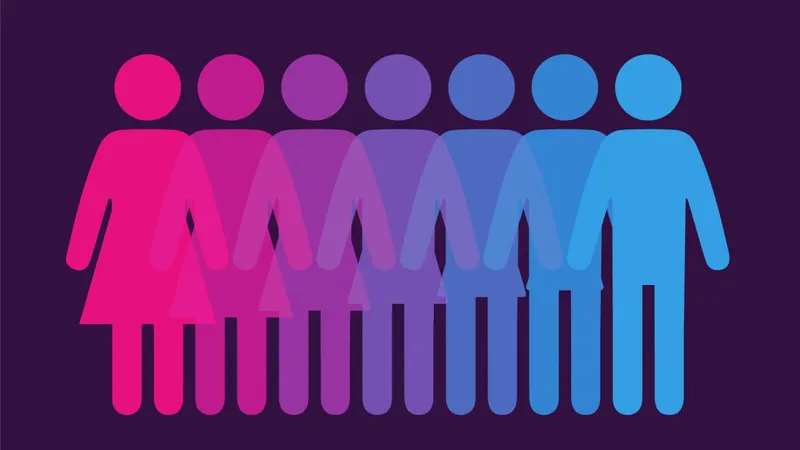
In the 1920s,
In the 1960s, however, a combination of
![Emmeline Pethwick-Lawrence and Emmeline Pankhurst at a Suffragette meeting in Caxton Hall, Manchester (c.1908). [Wikicommons]](/_astro/inline-1.BIIhjYzf_Z1YsL0z.webp)
This questioning of how we conceptualise history was inevitable, as feminist scholars did not want ‘women’s history’ to simply be an additional field of study. Instead, this field would profoundly change how we think of historical narratives in general. To integrate new voices and perspectives, historians’ analytical structures and tools themselves had to be rethought. History was already going through many internal changes as a discipline (as I explain in What is Cultural History?). Heavily influenced by anthropology, historians considered new objects of study, such as lower classes, often excluded from the historical narrative. Women were a great example of the ones left behind in the study of history.
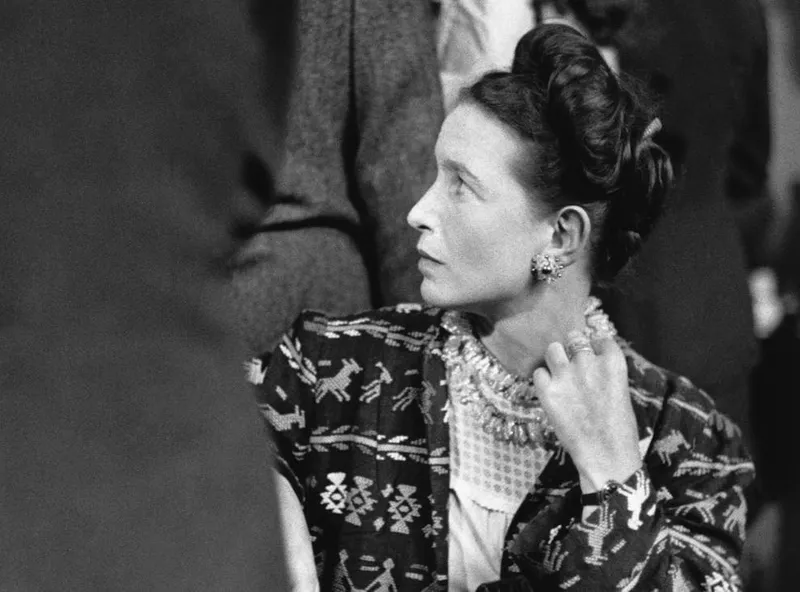
By thinking of womanhood and the role women played in the past, historians questioned categories, influenced by earlier philosophy, such as
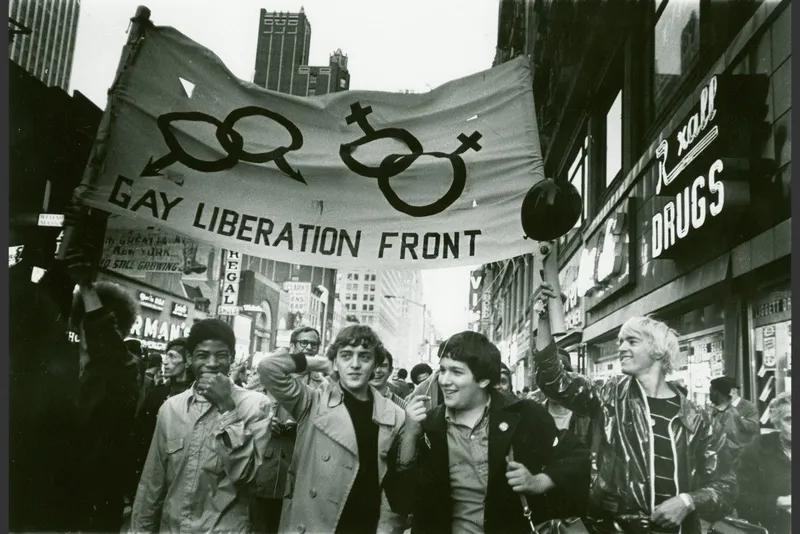
Furthermore, with the Stonewall Riots in 1969, and especially with the AIDS epidemic in the 1980s, the fight for gay rights gained momentum and became part of the mainstream. Queer studies progressively gained space in universities, combining academic and political goals, as women’s studies had earlier. At the same time, feminist historians who had established these ‘women’s studies’ courses in academia gradually realised that their aims to change the way we conceptualise history had not been fully realised. ‘Women’s history’ was still a sub-field of history, apart from the more traditional, male-dominated ways of writing history.
However, the move from ‘women’s history’ to a broader ‘
(There is an interesting parallel with how feminists are divided today where trans rights are concerned. Some feminists believe we should fully embrace trans liberation and include all LGBT+ minorities in the feminist project. In contrast, others fear the ‘erasure’ of women and the loss of rights feminists have fought so hard to gain. I believe that feminism and true equality should benefit all of us: that is why inclusive and intersectional feminism seems to me the only way forward.)
In any case, ‘
Finally, this shift towards inclusiveness gave the study of gender more impact in academia. By leaving the ‘intellectual ghetto’ of women’s studies, historians of gender were able to influence historical narratives more deeply. Historians of any subject would have to consider the gendered construction of their objects of study – whether they were military, political, or artistic. As cultural history gained popularity, historians also started to confront the tensions between social reality and representation in the past. The idea of socially constructed categories exemplified by sex/gender became a prime example of how to balance this tension. So, as cultural history gained prominence, it did so arguably using many of the theoretical and methodological frameworks created and developed by feminist scholars. The same could be said about poststructuralism.
In a way, then, we could argue that feminist historians’ political and intellectual goals were reached as the field itself became broader to other perspectives. Outside of academia, there are also many feminisms today. But maybe we can learn something from the internal changes history underwent in the last decades. An inclusive kind of feminism might be able to impact our society deeper than a narrower one. Plus, it is a more empathetic way of understanding the human experience.