Brazilian cinema is having a moment, and I’m here for it! Brazilian cinema is incredible, and it’s so wonderful to see it being recognised internationally. Wagner Moura recently won a Golden Globe for his incredible work on The Secret Agent (O Agente Secreto), directed by Kleber Mendonça Filho, and he said in his speech how, for Brazilians, the dictatorship is still an open wound, and that we need to keep talking about it. I couldn’t agree more.
Wagner Moura delivers his acceptance speech after winning a Golden Globe for his role in The Secret Agent.
So, let’s do it. What are my qualifications, you might be wondering? Well, I’m a historian, I’m Brazilian, and I love cinema. And for this article, I’m collaborating with Heloisa Matias, a fellow Brazilian historian who worked in the Brazilian National Truth Commission, which investigated human rights abuses during the military dictatorship. We talked a lot about this film and what it means for the way we understand history, and hopefully this article will give you some context to understand The Secret Agent - especially if you’re not Brazilian. We tried to avoid spoilers as much as we can, but if you’d like to be completely surprised by the film, maybe go watch it first and then come back to this text! Ok, let’s get into it.
The theatrical release poster for Kleber Mendonça Filho’s film The Secret Agent (O Agente Secreto).Director Kleber Mendonça Filho, whose film explores the atmosphere of 1970s Recife during the military dictatorship.
Setting the Scene: Tropical Noir?
When historians speak of archives, we imagine the smell of old paper, the bureaucratic stamp of a government censor in the corner of a page, or the endless corridors of the archives, where the air conditioning is always set slightly too cold. Or at least, I do. These are the places where the official memory of a nation is stored, catalogued, and (sometimes) sanitised. But archives are never neutral: they are a collection of what survived - what was allowed to survive - and the stories we can try to reconstruct.
In his latest film, The Secret Agent (O Agente Secreto), director Kleber Mendonça Filho attempts to construct a different kind of archive, and to rethink how we understand memory. The Secret Agent follows a widowed ex-professor who is fleeing political persecution in the Northeast of Brazil in 1977, as well as a history student in the present who is researching the networks he was involved in and trying to reconstruct his story through the archives. The film stars Wagner Moura, and offers a different narrative to the one I discussed in last year’s video about Walter Salles’ I’m Still Here. While Salles gave us the suffocating silence of the domestic sphere, Mendonça Filho gives us the noise, the paranoia, and the sun-drenched claustrophobia of the street. It is a film that argues history is written not just in laws and treaties, but in the nervous systems of the people who survived it.
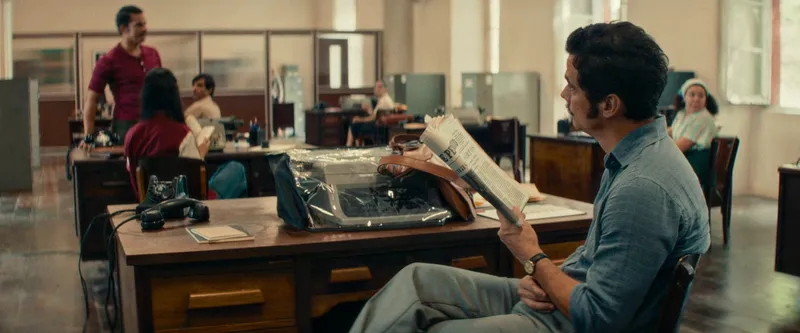
Wagner Moura stars as Armando, a man fleeing political persecution in the Northeast of Brazil in 1977.Armando (Wagner Moura) works at a government documentation center where he hides under a false identity.
Archives and the making of memory are crucial in this film, which forces us to confront what and who are left out of the story. Armando, the main character, is hiding, working under a false name at a government facility, where people go to have their identity cards made and where personal documents are stored. This is relevant, because he is using the time he is there to try to find out about his own mother, who he had never met, and who was mostly known as “India”, meaning indigenous woman. It is implied that she had been a semi-enslaved domestic worker who had been abused by her white employer, and that pregnancy had resulted in Armando. He knows nothing of her, she is absent from the archives and the story – but through her absence, the film forces us to think of Brazil’s history of abuse and erasure, especially towards women of colour.
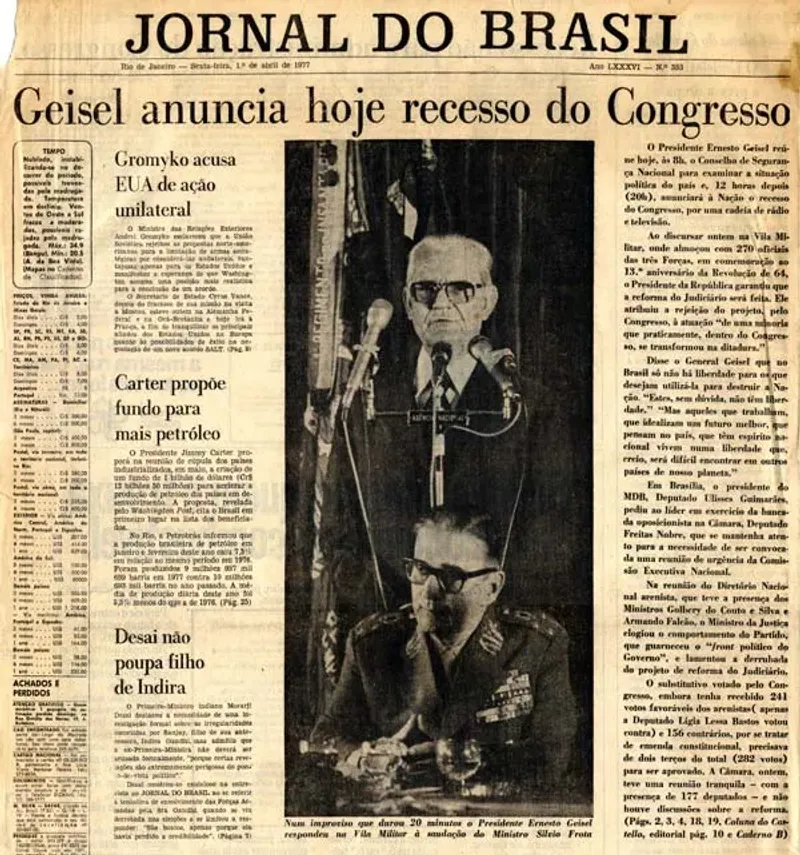
To understand why this film feels the way it does, we must first look closely at the date. For a general audience, the Brazilian military dictatorship (1964–1985) is often viewed as a monolithic block of repression. In reality, it had distinct seasons. By 1977, the regime led by President Ernesto Geisel had announced a policy of abertura - a “slow, gradual, and secure” opening towards democracy. This creates a complex and contradictory context which the film captures brilliantly. The horrific torture of the Medici years (the early 1970s) was becoming less visible, yet the apparatus of state surveillance remained entirely intact. It was a time of confusion. The regime was supposedly loosening its grip on society, yet in April 1977, Geisel temporarily closed Congress and issued the “April Package” (Pacote de Abril), a set of constitutional amendments designed to keep the opposition paralysed. This is important. It explains why a character like Marcelo feels so lost. He is not running from a coup, which is a sudden event; he is running from a corrupt system that shifts its shape constantly. And, crucially, he is not exactly being hunted by the government, but rather by an important businessman who has ties with the government. This is an important aspect of the dictatorship in Brazil that is sometimes left out of the narrative: the deep involvement of companies with it, and how economic and political interests intertwined. There are multiple examples of corruption throughout, at all levels, and everywhere.
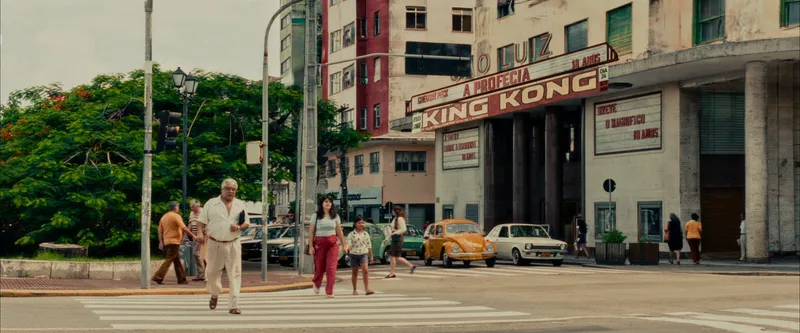
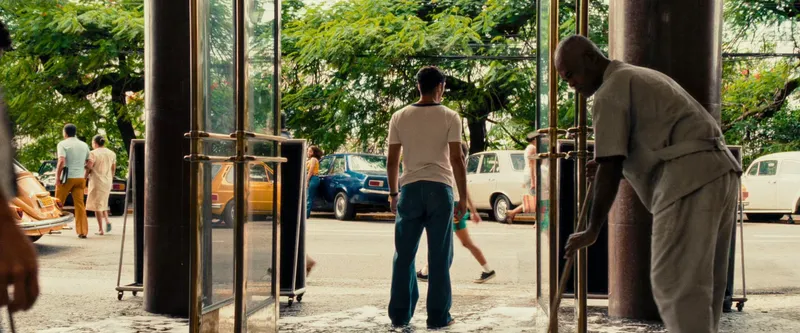
Kleber Mendonça Filho is a filmmaker deeply interested in space and architecture. But, while we usually associate the aesthetics of the dictatorship with the grey, brutalist ministries of Brasília or the dark, windowless interiors of police stations and the DOPS (the “Department of Political and Social Order”), The Secret Agent subverts this completely. This is a film set in the sun of the Northeast, with the vibrant colours of Carnival, and the humid, sticky heat of the coast. But it’s still a threatening atmosphere. In The Secret Agent, Kleber Mendonça turns the city of Recife into an accomplice.
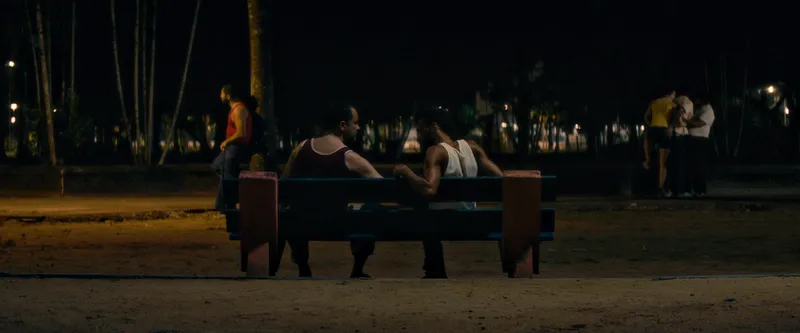
A street scene featuring the historic Cinema São Luiz in Recife, setting the stage for the film’s “tropical noir” atmosphere.The film utilizes the architecture of Recife to create a sense of sun-drenched claustrophobia and paranoia.A tense nocturnal meeting in a public square captures the pervasive surveillance of the dictatorship era.
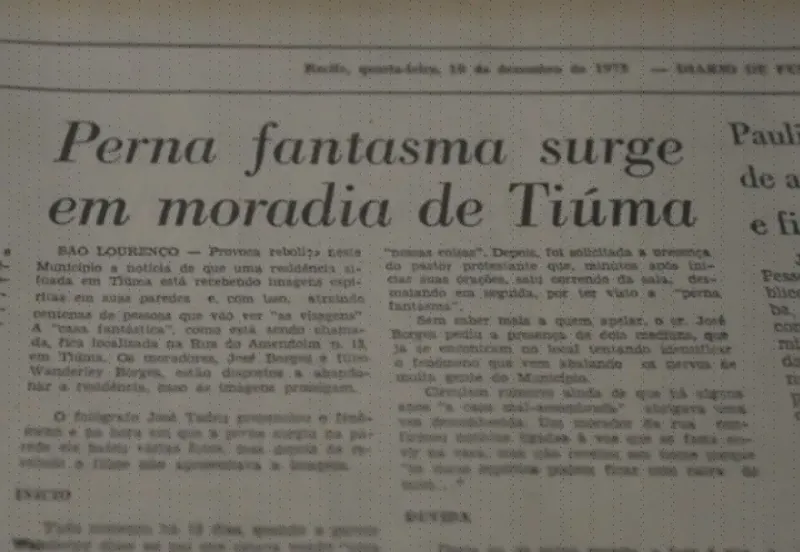
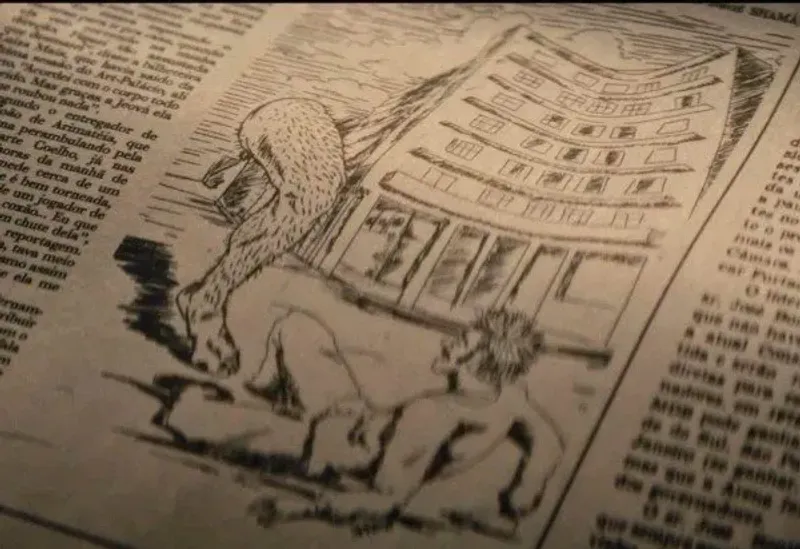
Also – and this was something that many Brazilians were talking about, especially people who are not from the area where the film is set – there is a surreal aspect to the film. There was an urban legend in the 70s that a “hairy leg” with supernatural strength would roam around the city, mysteriously attacking people. If you’re not Brazilian and you watched this and thought “what is going on?!” – rest assured that many of us in Brazil were, too. And this is another reason why this film is so important, and why we need more stories from different perspectives. The story of the “hairy leg” quickly spread, and the press ran with it, probably to talk about the violence that was happening while avoiding censorship. The bizarre story spread and became part of local folklore. It has been interpreted as a metaphor for repression and institutional violence during the military dictatorship.
A newspaper clipping reports on the “Hairy Leg” (A Perna Cabeluda), a bizarre urban legend that gripped Recife in the 1970s.An illustration depicts the “Hairy Leg” folklore, which some interpret as a metaphor for the inexplicable violence of the regime.
The Dictatorship and the Law
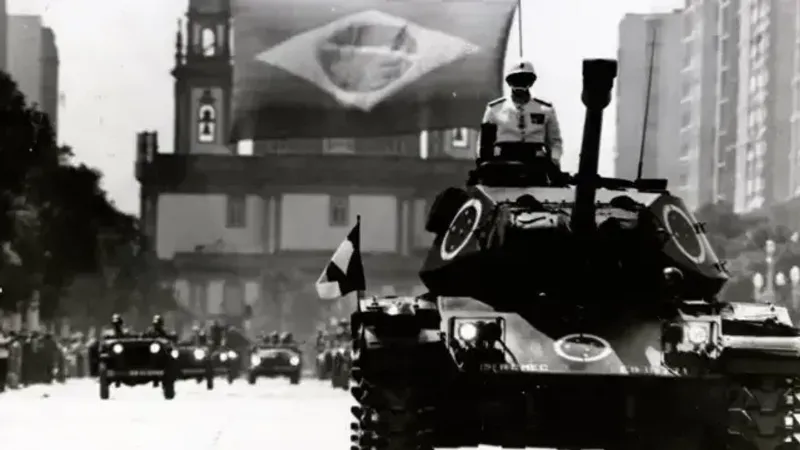
It’s important to highlight how the dictatorships in 1960s Latin America valued the pretence of rule of law and democracy. Right after taking power the Brazilian military wanted to legitimise their actions and issued the Normative Acts of the Revolution (Atos Normativos da Revolução). This was the first of seventeen documents, subsequently called “Institucional Acts” (Atos Institucionais) that versed on several points, from civil rights and elections to student unions and everything that seemed relevant for them to contain a supposedly subversive movement that existed in Brazil. A new written Constitution was issued in January 1967, but it was completely changed by the most famous of these normatives acts, known simply as AI-5, published in December 1968. The AI-5 actually revoked civil rights, and its main effect was giving the State power to simply take people to detention centres and basically torture and kill them. And from 1968 and 1974, people did disappear, but they also resisted, creating clandestine organisations, working in student unions, creating clandestine newspapers, moving abroad and creating networks for helping people find their loved ones, and trying to survive the worst of the Years of Lead, as these became known.
Military tanks patrol the streets of a Brazilian city during the height of the military dictatorship.
By the time Ernesto Geisel came to power, in 1974, the military had spent a lot of time and resources on fighting organisations that they saw as threatening but also reorganising the political landscape and creating alliances that would help them to leave power without suffering any consequences. By 1977 there were legally only two political parties, the government party (named ARENA - Aliança Renovadora Nacional) and the opposition MDB, (Movimento Democrático Brasileiro) that was gaining traction and threatened the military by hastening the end of the regime, so they evoked the AI-5 and closed Congress. After months of threatening, Congress was reopened and after a few months, the Amnesty Law started to be discussed. The law was passed and offered amnesty to all the military personnel that were involved in kidnapping, torturing and killing the citizens that they were supposed to protect, and the “subversives”, the members of the clandestine organisations that took arms (and in most cases, pen and paper) to fight against the dictatorship. Most of the people who took part in clandestine organisations were in their 20s and 30s, without proper training in most cases, and like Marcelo/Armando, surviving on day to day small jobs because they were in hiding, having to use fake identities, people who clearly were not in a position to fight eye to eye with a government that was completely fitted to destroy them. These organisations were vital in the sense of showing the general public the brutality of the regime and that there were people with courage enough to rise against these powerful men that took the government by assault and used institutions to commit crimes. Not a single state agent was arrested or charged for their crimes and only a few of them were even pointed as responsible for human rights violations, while over 400 people have been killed or disappeared, and countless people were arrested and harassed by the state, so how is this fair?
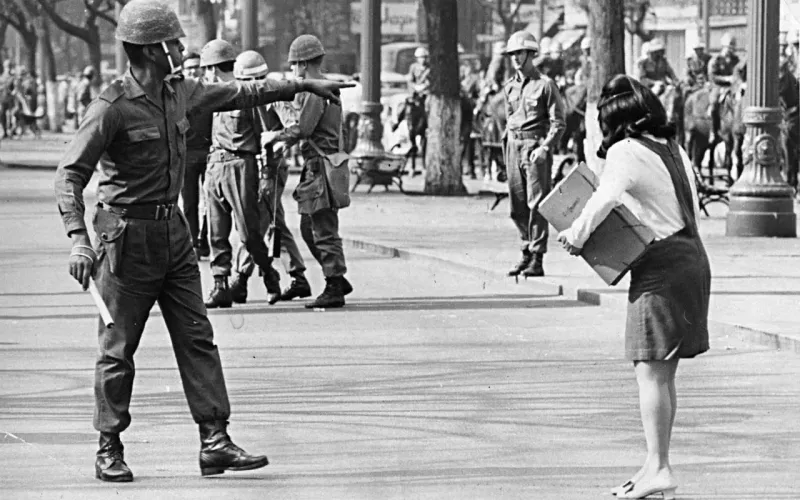
A Jornal do Brasil cover from April 1977 announces President Geisel’s decision to close Congress. (Image credit: Jornal do Brasil)A university student confronts a military policeman during a protest against the dictatorship. (Image credit: Arquivo Nacional)
The National Truth Commission
In 1984, a few months before the end of the dictatorship, the Archbishop of São Paulo published the first book denouncing the torture, kidnappings and persecution during the dictatorship, inspired and titled in honour of the Nunca Mas Comissions in Argentina, that were by then arresting military personnel for their crimes. Ten years later, in 1995, the Law No. 9.410, known as Law of the Disappeared (Lei do Desaparecido Político), allowed for the creation of a Special Commission on Political Deaths and Disappearances (the CEMDP), under responsibility of the Ministry of Justice, recognising and listing the people who are missing, allowing their families to have access to a death certificate so legal matters (as selling property, registering children and other rights) can be taken care of. This law also marks the first time the State recognised their responsibility for the illegal acts that were committed during the dictatorship. But still, no formal steps were taken to revoke the Amnesty Law and formally recognise the armed forces members involved in the crimes perpetrated during these years.
In 2011, after decades of discussions, the Brazilian Government officially announced the formal creation of a National Truth Commission (Comissão Nacional da Verdade), which started its work in 2012, to discuss the violation of human rights between 1946 and 1988 (promulgation of the current constitution). This Commission was composed of seven members and fourteen additional employees, and all over the country other commissions were created to investigate happenings in several states of Brazil, many major cities (including Recife) and federal universities, and all these findings helped the National Commission’s work. Because of the Amnesty Law, it is impossible to actually formally prosecute any of the armed forces members, but the main goal of the Commission was to understand the violations of human rights, the network of spying and persecution created by the National System of Information between 1964-1985, collect oral and written evidence to identify the people responsible for financing the dictatorship and those responsible for the many horrible crimes committed against Brazilian citizens and listing actions that could be taken by the government to strengthen the protection of human rights in the country. Even though the men responsible for the terror of those 21 years can’t be formally arrested, even if the armed forces continue to protect them, the Brazilian people now know that some of them are still alive and we can still hope that someday the law will be overturned and these old men will finally be held accountable for their doings.
It was incredibly moving to see the then President of Brazil, Dilma Rousseff, herself arrested and tortured as a young woman, receive the final paper containing the findings of the commission and see the names of her torturers there. I’ll never forget that moment, especially because I had the honour of working at the truth commission installed at the Federal University of São Paulo, where I got my BA in History, collaborating with the commission of their findings about repression in universities. This period in Brazilian History is still so present, with many people looking for clues about what happened to their loved ones, people passing by streets named after their torturers and brutality and corruption still present in the armed forces. This is why movies as The Secret Agent are so important: they ask us to think about what kind of country we want to be while highlighting the dangers of not looking at our past.
President Dilma Rousseff, a survivor of dictatorship-era torture, receives the final report from the National Truth Commission in 2014. (Image credit: Agência Brasil)
Final Thoughts
Why are we seeing these films now, in the mid-2020s? It is impossible to disconnect The Secret Agent from the current political reality of Brazil. The “Secret Agent” of the title could be a literal character, sure, but it also suggests the lingering, invisible presence of authoritarianism in Brazilian society. Brazil remains an outlier in South America regarding transitional justice. Unlike Argentina, which put its generals on trial, or Chile, which has had a long public reckoning, Brazil passed the 1979 Amnesty Law. This allowed the military to step back into the shadows without facing prosecution. The torture centres were closed, but the torturers went home, collected their pensions, and died in their beds. (Not all of them, though. This is recent history; some of these people are still alive.) The “ghosts” in Kleber’s film are not metaphorical. They are real people who walked free, and the recent Bolsonaro presidency brought many of these questions back to people’s minds.
The Secret Agent is a film about memory and how we relate to it; what we remember, what we chose to forget. Perhaps this is most clear when we compare the two history students who, in present-day Brazil, are tasked with researching and going through the many documents and interviews of the time. One of them is distracted, uncaring, seemingly preferring to think about something else. The other student won’t let go of the case; she wants to find out what happened. I think they encapsulate how Brazilians feel about this period in our history, either wanting to do the hard work, or choosing comfort instead.
In films about authoritarian regimes, it’s clear how political violence and oppression cause deep trauma in a society. But the choices society makes afterwards - including choosing to forget - also causes trauma. And arguably the only thing we can do to collectively heal is to talk about what happened, to remember. As Wagner Moura said in his speech - trauma can be passed down from one generation to the next, but so can values. And that means understanding how important it is to remember our past. And that gives me hope.
Cinema is stepping in to perform the work that the state refused to do. By meticulously recreating the atmosphere of 1977, Mendonça Filho is forcing a confrontation with the past. He is filling the gaps in the national archive with emotional truth, reminding us that the “Economic Miracle” was built on a foundation of silence and terror. The film is a tense, stylish thriller which feels deeply Brazilian. It demonstrates how easily a society can become a trap and how quickly a citizen can become a target.
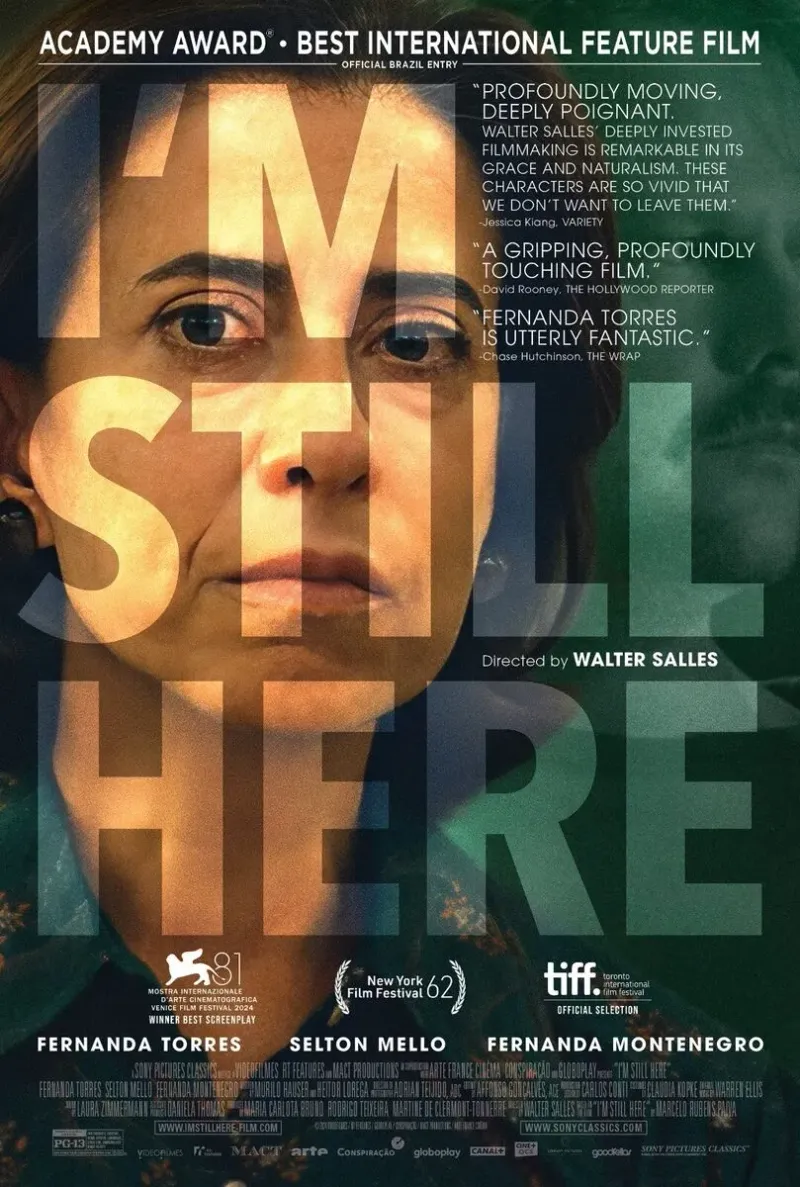
I find it fascinating to view The Secret Agent alongside I’m Still Here. It is a stroke of cinematic luck that two of Brazil’s most important filmmakers have released distinct masterpieces on the dictatorship within months of each other. They can function as two halves of the same national trauma. I’m Still Here explores the experience of authoritarianism through a wife and mother whose husband disappears. It focuses on the home, the waiting, the raising of children, and the legalistic battle for truth. It is a film about staying. The protagonist, Eunice Paiva, refuses to be moved, both literally and metaphorically.
The promotional poster for Walter Salles’ film I’m Still Here, which offers a domestic counter-narrative to The Secret Agent.
The Secret Agent arguably is a film about running. Armando’s story happens in the public sphere, in the university corridors, bars, and the city squares. Whereas Eunice had to be stoic to survive, Armando is restless. Of course, it would be two simplistic to think of this through a gender binary. After all, Armando is also a father – both the absence of his mother and the presence his son anchor him throughout the film. These two films tell complementary stories from a geographical perspective, too. I’m Still Here is set in Rio, which has traditionally dominated narratives about Brazil, alongside Sao Paulo, while The Secret Agent is set far away, in Recife, which is too often left out of the story. I don’t mean to fall into the trap of binaries, though. In truth, we need more stories about this time in our history, told by different people from different perspectives.
As historians, we often try to remain objective, even if that’s impossible. We look for the paper trail. But The Secret Agent reminds us that history is also written in the body. It is recorded in the way a person checks the rearview mirror, the way they flinch at a siren, or the way they lower their voice when discussing politics in a crowded bar. And this history refuses to be forgotten. And now, let’s cross our fingers for the Oscars…! Thank you and see you next time!
References
Juliana Bezerra, Ditadura Militar no Brasil (1964-1985), Toda Materia.
Christopher Dunn, Brutality Garden: Tropicalia and the Emergence of a Brazilian Counterculture (2001).
Elio Gaspari, A Ditadura Escancarada (2002).
James N. Green, We Cannot Remain Silent: Opposition to the Brazilian Military Dictatorship in the United States (2010).
Maria Aparecida Rocha Gouvea, Música de Protesto e Ethos Discursivo no Período da Ditadura Militar. A Arte de Dizer o Proibido (2013).
Marcos Napolitano, 1964: História do Regime Militar Brasileiro (2014).
Brasil, Relatório Final da Comissão Nacional da Verdade (2015).

 Julia Martins and Heloisa Matias