 Dr Julia Martins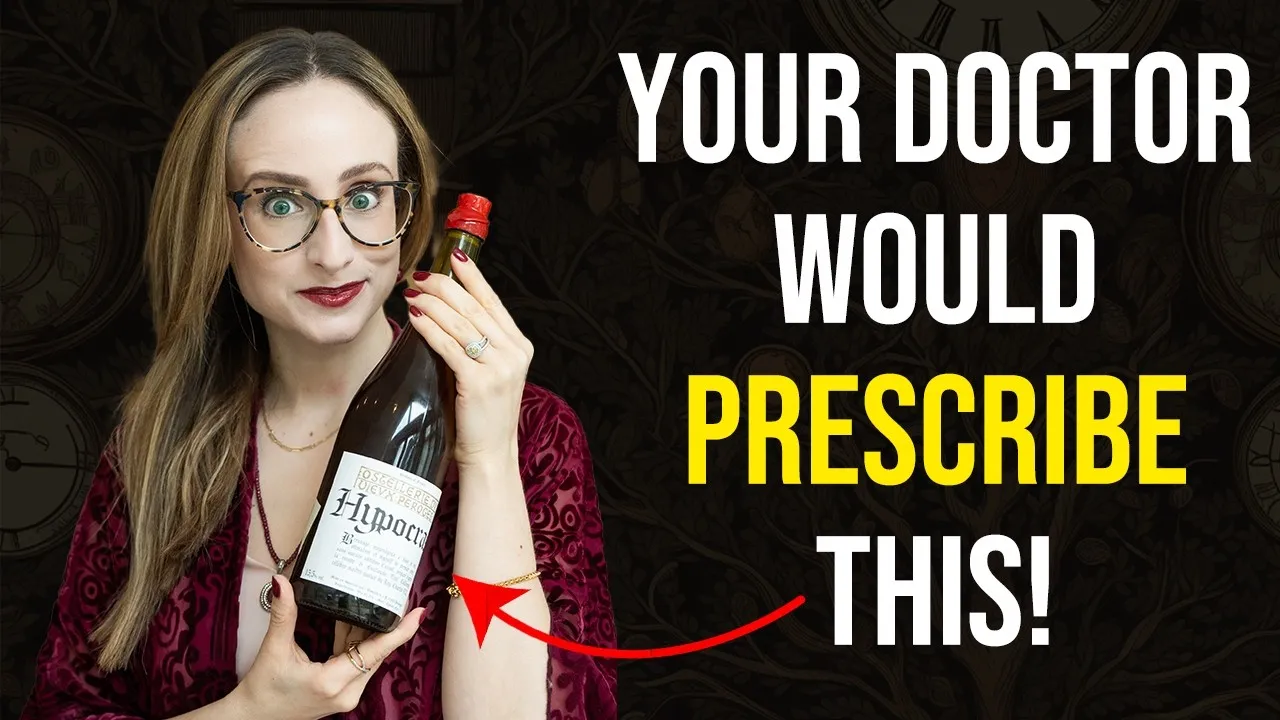
What if I told you one of the most popular medicines in medieval Europe was also the trendiest party drink? Hypocras (or ‘hypocras’ if you stick to the French pronunciation) was a spiced and sweetened wine so prestigious that kings gifted it to each other; it was believed to be so medically effective that doctors prescribed it, and so delicious that everyone wanted more of it. Imagine a world where your doctor hands you a glass of wine and says with complete authority: “Take two of these and call me in the morning.”
But here’s the fascinating part – this wasn’t some obscure home treatment or fringe medical practice. For nearly a thousand years, this sweet, spicy alcoholic concoction was a staple of Europe’s medical arsenal. It was served at royal banquets, prescribed for
Now, I’ll admit it—I have a bit of an obsession with Hypocras. I first came across this drink when I was reading The Accursed Kings series by Maurice Druon as a teenager – and by the way, I highly recommend checking out this series. If you’re a fan of Game of Thrones, you’ll love it. But anyway, in the books, there’s a scene in which the women are discussing how to get the king’s brother, Philippe de Poitiers, to fall in love with his wife once again, after many court intrigues. They decide to give him a ‘love filter’, or a love potion, mixed in his hypocras, which was itself considered to be an aphrodisiac. The spices in the wine would cover up any traces of their concoction, they thought. Philippe drinks the hypocras, compliments it, and not much later his wife, Jeanne, is pregnant. The love potion apparently worked.
Of course, this is a historical novel, there’s a lot of fantasy in it, but it gives us an idea of the role hypocras played in the
“What’s in a Name?” The Classical Origins of a Medieval Drink
Both the pronunciation and spelling of hypocras varied widely across time and space, with variations such as Ipocras , Ypocras, Hypocrass, Hippocris, and Hipocras. Now, Hypocras may sound like something out of a fantasy novel, but its name has surprisingly scholarly origins. The term derives from
But
According to the famous
The concept of medicinal wine itself stretches back even further. The Ebers Papyrus from Ancient Egypt (circa 1550 BCE) contains numerous wine-based remedies. The Romans enjoyed conditum paradoxum, or “marvelous spiced wine,” made with honey, pepper, mastic, bay leaves, saffron, and dates. If you’re thinking this sounds suspiciously like a cocktail recipe rather than medicine, you’re catching on to the delightful ambiguity that surrounded Hypocras throughout its history.
“The Doctor Will Pour You Now”: Medical Theory Behind Hypocras
To understand why medieval Europeans were so keen on medicinal wine, we need to dive into the fascinating world of medieval medicine and the theory of the four humours, which I have mentioned several times on this channel, but bear with me, I’ll be quick. According to this theory – which dominated Western medicine for over 1,500 years – the human body contained four essential fluids or “humours”: blood,
Each humour had specific qualities: hot or cold, wet or dry. Blood was hot and wet;
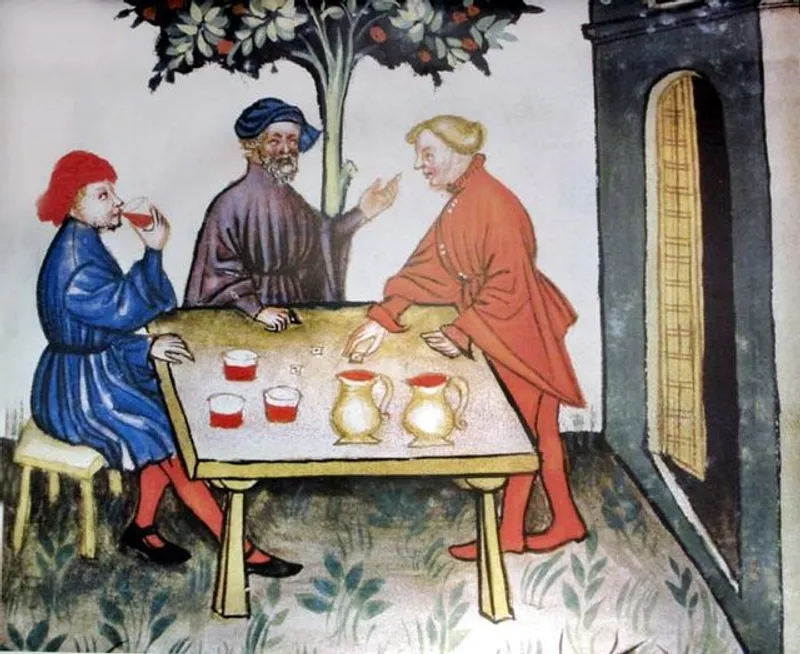
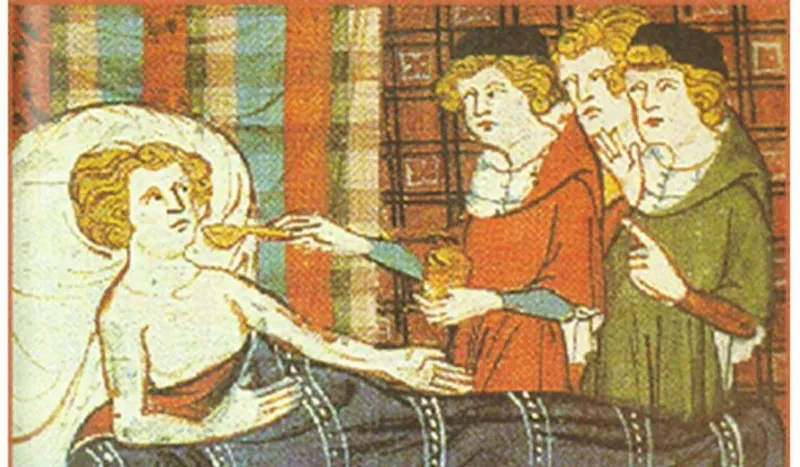
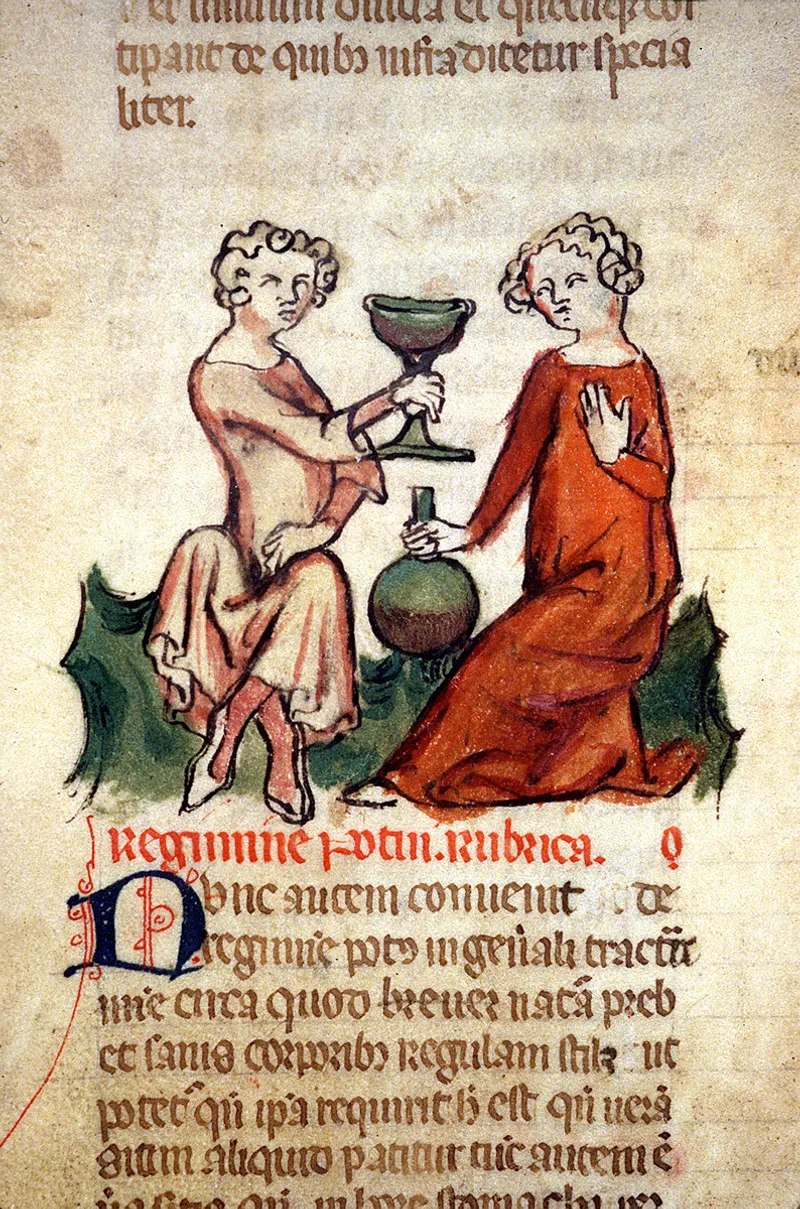
What’s fascinating is how medieval doctors created elaborate justifications for what was essentially a delicious treat. Even the famous physician
And this lasted beyond the
Interestingly, the choice of sweetener carried its own medical and social significance. Sugar was quite costly until the expansion of colonial sugar plantations in the
Hypocras at Court
By the 14th century, Hypocras had transformed from purely medicinal to fabulously fashionable. It became the essential finale to any respectable feast among European nobility. In fact, the modern term “banquet” comes from the Italian ‘banchetto’ or bench, and originally referred specifically to that final course with Hypocras and sweetmeats served in a separate room or outdoors.
After a long feast – and medieval feasts could last many hours with dozens of dishes – hosts would clear the dining hall and offer Hypocras with confections, candied fruits, nuts, and wafers. Court records from across Europe attest to the extravagant consumption of Hypocras at royal events. In 1472, when the Burgundian lord Louis de Gruuthuse visited the English court, he was treated to “green ginger, diverse syrups, comfits, and ipocras” before bed – the medieval equivalent of turndown service with premium minibar access.
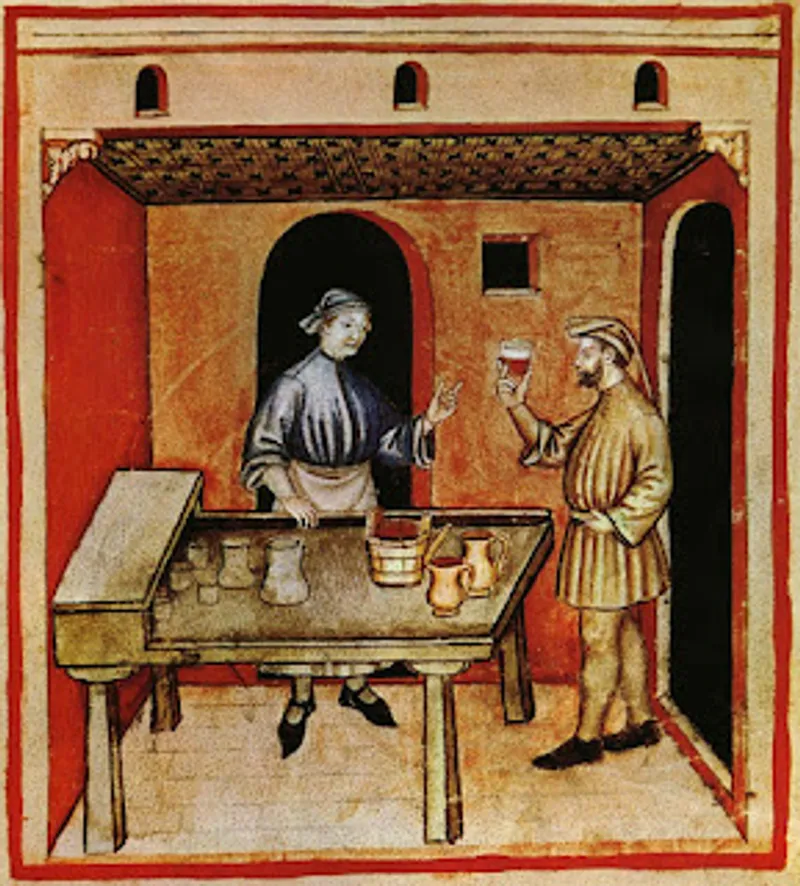
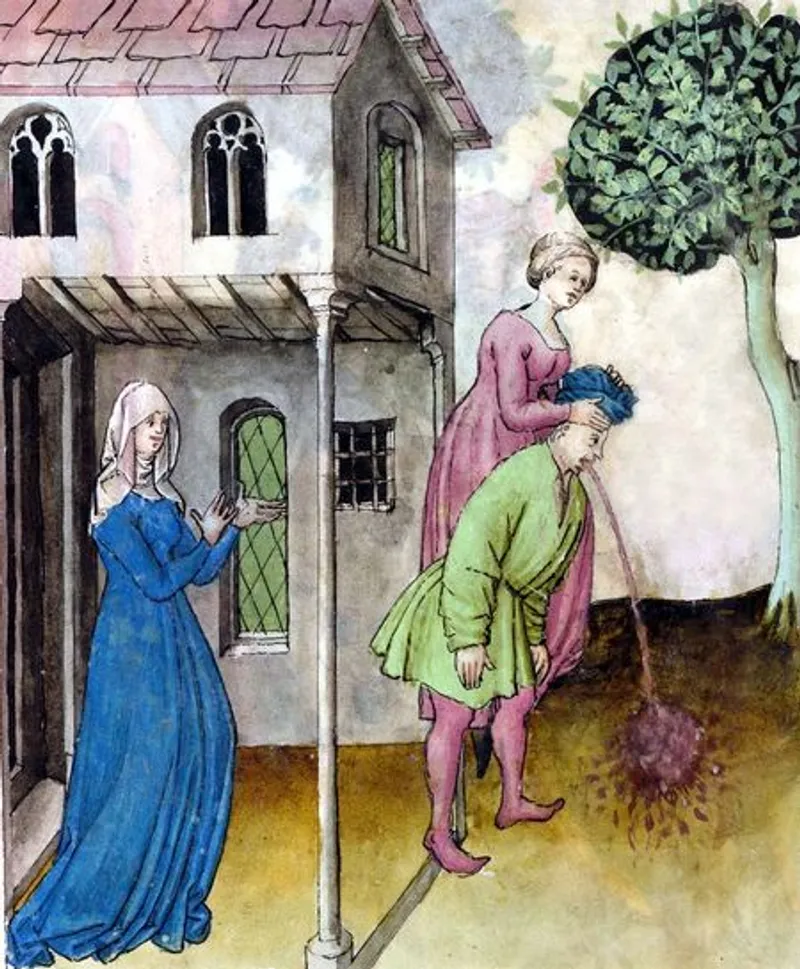
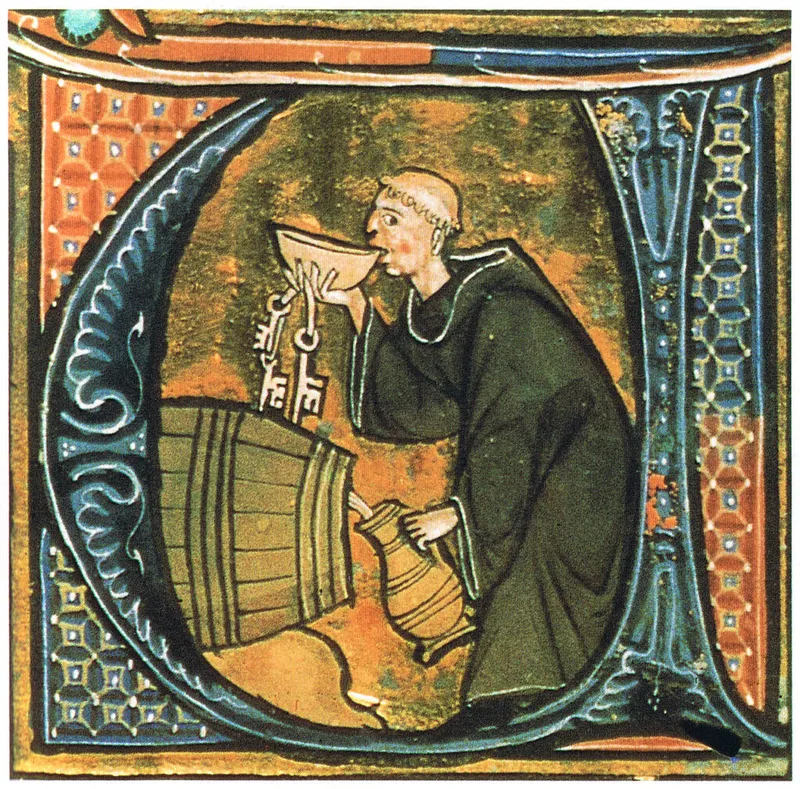
Charles V of France and the Burgundian dukes were particularly fond of it. The drink even enters medieval lore in darker ways; the notorious 15th-century Baron
Hypocras became so synonymous with sophistication that it was commonly presented as a prestigious gift. Royal accounts from the 1500s record significant expenditures on spices and sugar to make Hypocras for celebrations and diplomatic exchanges. King
Imagine attending a royal banquet in 15th-century Europe where servants appear with beautiful glass decanters of ruby-red Hypocras. The spiced aroma fills the room as they pour it into your goblet. You’re simultaneously indulging in a luxury, partaking in a social ritual, and technically taking preventative medicine. Sounds lovely, doesn’t it?
The Making of Medieval Hypocras
Let’s talk recipes. Medieval Hypocras was not a standardised product – it varied by region, wealth, and intended use. However, most recipes followed a similar pattern. (And if you’re interested in making your own, make sure to check out the references below for suggestions on how to do that!)
A typical French formula from the late 14th century (found in
The choice of base wine was flexible – both red and white wines were used, though red seems to have been more common. In France, “Greek wine” (imported strong wine from the Mediterranean) was sometimes favoured, likely due to prestige and, I imagine, the connection to the Greek physician
Just for a comparison, here are two 17th-century versions of hypocras, from Robert May’s 1660 book, The accomplish’t cook:
To make Ipocras. Take to a gallon of wine, three ounces of cinamon, two ounces of slic’t ginger, a quarter of an ounce of cloves, an ounce of mace, twenty corns of pepper, an ounce of nutmegs, three pound of sugar, and two quarts of cream..
Otherwayes. Take to a pottle of wine an ounce of cinamon, an ounce of ginger, an ounce of nutmegs, a quarter of an ounce of cloves, seven corns of pepper, a handfull of rosemary flowers, and two pound of sugar.
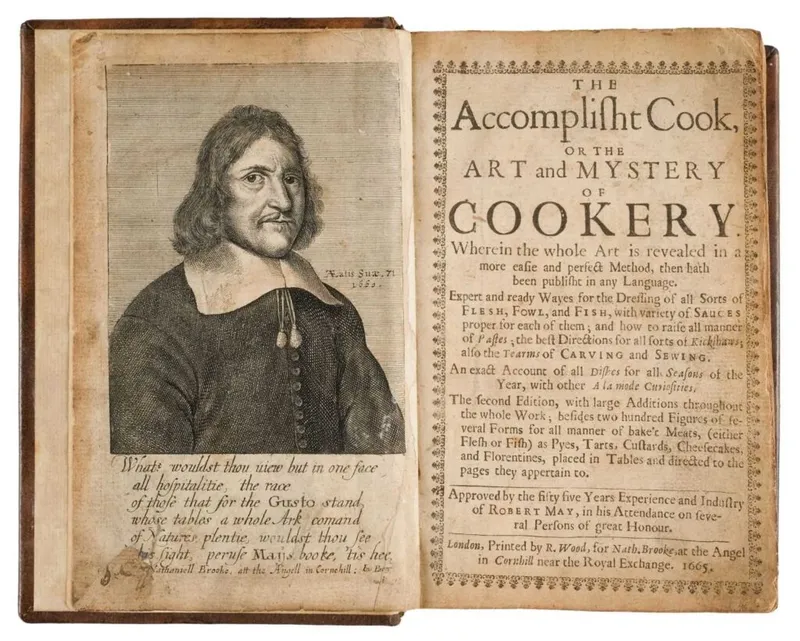
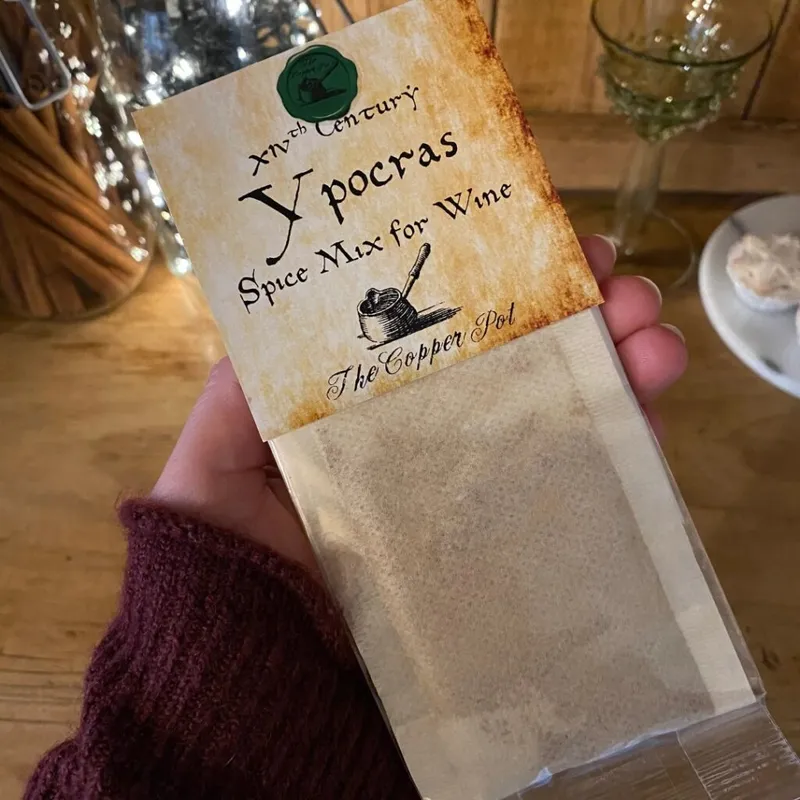
Recipe books often offered readers more than one way of doing something, depending on their budget, skill level, and what ingredients were available to them. As I mentioned, the sweetener was a key social status marker. Early medieval recipes used honey, creating a drink called “claré” or “clarry” (from Latin claratum vinum – clarified wine). As cane sugar became more easily available in Europe – first as an expensive “spice,” later more common by the 15th–16th centuries – it began replacing honey in luxury recipes. Spice merchants even sold ready-made Hypocras spice packets – the medieval equivalent of those pre-mixed mulling spices we see at Christmas markets today. This commercialisation shows how popular the drink had become.
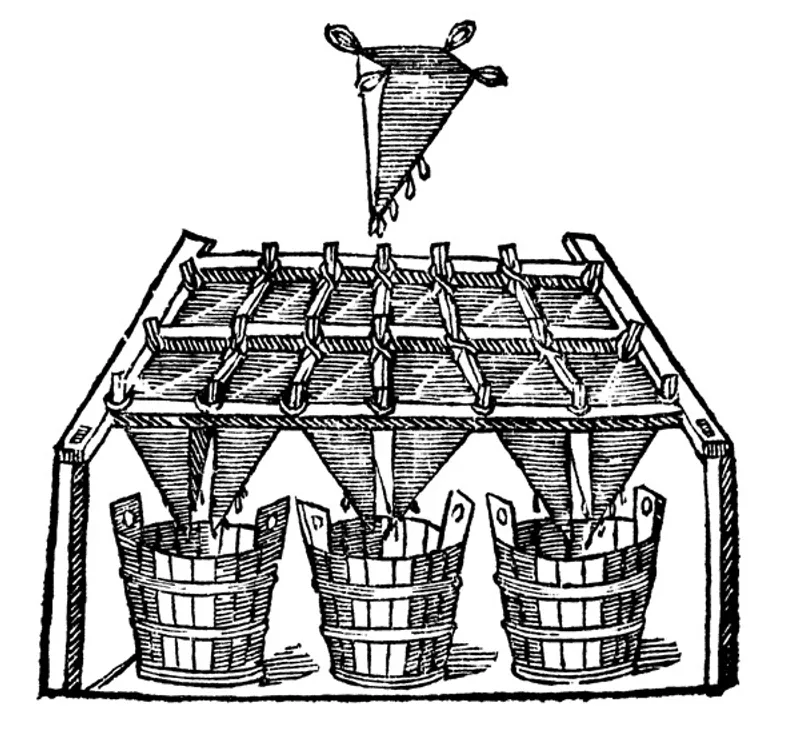
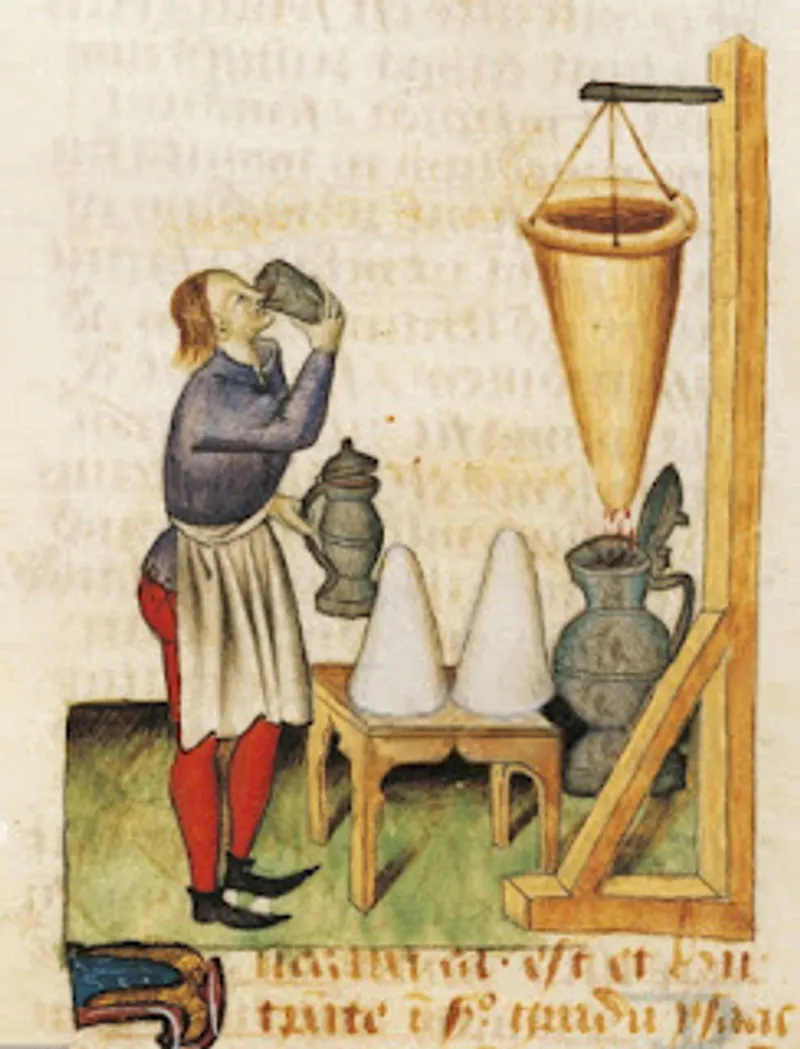
What’s particularly amusing about medieval Hypocras production is how seriously they took the filtering process. One recipe recommends filtering the mixture seven times through a cloth bag until perfectly clear. I can just imagine a medieval servant sighing as they’re told to strain the lord’s Hypocras for the fifth time: “Is four times not enough, my lord?” “No, Jacques! The physician specifically said seven times ensures optimal humoral balance. Now get back to straining!” All that effort for what was essentially a spiced wine cocktail.
How Hypocras Lost Its Medical Credibility
By the late 17th century, Hypocras began its slow decline. Several factors contributed to its fall from favour. First, drinking fashions changed dramatically with the introduction of new beverages. Coffee, tea, and chocolate arrived in Europe, offering alternative stimulants and digestifs that were increasingly fashionable. These newcomers had the advantage of novelty and ‘exoticism’ – qualities that Hypocras, after centuries of popularity, could no longer claim. Second, improvements in winemaking reduced the need for spiced wines. Better techniques for wine preservation and the growing popularity of fortified wines like Port and Sherry meant that adding spices was no longer necessary to potentially mask the taste of less-than-perfect wine – a practical function that Hypocras had sometimes served.
Further evidence of Hypocras’s medical standing comes from Nicholas Lemery, the French chemist who, even as late as 1700, still listed Vin Hippocraticum under cordial waters. This shows that even as empirical science was emerging, the tradition of Hypocras as a health-giving beverage persisted well into the
What’s rather ironic is that just as Hypocras was falling out of medical favour, it was becoming easier to make thanks to cheaper sugar and more available spices. It’s like finally being able to afford that expensive trendy supplement just as scientists announce it doesn’t actually do anything. By the time of the
The once-universal “nectar” of medieval feasts had been demoted from miracle medicine to outdated indulgence. The magic potion of medieval Europe had become just another quaint historical footnote. Or had it?
Modern Revivals: History in a Glass
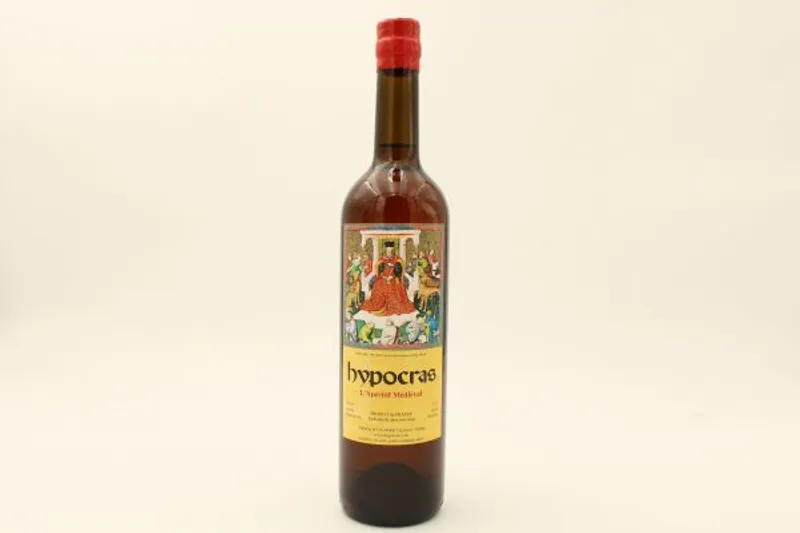
Today, though Hypocras nearly vanished, it has enjoyed several revivals in modern times. In a few regions of France, small producers have kept the tradition alive, like the lovely people who made this bottle here. In the Ariège region of the Pyrenees, the Séguelas family has been producing Hypocras since 1870, using what they claim is an “original recipe” with wine, honey, and spices passed down through generations.
Similar artisanal producers can be found in the Haute-Loire region around Le Puy, where they sometimes market traditional Hypocras as “Philtre d’amour” (love potion) – playing up the old belief in its aphrodisiac properties. (See how we go back to the story told by Maurice Druon of the love filter who made prince Philippe fall back in love with his wife…? )The marketing may have changed, but the essential appeal remains the same: it’s delicious, it’s historical, and who knows, it just might be good for you.
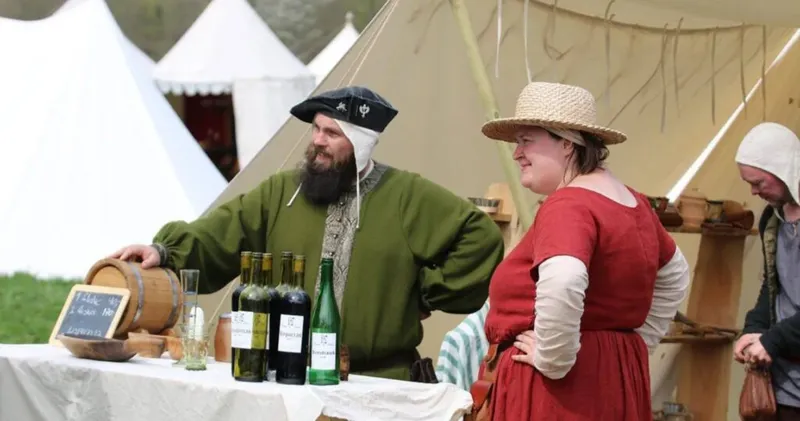
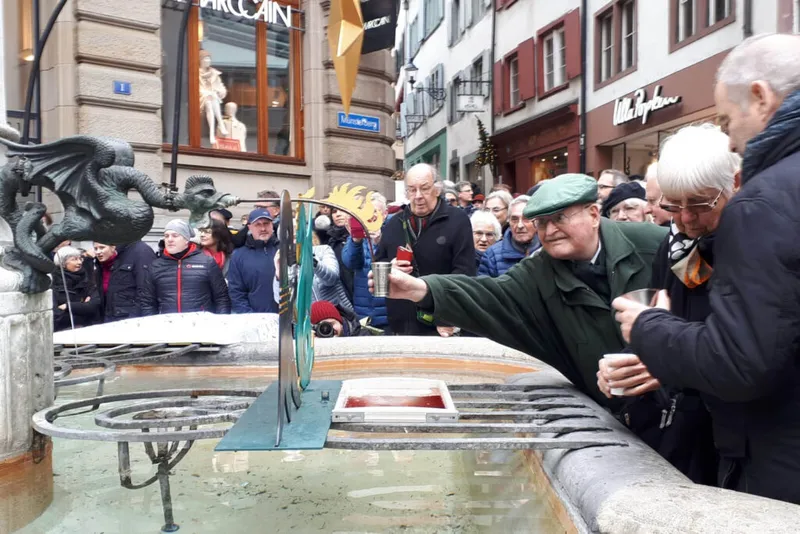
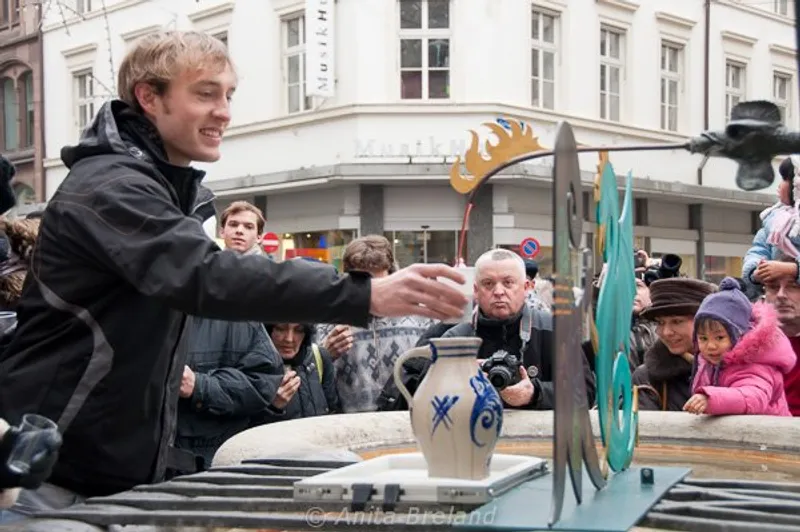
Hypocras has also found a place in historical reenactments, medieval-themed banquets, and Christmas markets. In some Swiss and French Christmas markets, vendors sell pre-mixed “Hypocras spices” or bottled Hypocras, making this medieval treat accessible to modern consumers. A particularly delightful modern tradition occurs in Basel, Switzerland, where since 1996 the city has celebrated New Year’s Day with the “Neijoors Aadringgede” (please excuse my pronunciation) – the historic Dreizack Fountain in central Basel flows with Hypocras instead of water, and citizens gather at 11 AM to fill their glasses and toast the New Year. I can only imagine medieval physicians nodding approvingly at this public health initiative.
Final Thoughts: “The Proof Is In The Pouring”
What I love about historical food and drink is how it connects us to the past. We might not wear medieval clothing or live in castles, but we can taste what our ancestors tasted—perhaps the most immediate way to understand their world. What I find most compelling about Hypocras in particular is how it challenges our modern compartmentalisation of food and medicine. Today, it seems that we’re constantly forced to choose between what’s good for us and what we enjoy, between kale and donuts. We separate healthy salads from indulgent desserts, bitter medicines from pleasant treats, and necessary purchases from luxury splurges. (Just imagine if your doctor prescribed chocolate cake as a legitimate treatment – we’d all be booking appointments!)
Hypocras blurred all these boundaries. It was simultaneously a medical prescription, a status symbol, and a gastronomic pleasure. It reminds us that throughout most of human history, the lines between these categories were much more fluid than we now assume them to be. This medieval spiced wine also demonstrates how medical theories reflect cultural values. The humoral system that justified Hypocras wasn’t merely a set of medical beliefs – it was a comprehensive worldview that connected the human body to the broader universe. Just as Hypocras balanced hot and cold, wet and dry qualities to restore health, medieval people sought balance in all aspects of life.
As we raise our own glasses today – whether filled with wine, tea, water, or indeed Hypocras – perhaps we might reconsider our own compartmentalised view of pleasure and health. Must medicine always be separate from pleasure? Must luxury always be distinct from necessity? I’ll leave you with that thought, and with a toast in the style of a medieval physician: May your humours be balanced, your spirits be lifted, and your cup – whatever it contains – be full and bring both health and happiness. Thank you and see you next time!
References:
Le Ménagier de Paris (c.1393).
The Papyrus Ebers, translated by B. Ebbell (1937).
Regimen Sanitatis Salernitanum (written in the 13th century, published in1480). (Read a 19th-century version here.)
Maurice Druon, The Accursed Kings (1955-1977).
Dioscorides Pedanius, Materia Medica, translated and commented by Andrés de Laguna (1555).
Nicolas Lémery, Pharmacopée universelle (1728).
Paul Lukacs, Inventing Wine: A New History of One of the World’s Most Ancient Pleasures (2012).
Julia Martins, What is the Humoral Theory?, Living History (2022).
Robert May, The accomplisht cook (1660).
Max Miller, Making Hippocras at Home | Medieval Spiced Wine (2021).
Marissa Nicosia, ‘Hippocras, or Spiced Wine’, Cooking in the Archives (2018). (For variations on historical recipes.)
Guillaume Tirel ‘Taillevent’(?), Le viandier (written in the early 14th century, published in1480).
Arnaldus de Villanova, Liber de uinis (1311).