 Dr Julia Martins
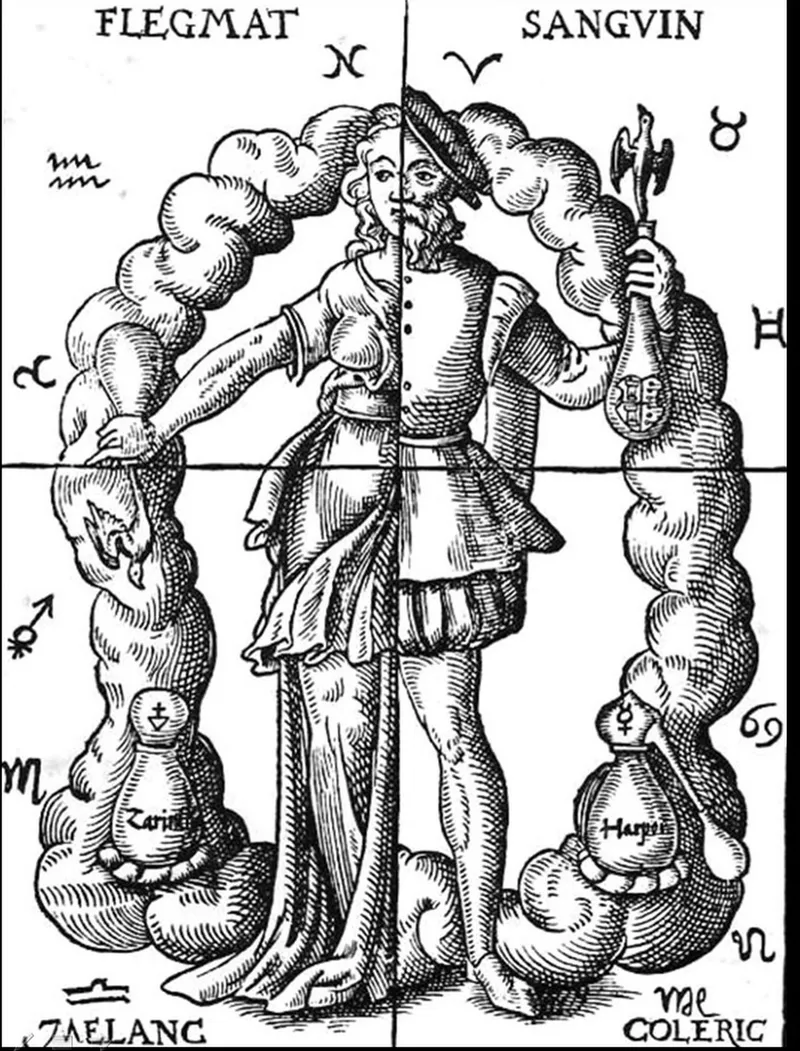
 The humours were fluids or spirits (humon in Greek means fluid) concocted in the stomach in the heat of the digestion, which circulated in the body. There were four humours: blood, phlegm, yellow bile (choler), and black bile (melancholy). For over two millennia, humorism (or humoralism) was the framework within which people thought about and practised medicine, especially in the West. It is the backdrop for most of our discussions about the history of medicine and gender, which is why it is such an important topic.
He was trying to gather up the scarlet threads of life and to weave them into a pattern; to find his way through the sanguine labyrinth of passion through which he was wandering
— (The Picture of Dorian Gray, Oscar Wilde)
The Origins of Humoral Theory
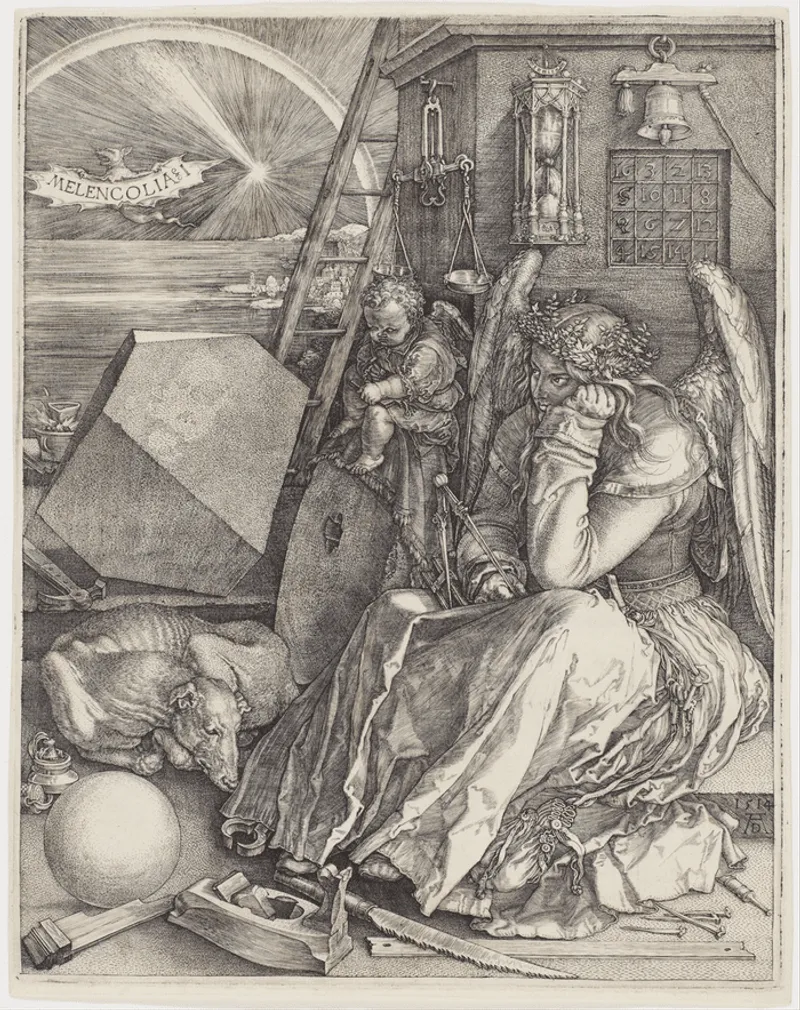
What Were the Four Humours?
All bodies contained the four humours but in different proportions, which could vary according to gender, age, and the season of the year. Each person had a different combination of humours, which determined their temperament, personality, and physical health: humorism saw the mind and body as deeply connected. This is why we still have adjectives such as melancholic, choleric, sanguine, and phlegmatic to describe people.
The humours were associated with the natural world, such as seasons and elements, but they also corresponded to a life stage and a specific organ. This web of connections was the basis for how illnesses would be treated.
| Blood | Phlegm | Choler (yellow bile) | Melancholy (black bile) | |
|---|---|---|---|---|
| Life Stage | Childhood | Old Age | Youth | Maturity |
| Season | Spring | Winter | Summer | Autumn |
| Element | Air | Water | Fire | Earth |
| Temperament | Sanguine | Phlegmatic | Choleric | Melancholic |
| Characteristics | Hot/Moist | Cold/Moist | Hot/Dry | Cold/Dry |
| Organ | Liver | Lungs | Bladder | Spleen |
| Personality Traits | Brave, Hopeful, Playful | Calm, Patient, Indolent | Impatient, Ambitious, Restless | Quiet, Pensive, Despondent |
| Astrological Body | Jupiter | Moon | Mars | Saturn |
Foods deemed hot, such as spices and red meat, could be used to treat an excess of phlegm or melancholy, heating the body. (For the same reason, they could act as aphrodisiacs.) On the other hand, cucumber and melon would be appropriate to counteract an excess of yellow bile. Physicians could also advise patients to change their location, going somewhere where the weather was more suited to treat their condition.
How Were Illnesses Treated?
The delicate balance of humours determined a person’s natural good health; therefore, illness was contra-natural, often resulting from a humoral imbalance. Besides changes in their diet and environment, physicians could prescribe herbal remedies to counteract their patient’s condition. Moreover, if a humoral excess or lack caused illness, physicians recommended treatments such as enemas, emetics,
Humours and Gender
For instance, menstruation was deemed essential for women of fertile age, as it was the body’s natural
The Legacy of Humoral Theory
Humorism changed through the centuries, combining local influences and merging traditions. However, for centuries, the four humours’ paradigm was orthodoxy among physicians, surgeons, midwives, and patients alike. It was challenged at times, such as by the rise of chemical medicine and Paracelsianism in the sixteenth century. Still, it remained central to how the body was understood in premodern times. It was a deterministic system: people might treat illnesses but not change their physical and psychological makeup.
Humours do not survive only in our language. Humorism underpinned how the body was understood, both in physiological and psychological terms, for centuries, until the germ theory of disease supplanted it. Humours went beyond the medical domain, shaping how we think about the body and surviving perhaps most clearly in the arts and literature. For instance, as
Wrath-kindled gentlemen, be ruled by me;
Let’s purge this choler without letting blood:
This we prescribe, though no physician;
Deep malice makes too deep incision;
Forget, forgive; conclude and be agreed.— (Richard II, Shakespeare)
After the
References:
Jacques Jouanna,