 Dr Julia Martins
One December, when I was around 5 years old, a nun at the Catholic school I went to in Brazil told us about the birth of Jesus. I wasn’t particularly interested in the star who showed the wise men the way, but I was very intrigued by their choice of gifts for a baby. Why would they give him gold, myrrh, and frankincense? I figured gold made sense because then Jesus would be able to buy any toys he wanted, but what about the other two? I didn’t even know what they were, really. And, although the three wise men, or three Magi kings as we called them in Brazil, were central to the nativity scene, it wasn’t until I started studying the history of medicine that their choice of gifts started to make sense. So I thought it would be fun to explore the connection between medicine, myrrh, and frankincense, and how that changed throughout the centuries. Who knows, maybe you’ll even get inspired to rethink your Christmas shopping and give some oil of myrrh to someone you love – though personally, I would still prefer a pair of gold earrings! In the
Biblical Botanicals
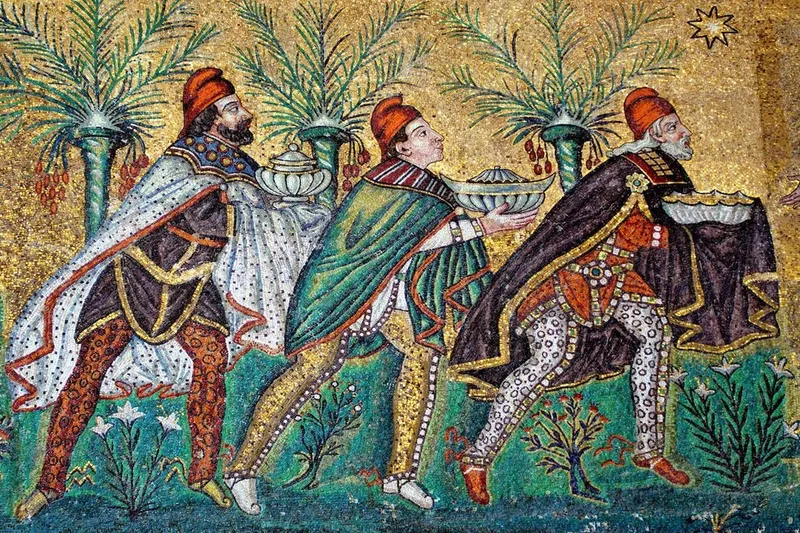
Most of us are familiar with the story the nun told me and the other children at school. The three wise men came to see Jesus after his birth, bringing him gifts, as described in the Gospel of Matthew:
…And when they were come into the house, they saw the young child with Mary his mother, and fell down, and worshipped him: and when they had opened their treasures, they presented unto him gifts; gold, and frankincense, and myrrh.
— Matthew: 2-11, KJVMatthew: 2-11, KJV
But what are frankincense and myrrh? Well, both of them grow as shrubs and are a part of the same botanical family (Burseraceae), though there are many different kinds.
Frankincense Sources
Myrrh Sources
Boswellia carterii (= Boswellia sacra)
Commiphora myrrha (= Commiphora molmol)
Boswellia frereana
Commiphora mukul
Boswellia serrata
Commiphora erythraea
Commiphora kataf
Arthur O. Tucker, ‘Frankincense and Myrrh’, Economic Botany 40(4), 1986, pp. 425-433.
Both frankincense and myrrh are gum resins that are obtained by tapping; by making incisions into the bark of the tree. They both contain volatile oils and so were used for their smell, especially because myrrh retains its perfume longer than virtually any other aromatic. Ancient writers believed that both of them came from the Arabian Peninsula. The Greek historian
Arabia is the only country which produces frankincense, myrrh, cassia and cinnamon…the trees bearing the frankincense are guarded by winged serpents of small size and various colours.
The Roman naturalist
The principal spices in Arabia are frankincense and myrrh. Frankincense is known to no other country than Arabia
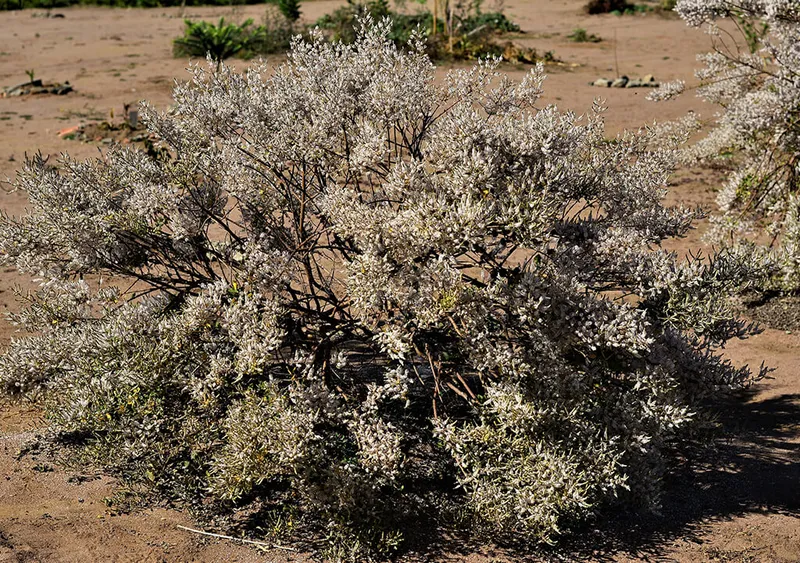

Pliny was wrong, but the peninsula was a major trader in it at the time. These trade routes extended from what today is Oman and Yemen through the Red Sea to Jerusalem and Egypt, and frankincense and myrrh were arguably the most prestigious products traders sold. Local taxes and the long journeys to transport them along this incense route made both frankincense and myrrh extremely expensive. The wise men, or magi, are described as coming from the East, and so their choice of gifts shouldn’t be surprising. Throughout
It’s likely that the word ‘myrrh’ comes from the Arabic murr, meaning bitter, whereas frankincense derives from the medieval franc, ‘pure’, and incensium, ‘smoke’. When you think of incense in general, you might imagine sticks, grains, or even oils that release an aromatic smoke when you burn them. They are largely made with plant resins and woods, such as frankincense, myrrh, and camphor, which was very popular in the early
Ancient Medicine
The Greek physician
that pleases the gods; the priests in Egypt use it lavishly.
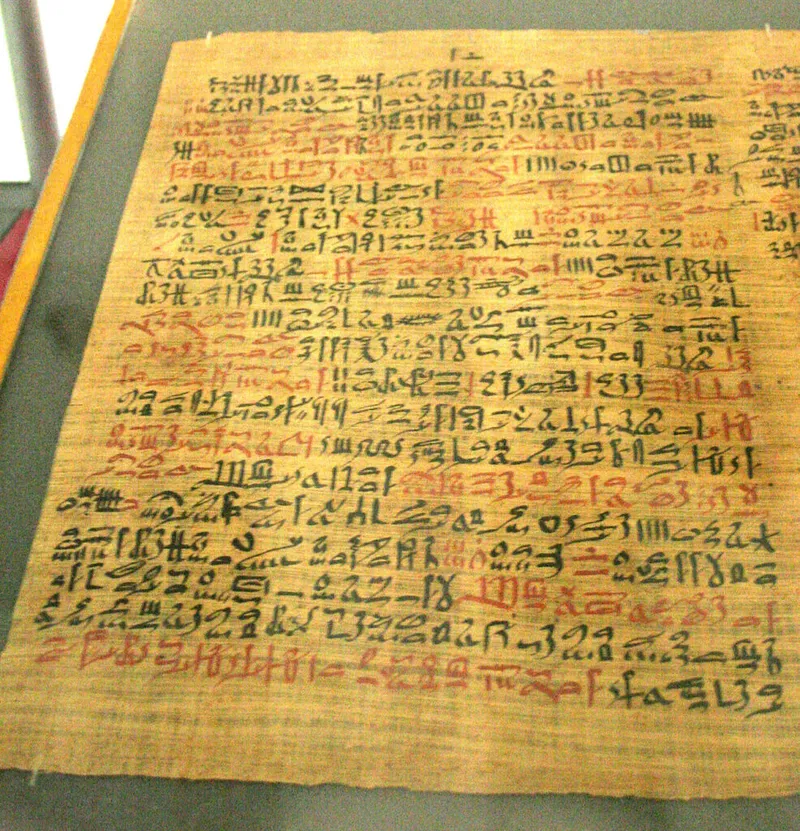
The Egyptian Ebers papyrus (c. 1500 BCE) tells us that both myrrh and frankincense were used to treat wounds and sores, as well as a part of the mummification process. Dioscorides also described how it could be mixed with antidotes for poisonings and it could be given to asthmatics to help them breathe better as well. Myrrh could treat coughs, but also eye infections. The ancient Romans used it in a preparation called mendesium, which treated sore muscles, and as an ingredient in murra, a scented hair tonic and skin cleanser. Throughout the
Because of their symbolic and religious meaning, it is difficult to talk about myrrh and frankincense as ingredients in medical recipes alone. Both were used in incense, to purify places and bodies. They were used in Judaism to consecrate priests and the Tabernacle. In Egypt, they were key in the embalming and mummification process. They were also used in exorcism rituals. There was much overlap between the world of medicine and pharmacology and the world of cosmetics and perfumes, as well. For instance, myrrh oil was used to treat the skin in ancient Egypt, from beauty treatments to minimising wrinkles. In Ayurvedic medicine, on the other hand, it was used as a medicine to treat skin conditions, from psoriasis to eczema. Not to mention helping digestion and treating inflammation, and the same goes for frankincense. The ancient Persians even used it to treat gastritis and stomach ulcers.
Both have been used for thousands of years, from the ancient Egyptians, Romans and Greeks, in remedies to treat a variety of ailments. Mixed with other substances, myrrh was used in mouthwashes and toothpaste and as pain relief for toothaches. It was also used to treat digestive complaints, as well as respiratory issues such as asthma, in the form of a herbal syrup. But, in the ancient world, it was largely used to treat wounds and infections; not only could myrrh keep them clean, but it was believed to relieve the pain. Because it helped the skin regenerate, it was widely used on the battlefield. Greek soldiers even had vials of myrrh oil on them to clean and treat their battle wounds and help stem the flow of blood.
Myrrh and frankincense eventually arrived in China, and their use was similar in traditional Chinese medicine. Besides pain relief, myrrh oil was believed to improve blood circulation. Along with myrrh, frankincense was also used, both topically and orally. It was believed to treat deafness, strokes and irregular or painful periods – which makes sense as frankincense was associated with improving blood circulation. Much of this continued into the
Final Thoughts
For some Christians, Jesus had a three-fold nature of king, prophet, and priest and so maybe gold symbolised the first, myrrh the second, and frankincense the third aspect of his being. And, besides receiving them as gifts, it is said that the body of Jesus was anointed with myrrh at the crucifixion. There are hundreds of references to their spiritual, medical and cosmetic use throughout history, from sacred texts to recipe collections. Myrrh and frankincense are still used today, in cosmetics, perfumes, and medicine. There have been recent studies on their medical properties, but what I find the most fascinating about the story behind them is that, although different cultures assigned different meanings and symbolism to them, they seem to always have been valued throughout the centuries. And part of that worth came from their perceived medical value. From treating battle wounds to an upset stomach, having oil of myrrh or a frankincense ointment with you would always come in handy. So, who knows, maybe they would make a lovely Christmas gift for someone in your life who’s really into aromatherapy or skincare. Otherwise, scents such as Opium by Yves Saint Laurent or Chanel No. 5 might be an option if you want to bring a little bit of myrrh, and history, into someone’s life.
References:
Further Reading:
C. Burridge, ‘Healing Body and Soul in Early Medieval Europe: Medical Remedies with Christian Elements’, Studies in Church History, 2022 (58), pp. 46-67.
C. Burridge, Holy smoke! Incense as an ingredient in early medieval medical recipes, Herbal History Research Network Blog, 18th June 2022.
C. Burridge, ‘Incense in medicine: an early medieval perspective’, Early Medieval Europe, 2020 (28), pp. 219-55.
A. Dalby, Dangerous Tastes: The Story of Spices (2000).
A. Dalby, Food in the Ancient World from A to Z (2003).
N. Everett, The Alphabet of Galen: Pharmacy from Antiquity to the Middle Ages (2012).
N. Everett, ‘The Manuscript Evidence for Pharmacy in the Early Middle Ages’, in E. Screen and C. West (eds.) Writing the History of the Early Medieval West (2018).
M. Thurlkill, Sacred scents in early Christianity and Islam (2016).
M. Watt and W. Sellar, Frankincense and Myrrh: Through the Ages, and a Complete Guide to Their Use in Herbalism and Aromatherapy Today (2012).