 Dr Julia Martins
 In the
Origins, Development, and Principles of the Doctrine of Signatures
The doctrine of signatures was a way of understanding the world based on analogy and symbolic thinking. In Greek antiquity,
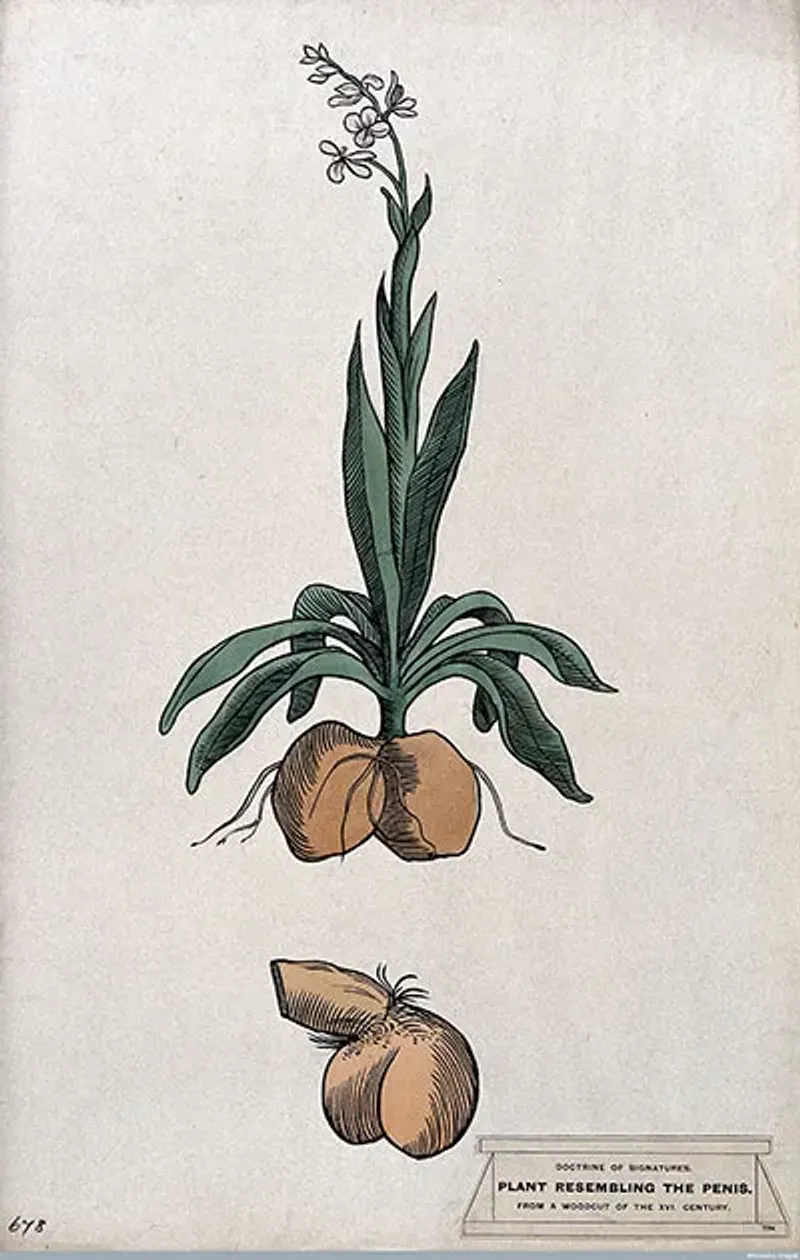
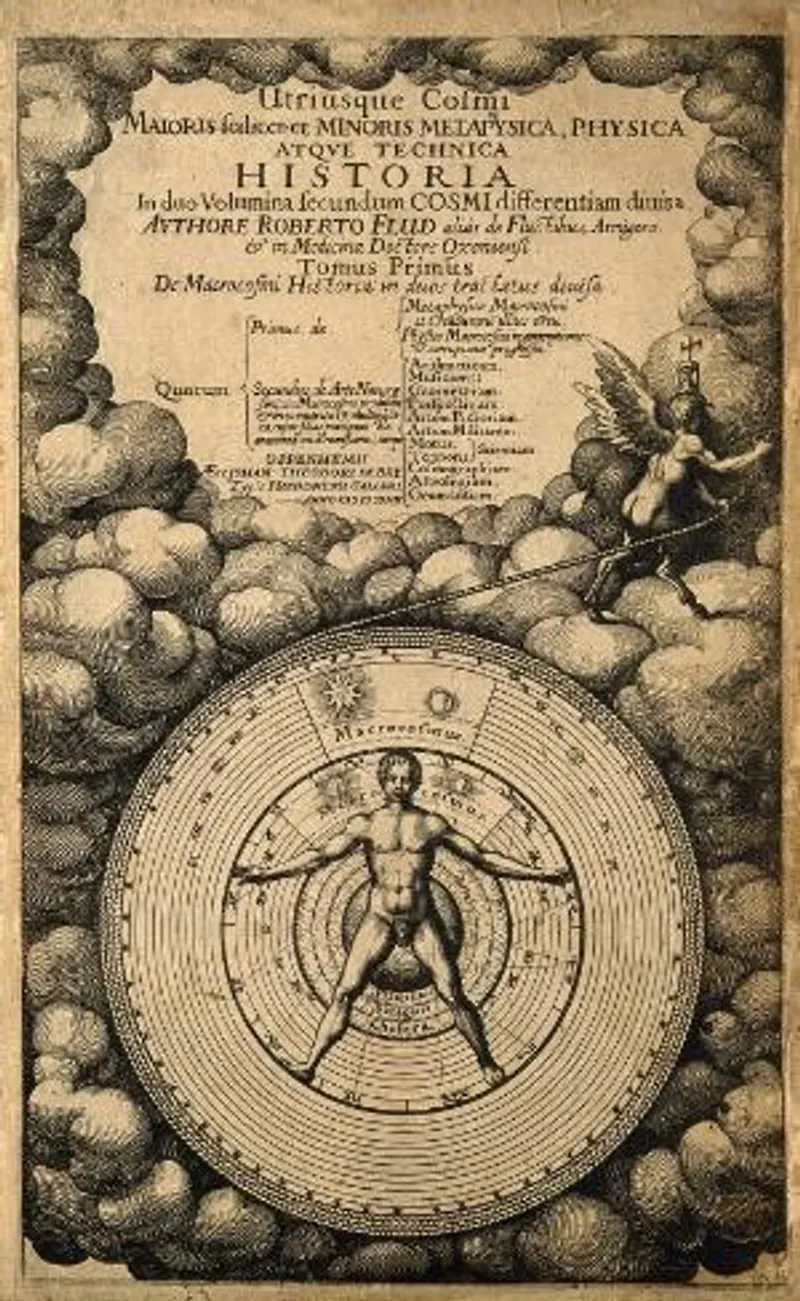
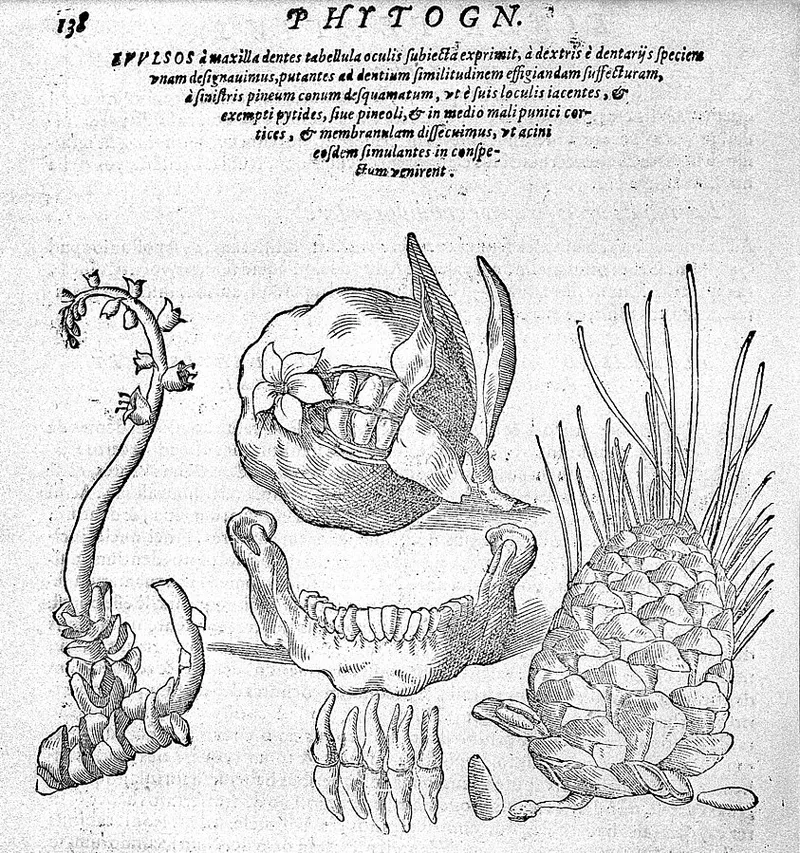
Being a part of nature, the perfect remedy could be found by those who knew how to ‘read the book of nature’, that is, understand the hidden signs and clues that indicated which plants (though animal and mineral medicines were used as well) could help treat the issue, based on their shape, texture, colour, or smell. So, just like the testicle-looking orchid roots, the phallic roots of mandrake could also be indicated to treat fertility issues in men. The doctrine of signatures was particularly influential in the work of Paracelsus, who revolutionised Renaissance medicine.
Connections to Medical Practices and Theories
This principle was eventually called ‘doctrine of signatures’ following the publication of
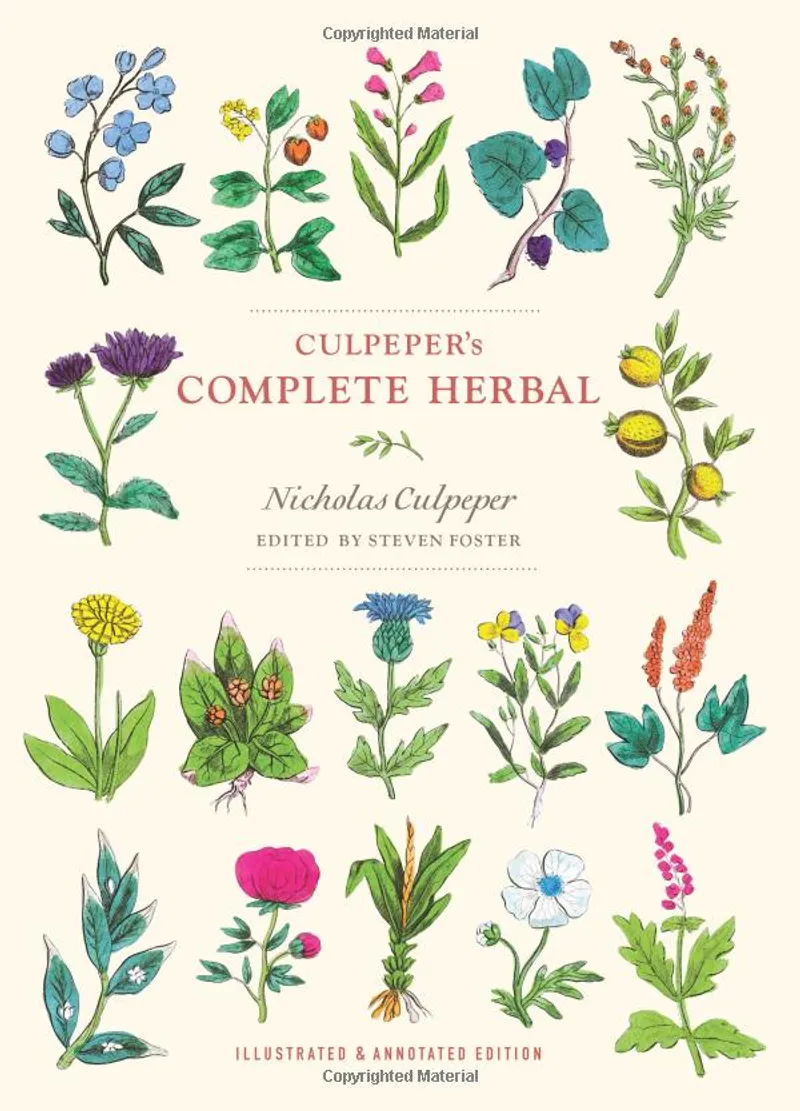
Applying the doctrine of signatures to medical practice was linked to sympathetic magic as well, and the medical idea that ‘like cures like’ (similia similibus curantur) through sympathy or affinity. However, although these theoretical concepts emerged from learned writers and influenced popular practice, they were also influenced by empirical knowledge and the practice of ‘traditional’ healers. Early modern medicine was a mix of many different traditions from myriad sources, which sometimes contradicted each other, and which could be adapted to different contexts and individual cases. For Nicholas Culpepper (1616-1654), who wrote in the vernacular for a wide readership, the doctrine of signatures was essential for all those hoping to take care of their health.
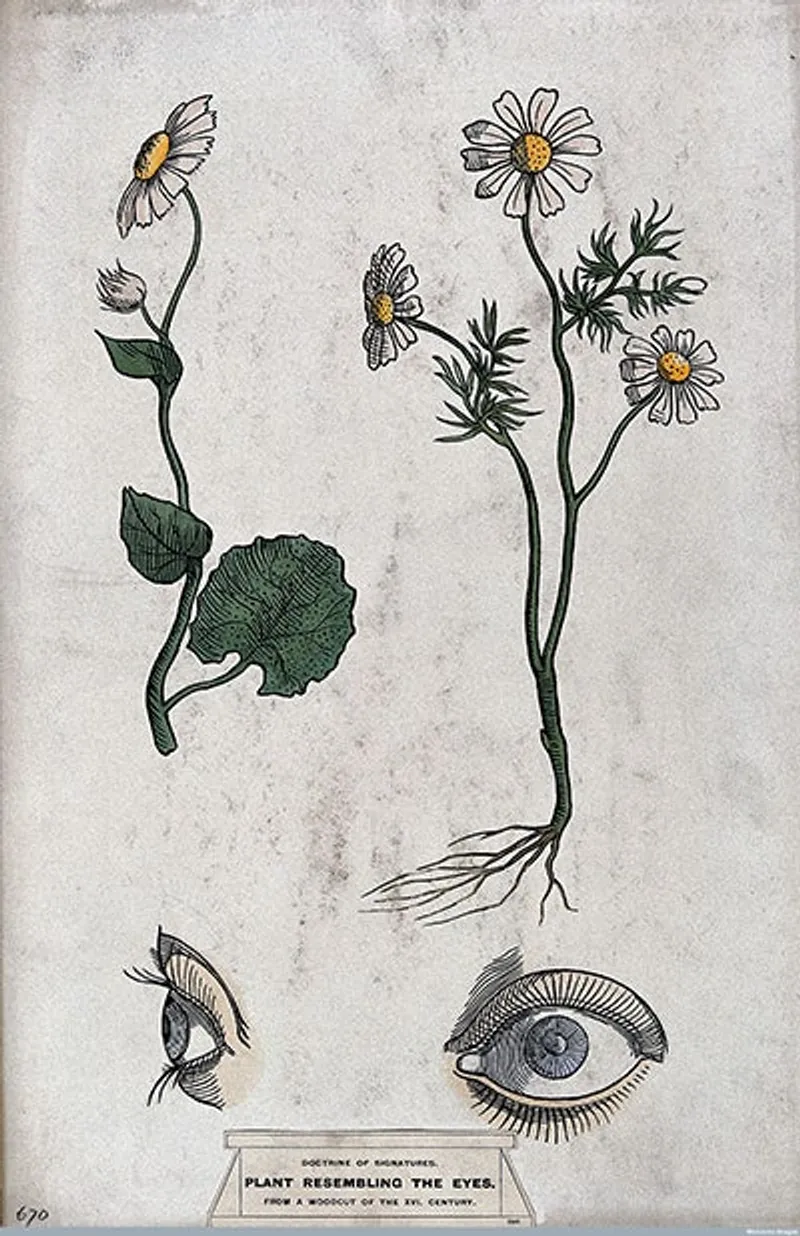
Moreover, the doctrine of signatures was combined with the humoral theory. The natural elements deeply affected the humours within the human body, causing imbalance and, therefore, illness. Fortunately, health could be restored using nature and her remedies: many plants were shaped like the organ or part of the body they could treat. So, if you had an eye disease, you could treat it with the aptly named plant eyebright, whose flower resembled a human eye. If the issue was jaundice, which caused the skin to turn pale and yellowish, saffron would be useful, while for brain-related problems, walnuts were indicated. For respiratory conditions affecting the lungs, the also aptly named lungwort plant would be helpful. You get the idea.
Legacy, Modern Influences, and Reassessing Folk Medicine
The doctrine of signatures might appear outlandish today. This all-encompassing, all-connected understanding of the world, exemplified by the doctrine of signatures, has arguably never been as dominant as it was during the
With the development of medical knowledge, as well as chemistry, botany, and pharmacology, researchers started to identify the active compounds in plants, making a plant’s appearance irrelevant to understanding its therapeutic use. Still, we should be mindful of judging our ancestors too harshly for their ‘outlandish’ beliefs.
Too often is popular knowledge about health derided as ‘folkloric’ and pertaining to the domain of ‘old wives’ tales’, itself a misogynistic expression. Of course, that does not mean that all of these medicines were effective. Indeed, some could even be harmful. The womb-resembling birthwort, which, as the name indicates, was used during pregnancy and childbirth, can cause cancer as well as kidney damage. Some of these ‘cures’ could indeed help though, and many of them were just innocuous.
As
References
Jakob Boehme, The Signature of All Things: De Signatura Rerum (CreateSpace, 2017) (originally published in 1621).
Geronimo Cardano, De Subtilitate Libri XXI (Basel, 1554).
Giambattista Della Porta,
Paracelsus, Essential Theoretical Writings (Leiden, 2008).
Further Reading
Ernst Cassirer, The Individual and the Cosmos in Renaissance Philosophy (Oxford, 1963).
Lawrence Conrad, Michael Neve, Vivian Nutton, Roy Porter and Andrew Wear, The Western Medical Tradition, 800 BC – 1800 AD (Cambridge, 1995).
Roy Porter, The Greatest Benefit to Mankind: A Medical History of Humanity from Antiquity to the Present (New York,1997).