 Dr Julia Martins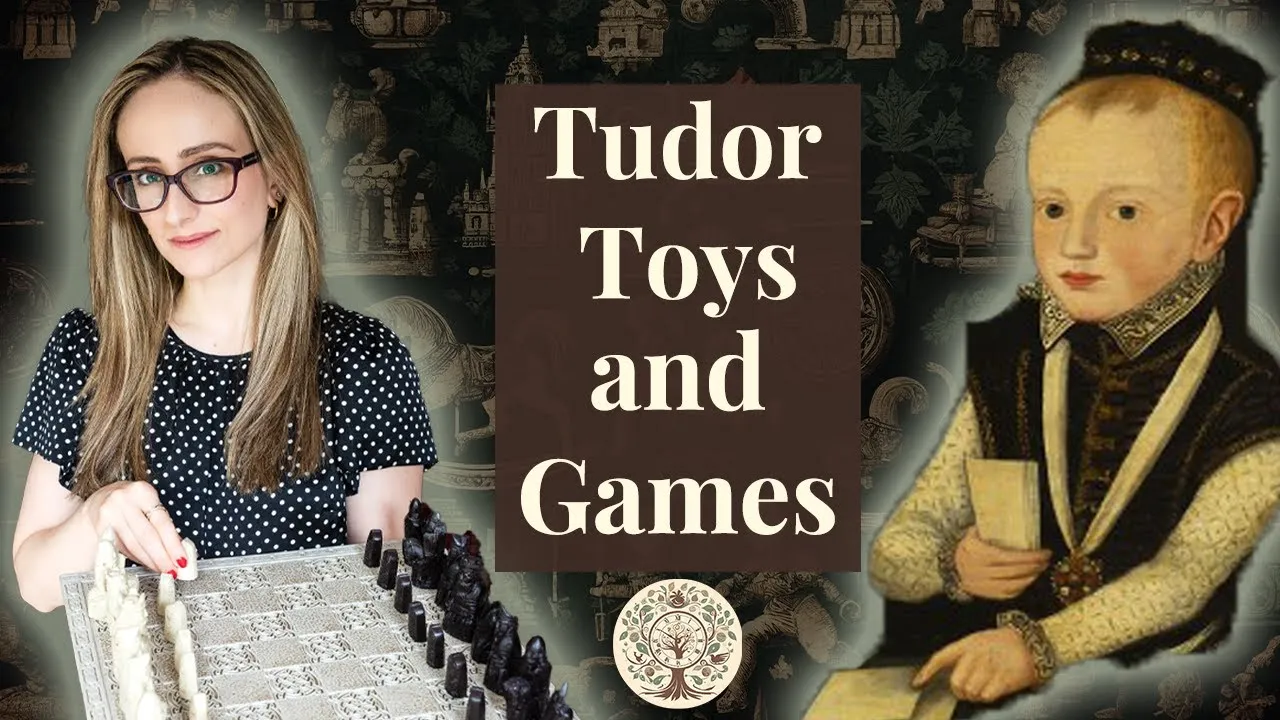
In describing childhood, following infancy, this is what
…And then the whining schoolboy, with his satchel,/And shining morning face, creeping like snail/Unwillingly to school.
— ‘All the world’s a stage’ (As You Like It, Act 2, Scene 7)
I think most of us can relate to this, dragging yourself to school, zero enthusiasm, having abandonned whichever game or toy we were playing with until then. Do you remember what your favourite toys were growing up? Or the games you loved playing with your friends? I’m sure most of us do. But have you ever wondered what childhood was like in Tudor England, before psychologists on Instagram were reminding us of how crucial playing is for a child’s development? Imagine a time when toys were crafted from everyday objects, games involved surprising amounts of animal cruelty, and play was both a joy and a subject of stern discipline by the Church and schools. It also followed a calendar deeply connected to the seasons and religious holidays. Some things would have been so familiar to us, like the boy creeping like a snail to school, and other things seem just unimaginable. So, join me as we uncover the intriguing and often unexpected world of Tudor childhood, from their imaginative toys to their harsh realities.
Children and Toys
In the passage I quoted earlier,
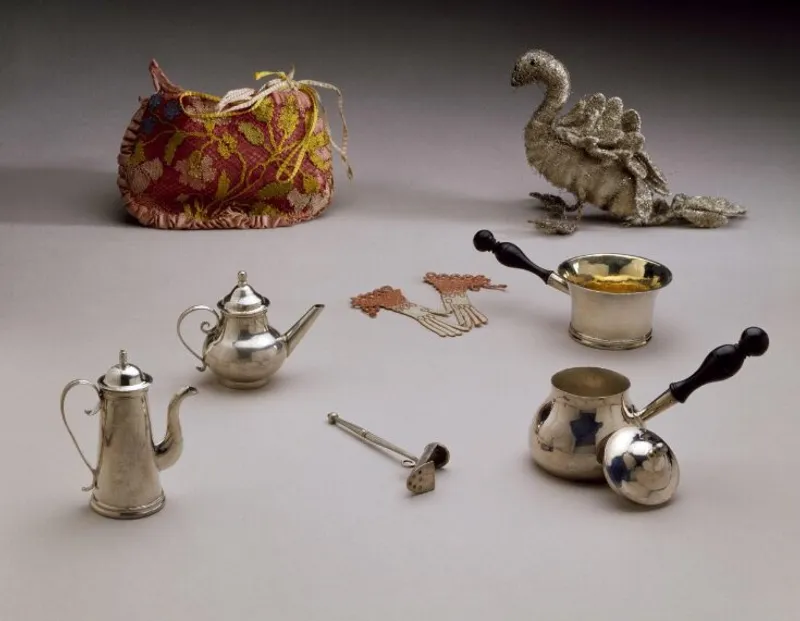
And, although the word ‘toy’ only became common during the
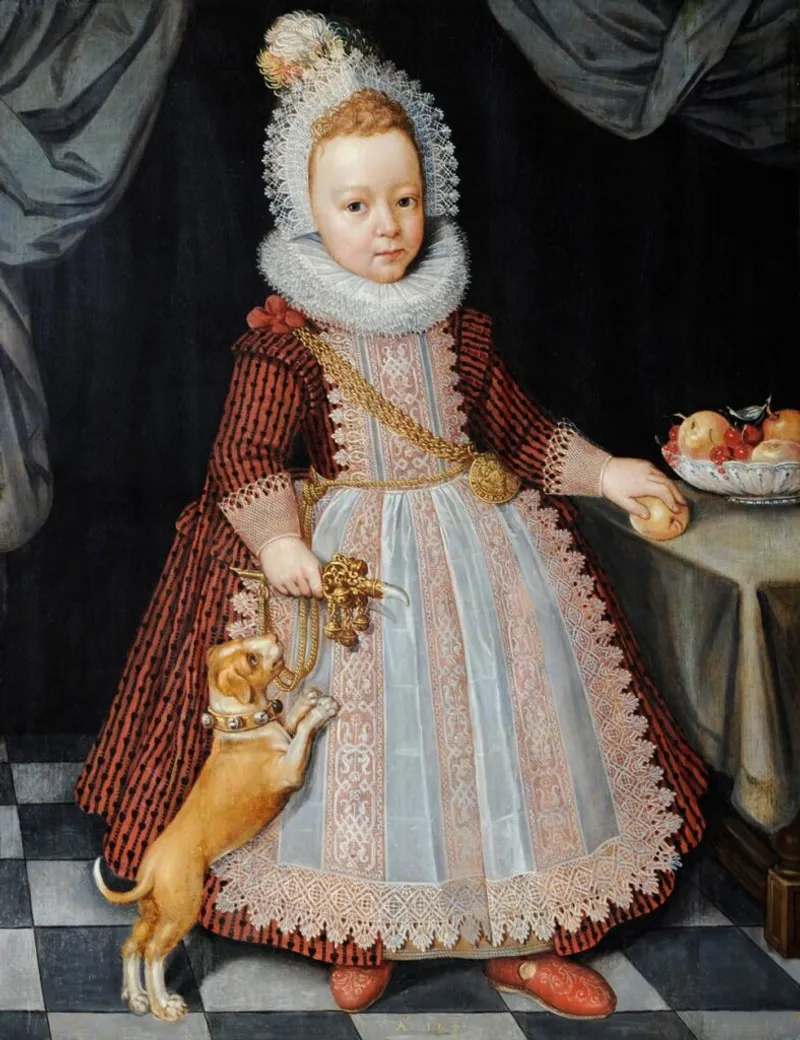
But there were more sophisticated toys, too. Babies often received rattles, which could be made of metal, and sometimes even imported. Shakespeare mentioned rattles in The Merry Wives of Windsor, when Mistress Page says ‘…my little son and three or four more of their growth we’ll dress like urchins, ouphes and fairies, green and white, with rounds of waxen tapers on their heads, and rattles in their hands” (IV.iv.51). And you can see a fancy rattle in Portrait of a Child with a Rattle, attributed to Paul van Somer I. For older children, dolls were very common. Again, the word doll itself didn’t exist yet; it’s thought to be a diminutive of the name Dorothy, and I couldn’t find a reference to it before the 17th century. They would have been called ‘poppet’ or ‘puppet’, ‘popyn’, or simply ‘babe’ or ‘baby’. From a gender perspective – which I’m always interested in, these dolls were not always female. Nor were they exclusive to girls. Boys played with them, too. These toys could easily have been made at home, using scraps of fabric, such as rags sewn together. Again, Shakespeare wrote of a ‘babe of clouts’ in “King John” (III.iii.58). By the reign of
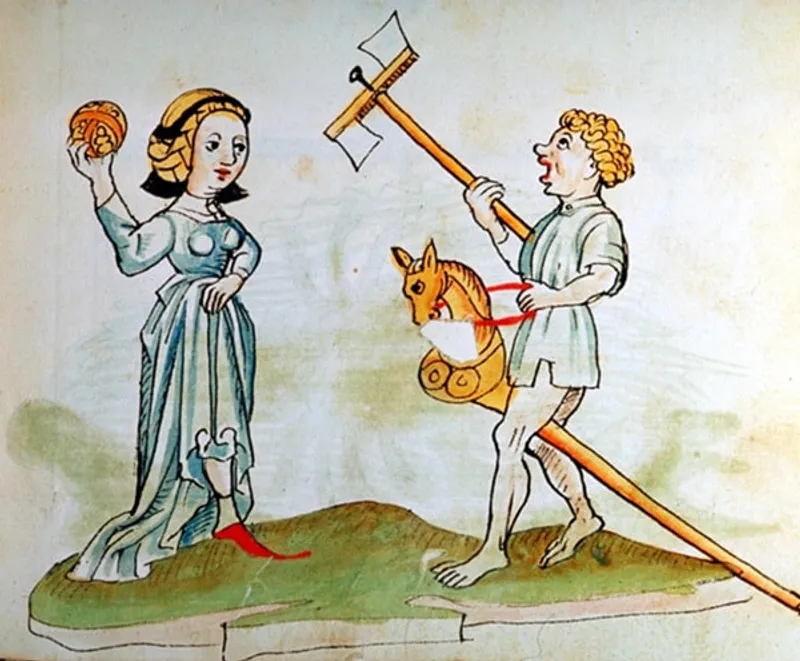
There were many other toys, of course. A very popular one seems to have been small windmills to wave around. John Florio described them in 1598 as “a piece of card or paper cut like a cross and with a pin put in at the end of a stick which, running against the wind, doth twirl about.” Hobby-horses were also, of course, popular in a society where horses were central to everyday life. These could be anything from a simple stick to a polished stick with a modelled horse head at the end. Spinning tops came in all kinds and sizes, from small ones spun with fingers to larger ones whipped to revolve. An English to Latin dictionary, “Promptorium Parvulorum,” compiled for schools in 1440 and printed in England as late as 1528, lists four kinds of tops for children’s play: top, prill, spilcock, and whirligig. I love that word, it really gives the idea of a fun toy, doesn’t it?!
Playing Games
Just as with the toys mentioned above, there was such a richness and variety in terms of games at the time that there’s no way to mention them all – just take a look at this table I made of the ones I found in Tudor and Stuart sources while researching this text! And no, I don’t pretend to know the rules to all of them.
Tick-Tack
Trump
Draughts
Tennis
Blind man’s buff
Leap-frog
Scourge-top
Shove-board
Bowls
Loggats
Skayles/pins
Spurn-point
Blow-point
Morell (nine-men’s morris)
Span-counter
Handy-dandy
Barley break
Hot cockles
King-by-your-leave
Stool-ball
Check-stones
Mumble-the-peg
Spurn-point/Hopscotch
Cherry-stones
Dice
Mumchance
Tick-tack
Shove-groat
Football
Nine holes
Trap-out
Chess
Hide-and-seek
Quoits
Truss
Backgammon
Some of them were also adult games. Many remained popular into the 19th century, and they were catalogued by the incredible folklorist Alice Bertha, Lady Gomme. Games were divided into those of skill (whether manual dexterity or intelligence) and those requiring physical strength. In the first category, there were actions using parts of the body, such as whistling, bird calls, popping noises, or finger tricks. “Handy-dandy”, for instance, involved moving small objects from hand to hand while someone guessed where they were. “Cherry-pits” or “cherry-stones” was more interactive and competitive. Children would throw cherry stones at a hole to score, and they would usually lose the stones that missed the target. Similarly, using nuts or conkers, children created miniature versions of bowls. The same could be done with marbles, which were often called ‘stones’, too.
Games requiring intellectual ability included ‘morells’ or ‘merels’, played with stones on a grid of three concentric squares, or what people today call shove ha’penny, and that some people still play in pubs. An older version of this game was mentioned by Shakespeare, who seems to be coming up more often than I would have thought in this text, when the character Falstaff orders Bardolph to throw Pistol downstairs ‘like a shove-groat shilling’ (Henry IV Part 2), since in this game the players would shove five coins onto the board when it was their turn. Using this image is interesting because we know that Shakespeare was writing to a broad audience at the time, and so it’s reasonable to assume that most people would have understood this reference, which indicates that this must have been a fairly common game. More sophisticated games like backgammon and chess required special boards and sometimes cards. During school breaks, children might play “trump,” a popular and easy game, which is why it was described as being played by those of around eight-years-old. As for more physical games using strength, they were mainly for teenagers and adults but, as always, were copied and adapted by children, too, like I mentioned with bowls using nuts before. Many of these were games of throwing. “Loggats”, as the name indicates, involved throwing logs at a target, probably a less intense version of what people still do at the Highland Games, “quoits” used discs made of metal or stone, and “mumble-the-peg” was a knife-throwing game which I’m sure was just as dangerous as it sounds!
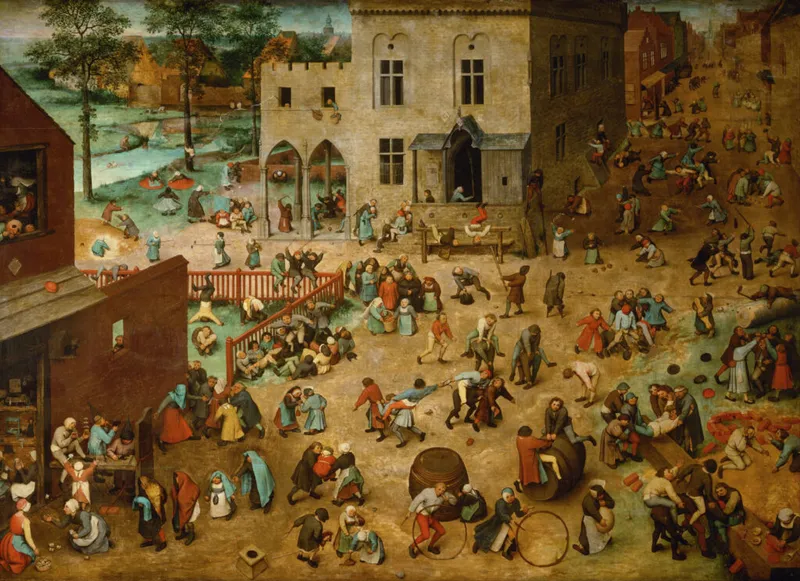
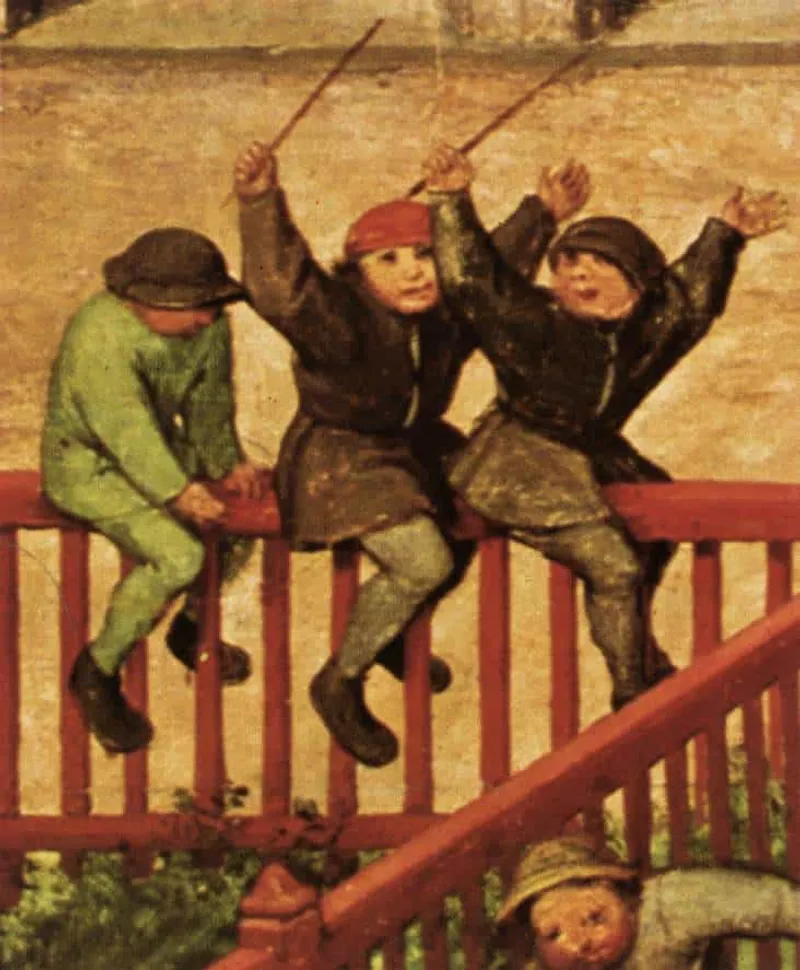
Games of action and skill were played by adult men, boys, youths, and sometimes even girls and women (the shock!). Ball games, for instance, involved using hands, feet, bats, or a combination of them and “stool-ball” involved defending a kind of wicket stool with a bat while another player tried to topple it, so, similar to cricket or baseball today. It was considered harmless enough for girls and women to play by themselves or with boys. Tennis was widespread and particularly popular at court, as a game where players hit a ball against a wall or the ground or over a net, using their hands or a racket. And although most ball games were played primarily by boys, girls sometimes joined in. As I’m sure you noticed, though, the primary sources used for this text focus mainly on boys, about whom there are more documents, such as exercise books used at grammar schools. Because people worried more about their education, their play was discussed at length, and so we know more about it. As it’s often the case, with girls and women we are largely left to imagine and fill in the gaps using educated guesses. For boys and men, though, it’s important to keep in mind how much overlap there was between playing games that required strength and developping athletic and military skills which could be useful, especially for those of wealthy families.
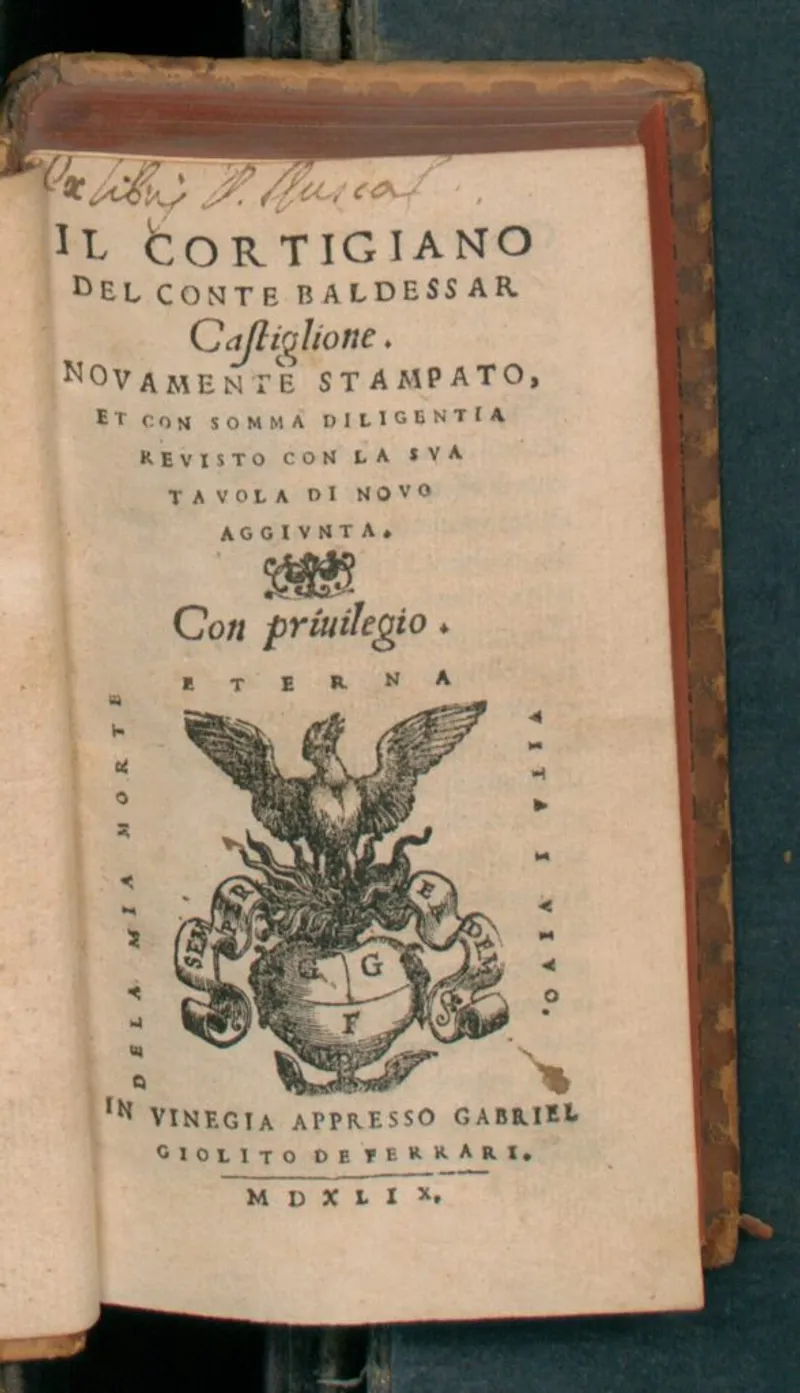
Young men studying in Oxford could take part in running competitions and the widely successful
Restrictions on Playing
I started this text with Shakespeare and
In Flanders, once, there was a company/Of young companions practised to folly,/Riot and gambling, brothels and taverns;/And, to the music of harps, lutes, gitterns,/They danced and played at dice both day and night.
Card playing was criticised too, mainly because of the gambling aspect that often came with it. Still, some writers like
Besides parents and family, as children grew, these restrictions could come from their employers, if they were apprentices, for instance. But also, if they went to school, from school masters. By then, many children were going to school, especially boys. Those who attended school studied for long hours and followed strict lessons and so, they would play on their before and after classes, on their way to and from school, and during their midday break. Of course, teachers realised how interested children were in playing and so they often made it a subject of discussion in class. For instance, in grammar schools boys could translate sentences from Latin into English describing games and hunting, which presumably could have made the lesson lighter and more fun, I guess. In the Vulgaria, a Latin exercise book by William Horman, who taught at Eton and Winchester, the exercises mentioned things like chess, dice, and playing tennis.
The Church also worried about excessive time spent playing, but not so much where children were concerned; their focus tended to be on teenagers. Up until the
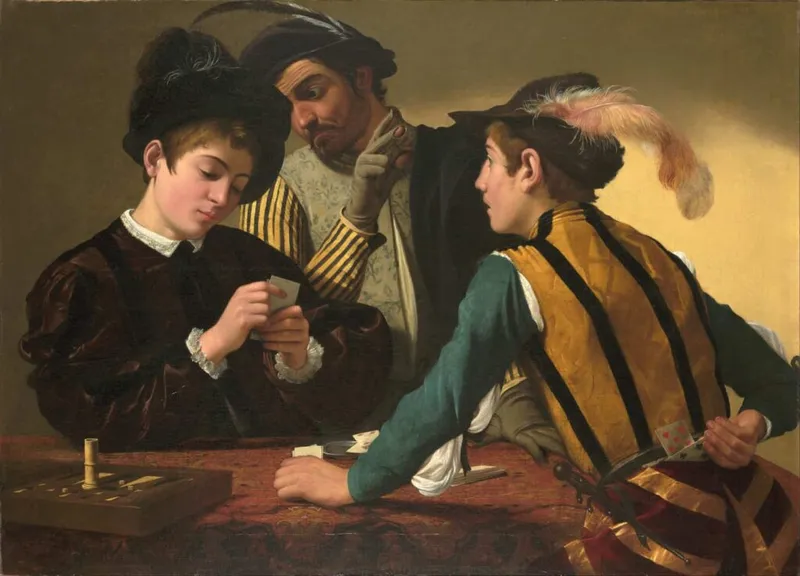
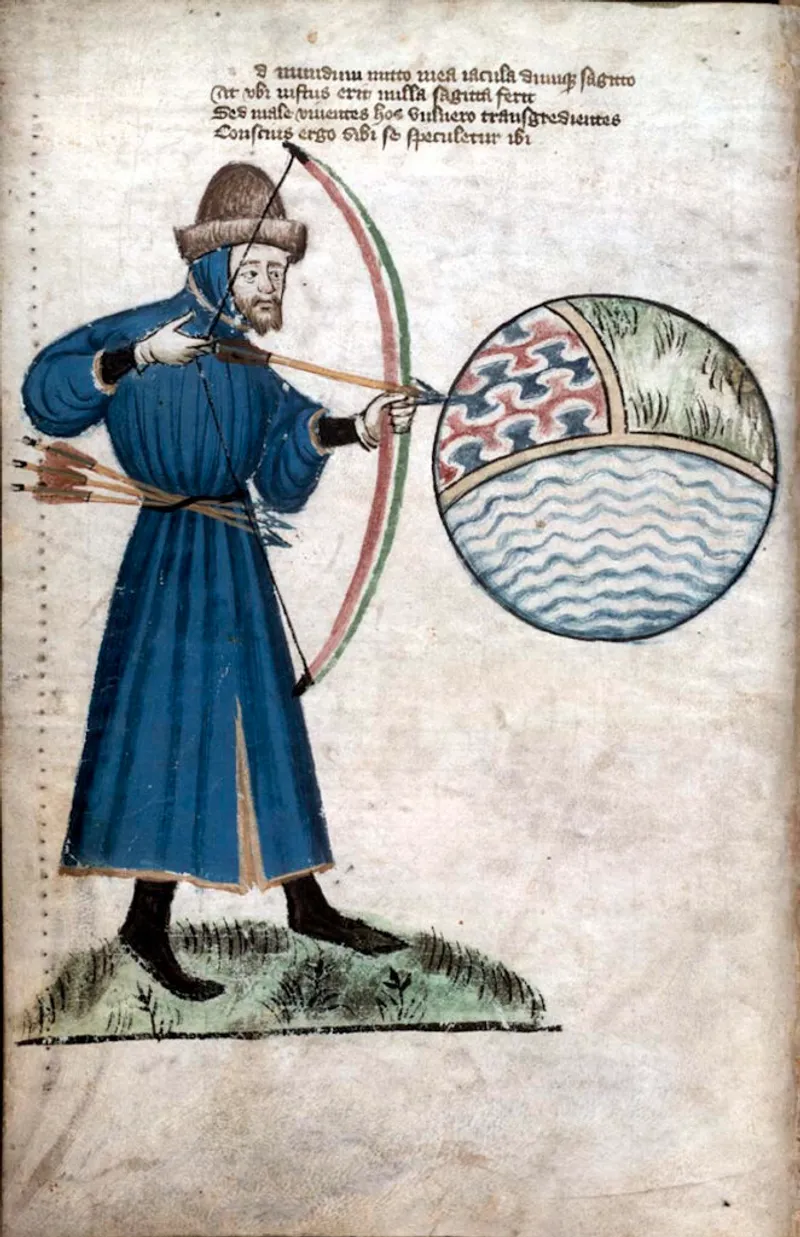
Regulations on children’s playing from adults also came through the Crown itself. There was a concern about excessively indulging in play and people becoming degenerates, especially among the populace. So, in 1495, for example, apprentices and servants were forbidden to gamble using money; doing so risked being fined. If they played a game, the stakes should be either foodstuffs or drinks. Some historians have linked the concerns over boys and youths being distracted with games and playing in general with neglecting practising shooting with the longbow. I’ll explain. Arguably, it was in the crown’s interest to keep the male population focused on practising archery using longbows, and so this was highly encouraged. Longbows had a long and symbolic history in England; they were part of the national memory and myths hailing from the
Violence and Play
Cruelty and violence in play, especially towards animals, is an aspect of Tudor childhood that can be hard to understand today. It’s always a challenge to look to the past without our modern values and, by our 21st-century standards, the world of play in the
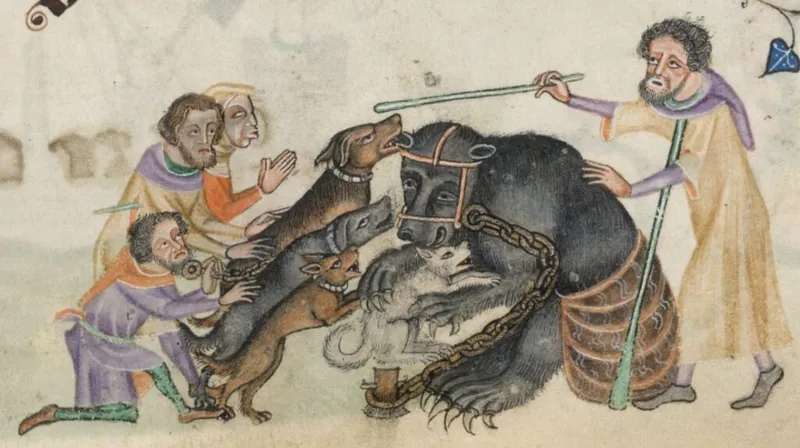
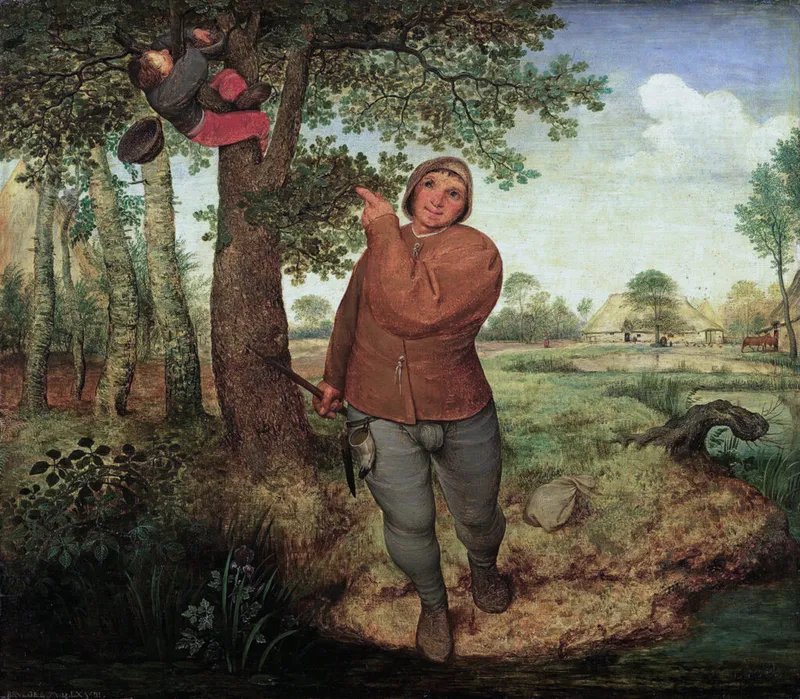
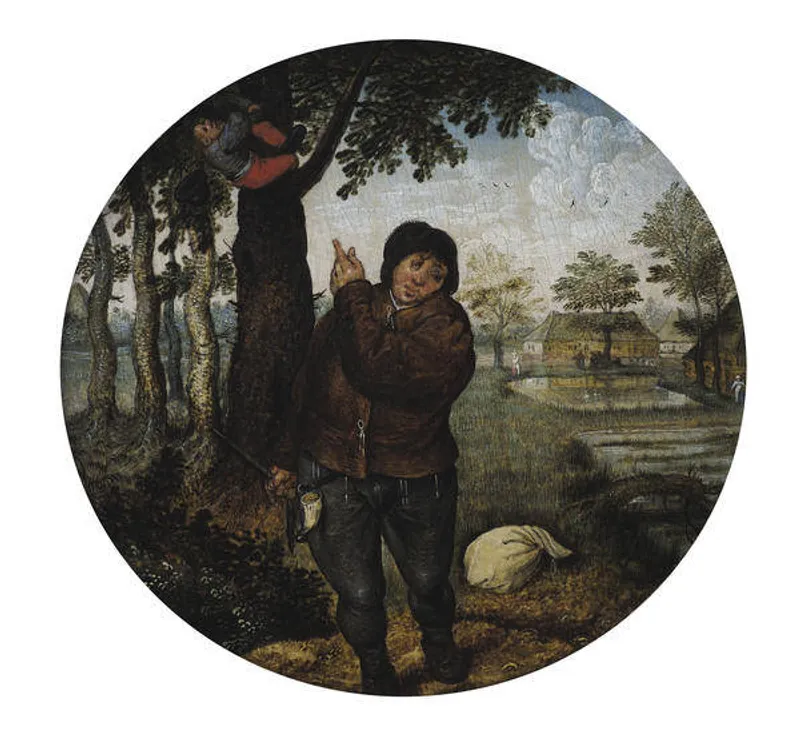
In the 1522 play ‘The Worlde and the Chylde, the character Wanton boasts of cruel acts such as gelding snails and catching cows by their tails, plus robbing sparrow’s nests, while in John Heywood’s ‘The Play of the Weather’, a character also delights in catching birds. Similarly, in William Wager’s play, the boy Moros says, ‘I will bring you a pretty bird’s nest’. And the artist Pieter Brueghel the Younger depicted this in Robbing the Bird’s Nest. Besides nest robbing for fun, there were other forms of violence towards adult birds. Cock-fighting was extremely popular among both adults and children. On Shrove Tuesday, it was traditional for boys to bring birds to school for fights, with the schoolmaster often keeping the dead birds. And, despite occasional bans, such practices continued. Plus, bear-baiting was hugely profitable and it was also attended by children, especially near theatres on the South Bank. You could argue that these practices reflect the social context of the time, that people relied heavily on agriculture and competed with birds for resources and the benefits of human labour. Birds were, of course, also a source of food. But that argument wouldn’t work for bear-baiting or pulling a cow’s tail, would it?
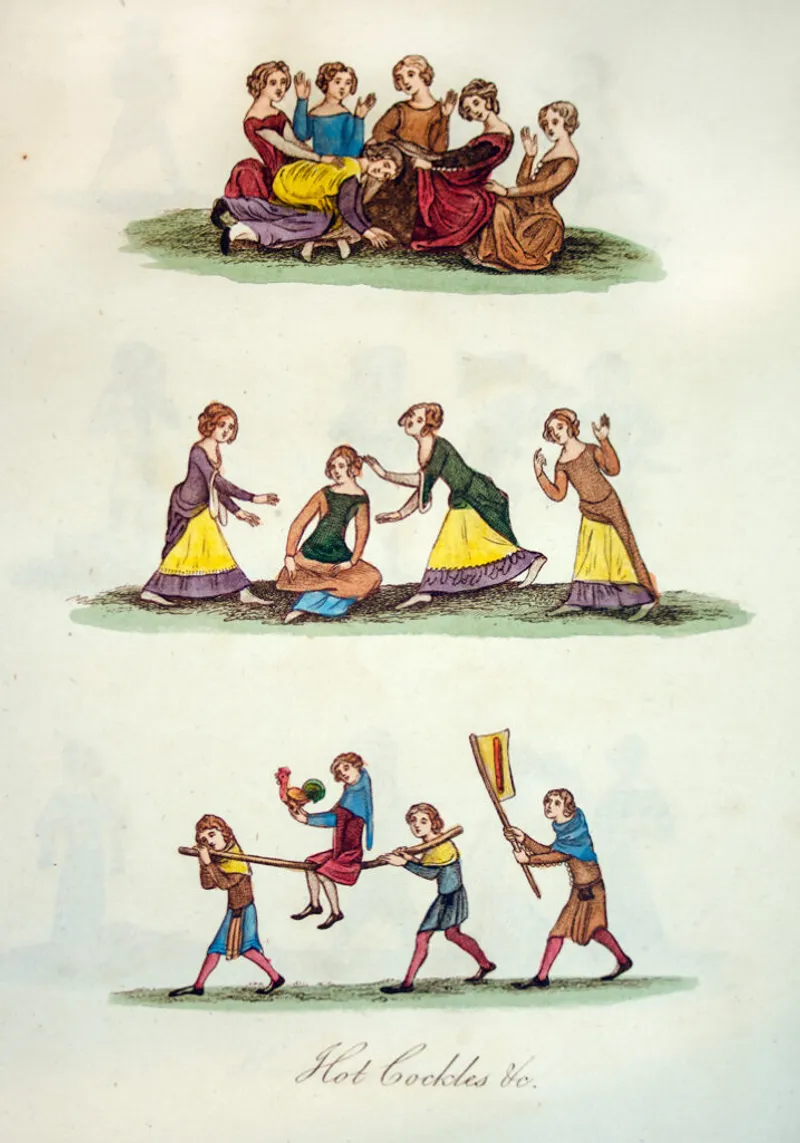
Plus, people were often cruel to each other; for instance, beggars were punished with whipping. Children teased each other, sometimes in cruel ways. The boy Wanton, who represented childhood in the play ‘The Worlde and the Chylde’, enjoyed tormenting other children. And, in William Wager’s 1569 ‘The Longer Thou Livest, the More Fool Thou Art’, yet another foolish boy was depicted with a ball and a list of all the mischief he would get up to, including tormenting animals and other children. But violence was also sometimes part of the way games were supposed to be played among youngsters. ‘King-by-your-leave’ and ‘blind-man’s-buff’ both involved a player being blindfolded and sometimes hit or teased. ‘Hot cockles’ involved a person knelt with their eyes covered who tried to guess which player struck them in the back, which sounds to me like the worst game ever. People writing about how the body should be educated alongside the mind at school recommended many physical activities, including wrestling and ball games. The headmaster of a London school, Richard Mulcaster, wrote so in his 1581 book ‘Positions’, although he criticised the violence involved in football at the time. Football games played by both boys and teenagers could be quite agressive – just think of its cousin, calcio storico, the ancient kind of football still played in Florence today and which resembles a fight more than what we call football today. English versions were even called ‘camp-ball’, from the verb ‘camp’, meaning to fight. The issue with games like this, besides injuries, was arguably that they had the potential for subverting the social order through violence. The Puritan writer I mentioned before,
Conclusion
Life in the
In this text, I tried telling you the story of an often-neglected aspect of everyday life, the world of children playing and having fun. I have been limited by the sources to focus more on boys than on girls, as it often happens, unfortunately. School masters, educators, and moralists worried about what an education should look like and in describing what not to do would often write about playing with toys and games. Still, we are left with many questions, especially about all the games that I mentioned. How were they played, and by whom? There are few primary sources from children themselves, although they could write about their experiences write once they grew up. Material culture and archaeology can help here. For instance, in the 1960s, an excavation of a former 16th-century school revealed small items fallen through the boards. These were probably rewards or treasures won in games, especially metal objects like pins, beads, and discs. And, because most children wouldn’t have had access to money, these objects could act as currency among them. Pins were particularly common. In the 17th-century tale ‘Tom Thumb’, for instance, children played ‘for pins and points, and cherry stones’, attesting to the habit of keeping treasures.
Still, it’s not every day that we are lucky enough to find clues like this, and so we tend to depend on what adults wrote about children, and especially how they showed up in popular ballads and plays – it’s no coincidence that Shakespeare has featured throughout this text! We know that girls would pretend to be mothers and queens, just like boys would pretend to be kings and knights – just like today. Children use play to make sense of the world around them and to understand their role in it, often by copying what adults do. So their games tend to offer us a mirror to our own society, whether in the
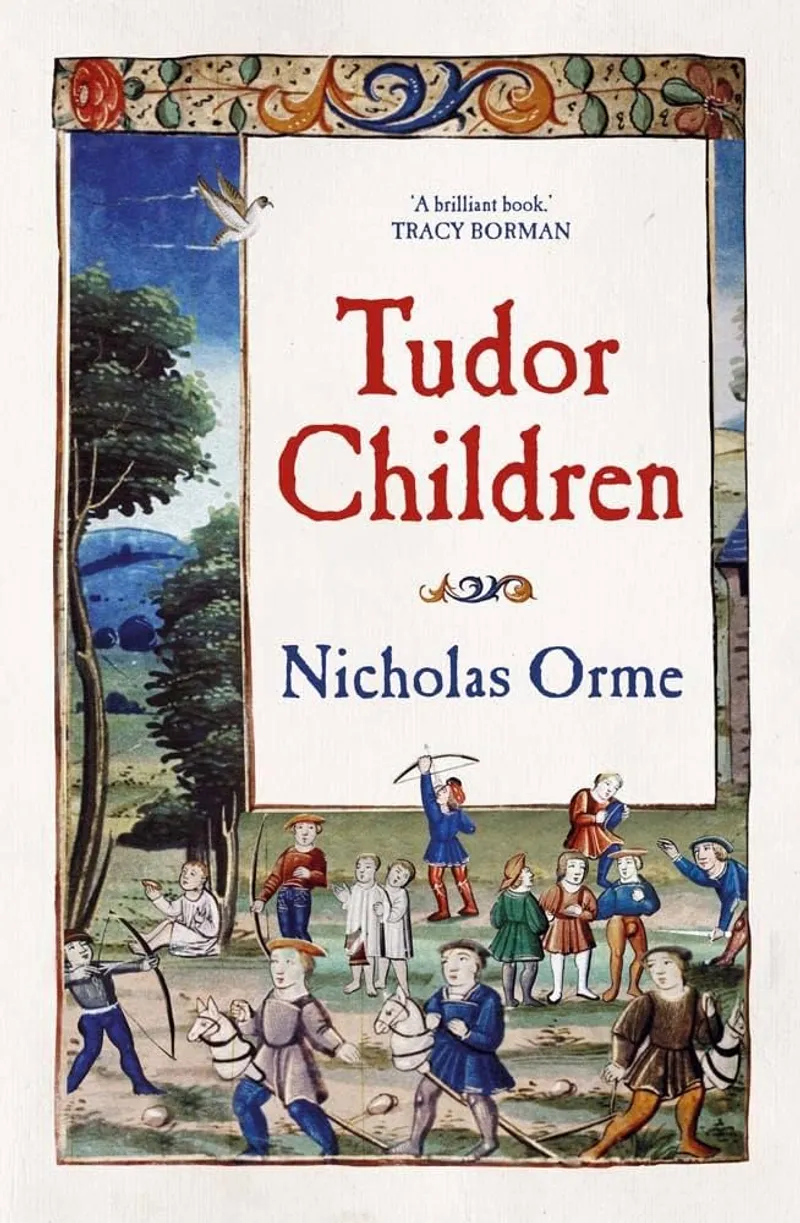
Thank you for joining me on this journey through Tudor childhood. Also, if you want to learn more, I highly recommend you check out this book, Tudor Children, by Nicholas Orme; there’s everything from children in the domestic world, learning at schools, going to Church and, of course, playing. I also have a Patreon, and I would be very grateful if you would consider joining our community and supporting my work and helping me bring you these history texts and videos. Thank you and see you next time!
References
Anon., Tom Thumbe, His Life and Death (1630).
Geoffrey Chaucer, The Canterbury Tales (2007).
John Florio, A Worlde of Wordes (1598).
John Gerard, The Herball (1633).
John Heywood, A Play of the Weather (1533).
William Wager, The Longer Thou Livest, The More Fool Thou Art (1569).
The Worlde and the Chylde (1521).
Further Reading
Ilana Krausman Ben-Amos, Adolescence and Youth in Early Modern England (1994).
Anthony Fletcher, Growing Up in England: The Experience of Childhood (2008).
Hazel Forsyth and Geoff Egan, Toys, Trifles and Trinkets: Base Metal Miniatures from London, 1200-1800 (2005).
Alice Bertha Gomme, The Traditional Games of England, Scotland, and Ireland (1894-8).
Paul Griffiths, Youth and Authority: Formative Experiences in England, 1560-1640 (1996).
Colin Heywood, A History of Childhood (2018).
Iona and Peter Opie, Children’s Games with Things (1997).
Nicholas Orme, Tudor Children (2023).
Keith Thomas, Rule and Misrule in in the Schools of Early Modern England (1976).