 Dr Julia Martins
In 1503, in the quiet Swiss village of
According to the chronicler
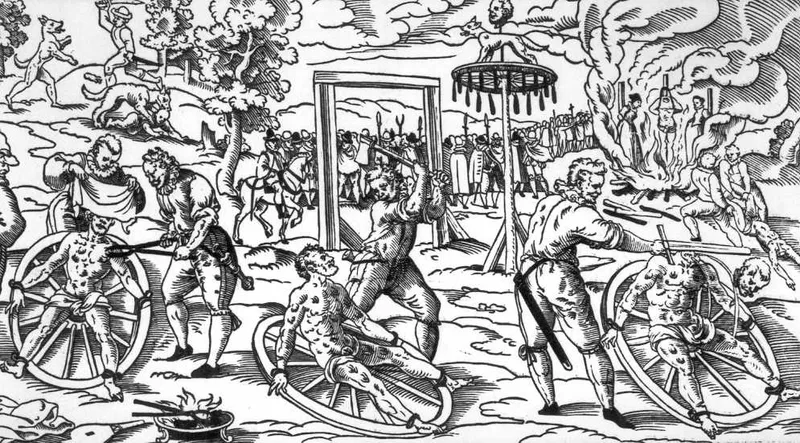
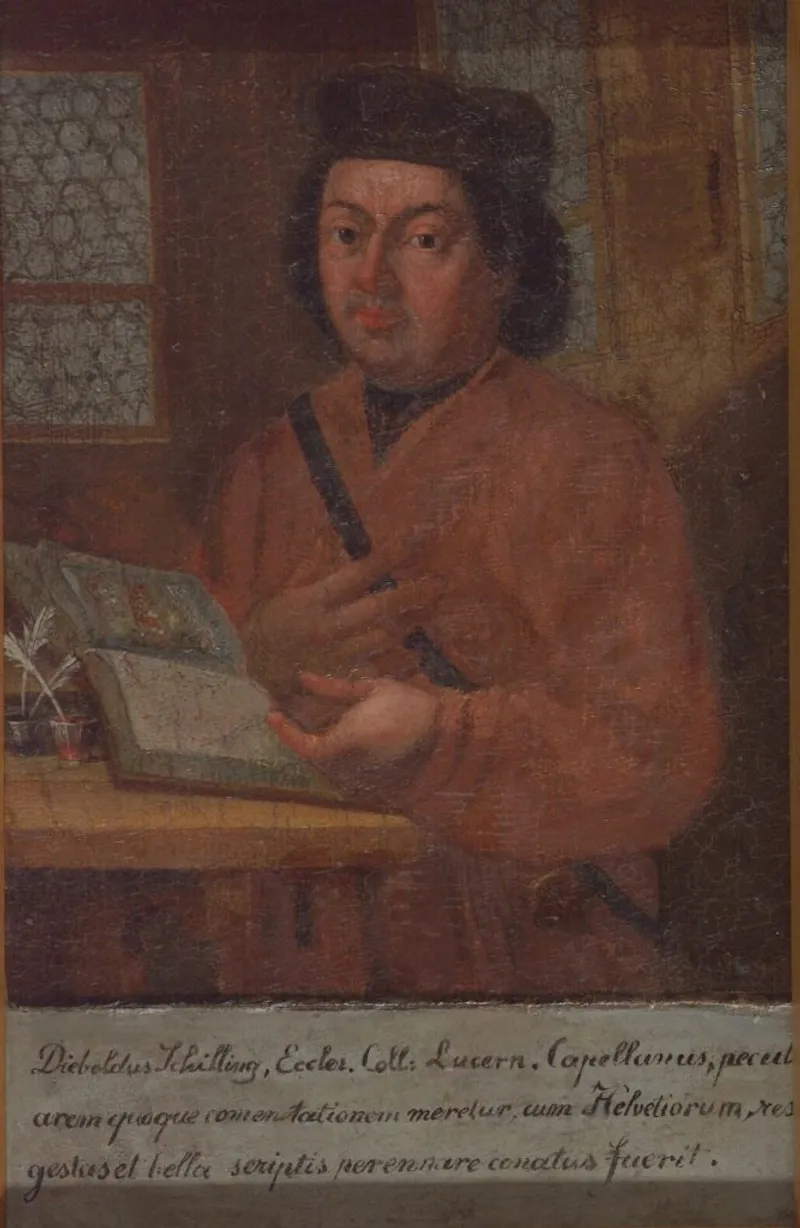
This was a bier-ordeal – a practice rooted in the belief that a corpse would bleed in the presence of the murderer. Known in Latin as cruentatio, from cruentare, to make bloody, the ritual was both a spiritual drama and a form of forensic testimony. It gave the dead the last word. Today, we would probably have a hard time understanding this as definitive evidence. But to the people of
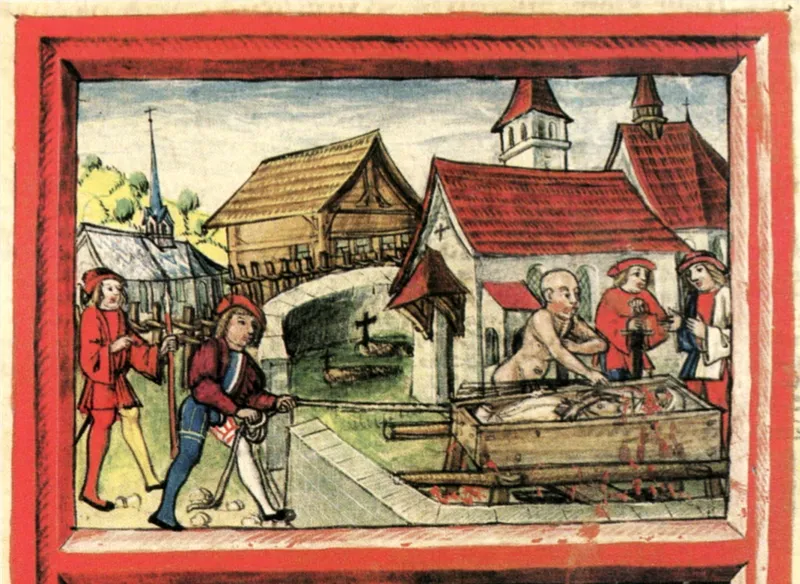
Part 1: The Divine Witness: Why Did People Believe This?
To understand cruentation, we need to begin with blood. To understand why people believed corpses could bleed like this, we have to step into a different way of thinking about bodies, death, and truth; a world where the line between divine and physical signs was very thin. In Christian thought, blood carried more than life – it carried meaning. It could bear witness, signal injustice, and act as a moral force. The foundational text was Genesis. After Cain murders Abel, God declares: “The voice of thy brother’s blood cries out to me from the ground.” Not metaphorically. Literally. Blood speaks, and God listens. This belief that blood retains moral agency helped shape medieval and early modern responses to violence. Murder disrupted more than human law – it offended divine order. In that view, the physical remains of the victim could manifest the truth that earthly systems failed to uncover.
This theological logic underpinned cruentation. The ritual emerged from a wider belief that God might reveal hidden crimes through miraculous signs. When a corpse bled in the presence of a suspected killer, many understood it as divine testimony. The wound reopened, and with it, the truth emerged. Cruentation also drew on the logic of older ordeals. If God could use boiling water or hot iron to expose lies, why not blood? The Church often found these rituals troubling, though. The Fourth Lateran Council in 1215 forbade clergy from participating, partly to curb the expectation that God would reliably perform on cue. The concern was theological: you couldn’t summon God’s power like a courtroom trick.Official bans slowed the practice but couldn’t erase the underlying belief. Cruentation survived, especially in Germanic and Slavic regions.
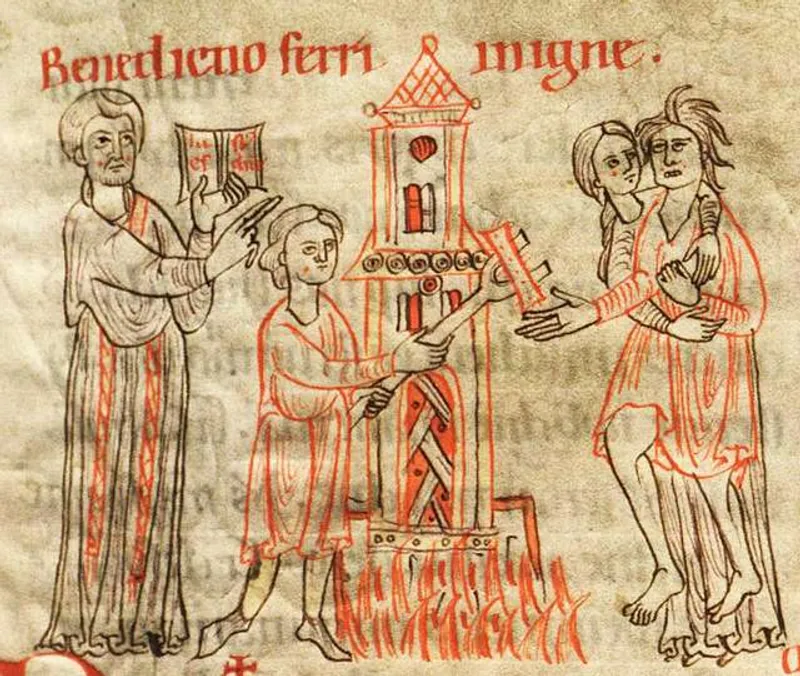
That belief shifted into folklore and literature. The Nibelungenlied, a German heroic epic from around 1200, includes a dramatic episode where the murdered hero bleeds when his killer draws near. The scene makes guilt visible through the body’s response. Chronicles used the same motif. The 13th-century monk
Such stories, whether legend or not, reveal how medieval people interpreted mysterious post-mortem bleeding as a divine sign accusing the guilty. Shakespeare later alludes to this folk belief in Richard III – the dead King Henry VI’s wounds “bleed afresh” when the murderer comes near. The implication must have been clear for contemporary audiences. The bleeding corpse acted as a divine witness, unbound by the limitations of human courts or politics.
That made cruentation a potent resource, especially in cases with no witnesses or confession. Here, a bleeding corpse offered a powerful sense of certainty. The ritual’s function went beyond symbolism; in the eyes of the community, the bleeding body was the moment justice became manifest. It acted as sacred evidence, a direct bridge between earthly ignorance and heavenly truth, exposing the unspoken and making visible what had been hidden — a miracle, but also, a method.
Part 2: The Corpse in the Courtroom and in the Cloister
The bleeding corpse might have begun as divine omen, but over time, it entered the courtroom — or more precisely, the churchyard just outside it. In parts of the Holy
This was never standard legal procedure. You won’t find cruentation in the Constitutio Criminalis Carolina, the 1532 criminal code that aimed to standardise Germanic law. It remained outside the formal lawbooks, operating instead through custom, popular expectation, and the symbolic weight of the ritual itself. In practice, the ritual was often used alongside confession and witness testimony – not instead of them. But it could shape perception, pressure the accused, or tip the scales for magistrates looking for divine endorsement.
Denmark under Lutheran rule presents an interesting tension. The practice was officially banned. Lutheran theology was more sceptical of miracles, and early modern legal reformers wanted evidence, not signs. Yet the prohibition was unevenly enforced. Pastors in small towns quietly permitted the ritual to continue. They might not have believed it entirely, but they recognised its social power. If the dead could speak, people wanted to hear.
Elite endorsement added weight. In
Earlier, the
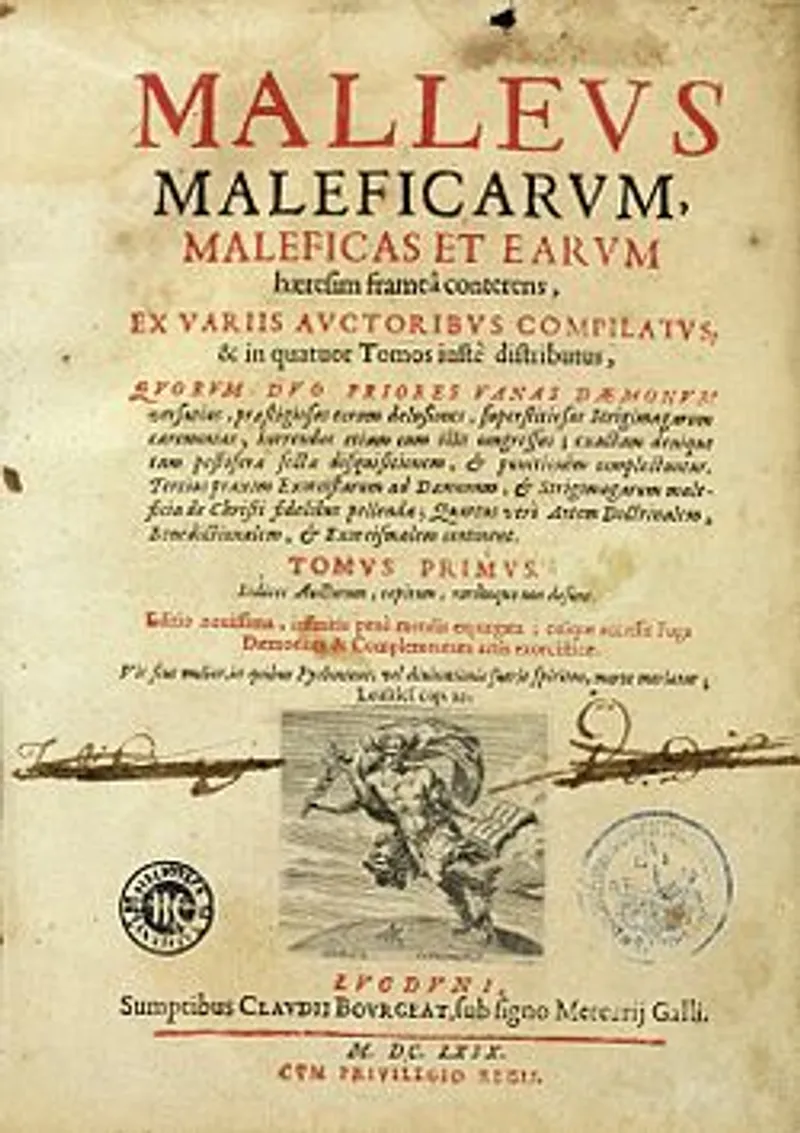
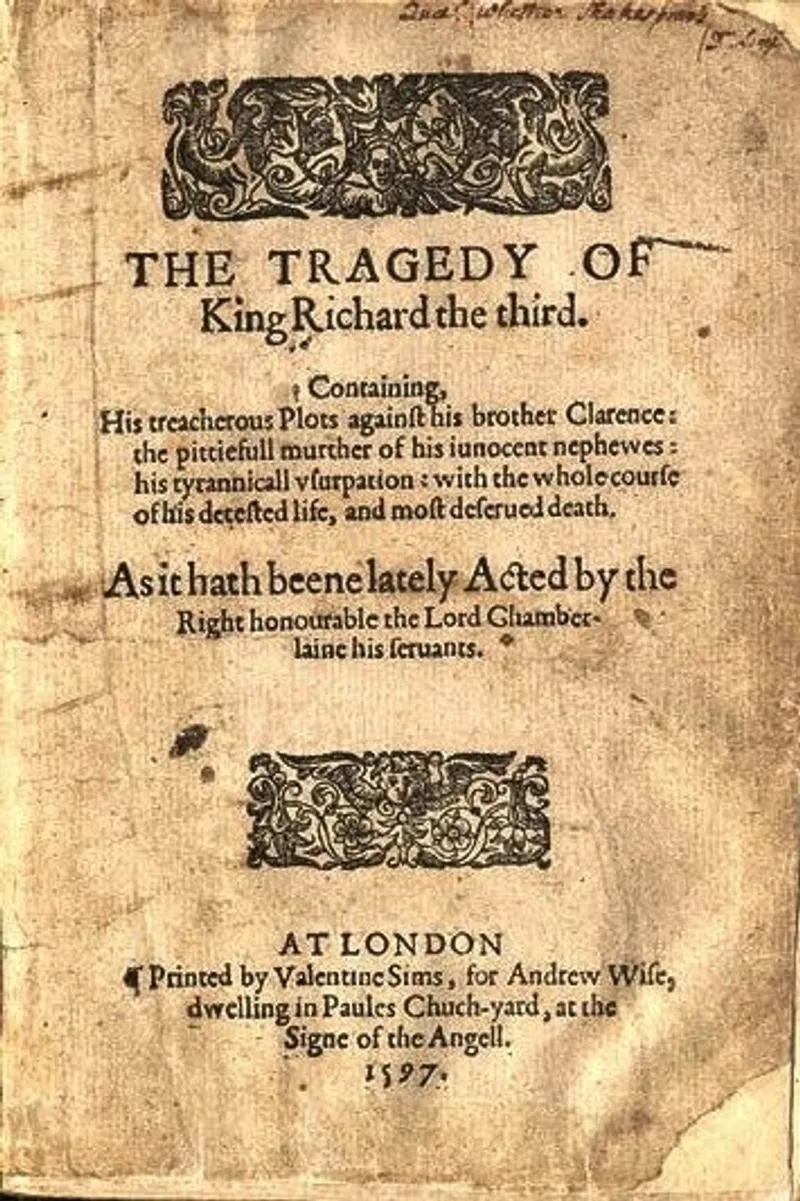
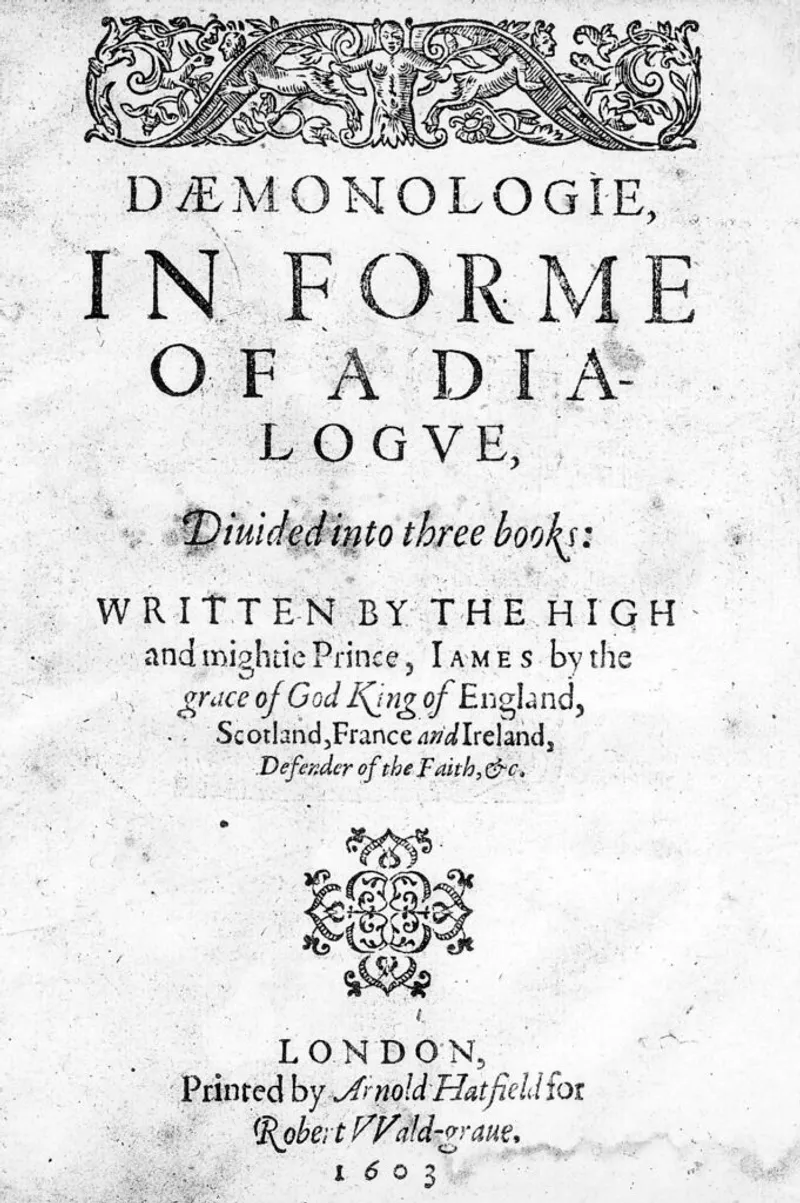
Shakespeare picked up on this again in Macbeth, when, after the murder of King Duncan, Lady Macbeth cannot scrub the imagined blood from her hands: “Out, damned spot! … Who would have thought the old man to have had so much blood in him?” , she cries. Her guilt is written in her own mind, but the metaphor echoes the cultural obsession with blood as truth. Her conscience replicates the cruentation logic – the blood returns, the body protests, even if only in her imagination. The stain speaks. The crime won’t stay hidden.
Perhaps the most interesting case from the
But not all applications of cruentation were so pious. The practice also appeared in antisemitic narratives, especially in the form of blood libel. These were false accusations that Jews had ritually murdered Christian children, often “proven” by signs such as bleeding corpses. The supposed post-mortem bleeding was taken as divine outrage. These accusations led to massacres and expulsions, a dark example of how sacred symbols could be turned into tools of persecution. Cruentation, then, sat in a liminal space: partly theological, partly legal, partly theatrical. It offered communities the sense that justice could be visibly, divinely revealed. And in a world where courts lacked forensic tools and operated amid deep social mistrust, that promise was difficult to let go.
Part 3: Bleeding Bodies and Medical Doubt
By the mid-sixteenth century, Europe was changing. Anatomy theatres were being built, medical faculties were growing, and the body – once a site of miracle – was increasingly becoming a site of study. Europe was still deeply religious, but a new type of thinker was emerging. The anatomist. The legal physician. The man of reason. And to these men, bleeding corpses raised questions. Could blood flow from a corpse without divine intervention? Could wounds re-open naturally? Was cruentation real, or just a misinterpretation of what happens after death?
As early as 1545, the physician
One case stands out as existing between the old belief and the new science: the 1688 trial of
The fact that the debate had reached the courtroom shows how contested the issue had become. For centuries, cruentation had been treated as a kind of sacred intuition. Now it was being forced to justify itself in a world that demanded mechanisms, not miracles.
In 1709, the compendium De miraculis mortuorum, “On the Miracles of the Dead”, devoted nearly 90 pages to bleeding corpses. The very length of the discussion reveals the strain. The author felt compelled to catalogue and defend the phenomenon in detail, which suggests how embattled the belief had become. As late as 1730, the medical-legal treatise Systema Jurisprudentiae Medicae by
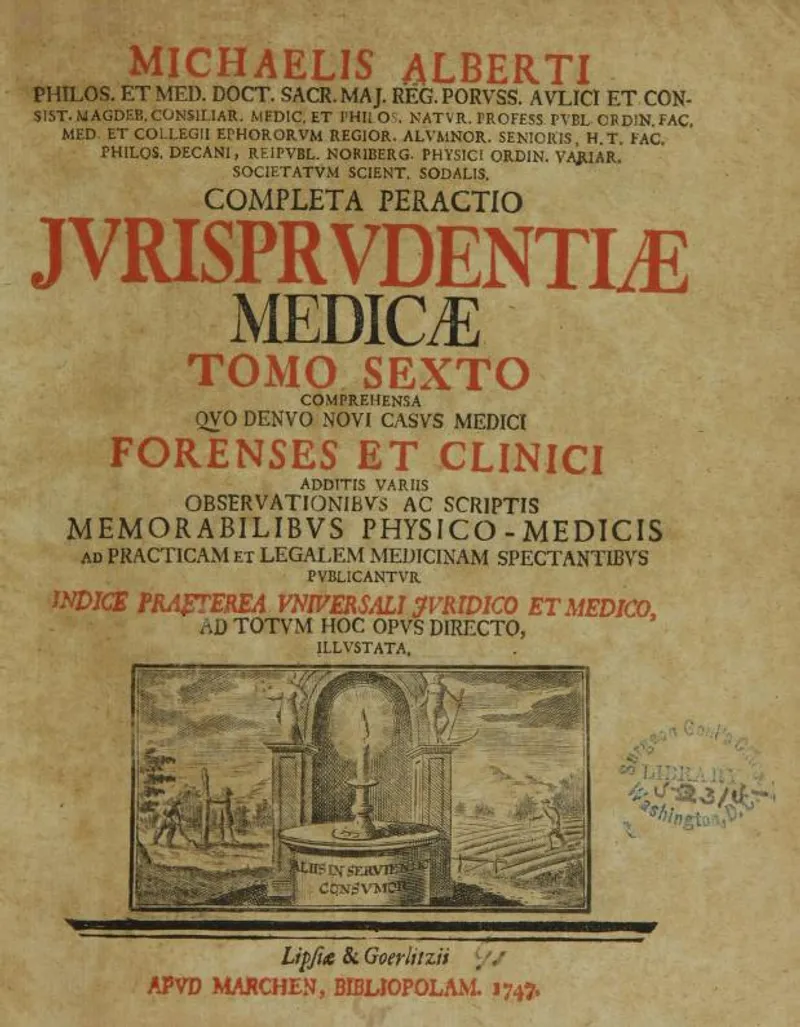
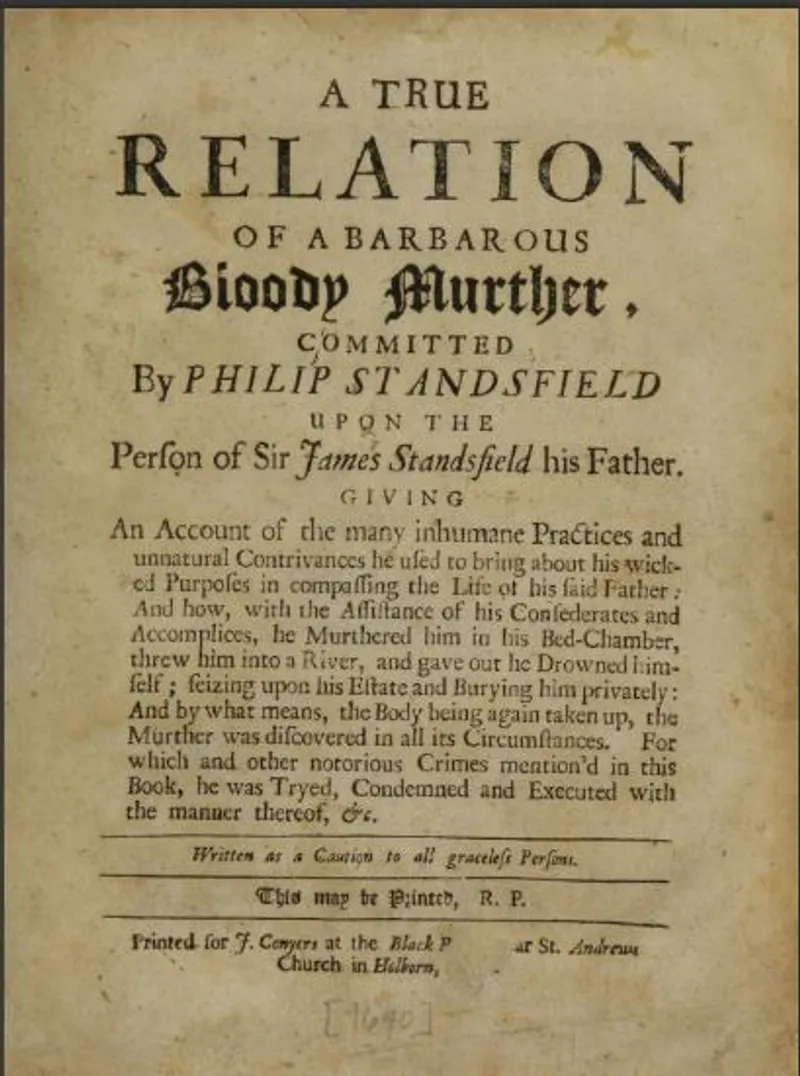
But the
Conclusion: Speaking Corpses?
Cruentation was never just a belief about bodies. It was a belief about justice; or rather, about the desperate need for certainty in a world full of uncertainty. When the law failed, when witnesses were silent or absent, people turned to the one presence that could not leave the scene: the victim. The bleeding corpse promised that truth would reveal itself. That the victim’s voice, though silenced by violence, would not be buried. In that sense, cruentation was more than ritual. It was reassurance; the hope that moral order could still assert itself when human systems faltered.
And the metaphor has proven remarkably durable. The idea that the body bears witness, that wounds speak, that blood testifies, remains powerful, long after the bier-ordeals disappeared from churchyards. Shakespeare knew it. Lady Macbeth cannot wash away the stain. Richard is exposed not by a court, but by the body he tried to silence.
For centuries, people believed a corpse could name its killer. Not through speech, but through blood – the last, most elemental testimony. Today, cruentation is gone from legal practice. It’s gone from medicine and religion. By the 18th century, it was being dismissed as superstition, bad science, emotional theatre. But it lingered in the popular imagination – in stories, in fears, in literature. Because the idea is potent: that the body remembers and truth cannot be buried. Cruentation isn’t just a relic or a historical curiosity. It was crude, dangerous, and misguided, but it was emotionally powerful. It let people believe that justice could still emerge from silence. If you enjoyed this text, do consider becoming a patron, your support truly means the world to me. Thank you, and see you next time!
References
Anon.,“A True Account of the Trial and Execution of Philip Stansfield” (1688).
R. P. Brittain, “Cruentation: In Legal Medicine and in Literature” Medical History,9(1), 1965, pp. 82–88.
Thomas of Cantimpré Bonum universale de apibus (c. 1260).
King James VI/I, Daemonologie (1597), in modern ed. (Cambridge, 1924).
A. Nicolotti, T. Caliò, and F. P. de Ceglia, “Le metamorfosi del sangue,” Annali della Scuola Normale Superiore di Pisa, Classe di Lettere e Filosofia, serie 5, 10/1 (2018), pp. 269–298.
Matthew Paris*, Chronica Majora* (entry for 1189).
Irven Resnick, “Cruentation, Medieval Anti-Jewish Polemic, and Ritual Murder”, Antisemitism Studies 3.1 (2019): 95–131.
Diebold Schilling the Elder, Illustrated Chronicle (1503).
Daniel Wojtucki, “Bahrprobe (cruentation, ordeal of the bier) – obtaining evidence in cases of homicide in legal practice in 16th- and 17th-century Silesian and Moravian towns and the countryside”, Czasopismo Prawno-Historyczne 77(1), 2025, pp. 29–46. (Open Access PDF)
Francis Watt, The Law’s Lumber Room (London, 1895).