 Dr Julia Martins
 Social media might make it seem like fasting (and especially intermittent fasting) is something new. But fasting – voluntary or not – has arguably existed for as long as humans have. People have abstained from food throughout history for many different reasons, not least of which scarcity of nourishment (think of hunter-gatherers during a harsh winter). But the main reason for voluntarily fasting has been religion – just think of the Islamic Ramadan or the Christian Lent. An extreme version of religious fasting has been called ‘holy anorexia’ (anorexia mirabilis), and it was not a rare occurrence among medieval saintly women. The most famous example is perhaps St
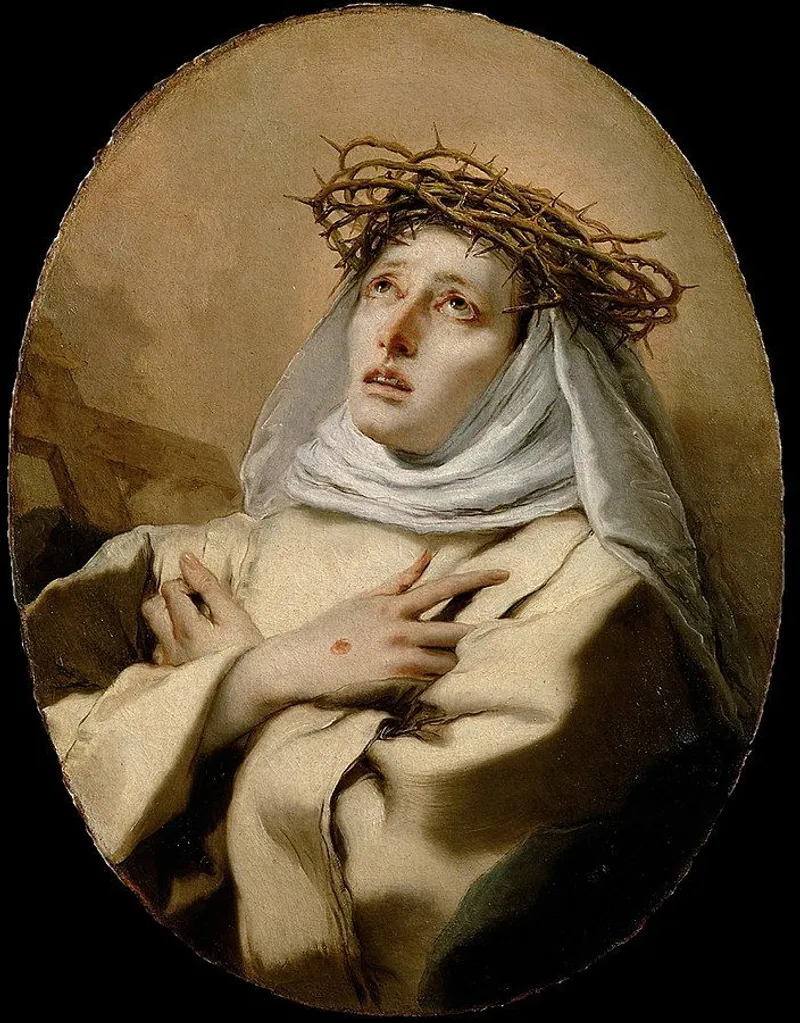
The term ‘anorexia’ comes from the Greek an (lack of) and orexia (appetite), encompassing a range of practices with various meanings. For
‘Holy anorexia’ was a social, religious, and psychological phenomenon, which reached its peak in the 15th century, when hundreds of saintly women were recorded as having survived on little or no food, according to some contemporary writers. Most cases were recorded in the Italian peninsula, with plenty of examples both before and after that period (you can check out a wonderful summary in pictures here); still, the 15th-century numbers the most cases of anorectic mystics. Because so many women in this period undertook extreme fasting, some historians have likened their anorexia mirabilis to the contemporary anorexia nervosa. But we should be careful with anachronisms: medieval people understood their bodies in a very different way than 21st-century people do. Yet many of these saints are still revered by Catholics today, as a symbol of piety and devotion.
For religious women, food was one of the few ways in which they could control the world around them; through renouncing ordinary food, they turned themselves to the divine nourishment of Christ. By embracing the suffering of the passion and letting go of their physicality, saintly women could paradoxically control their bodies. They could get closer to the divine, understand the pain of Christ, and elevate themselves above the people around them. Significantly, with excessive weight loss, many of these women stopped menstruating (
It is not a coincidence that other religious women of the period, such as
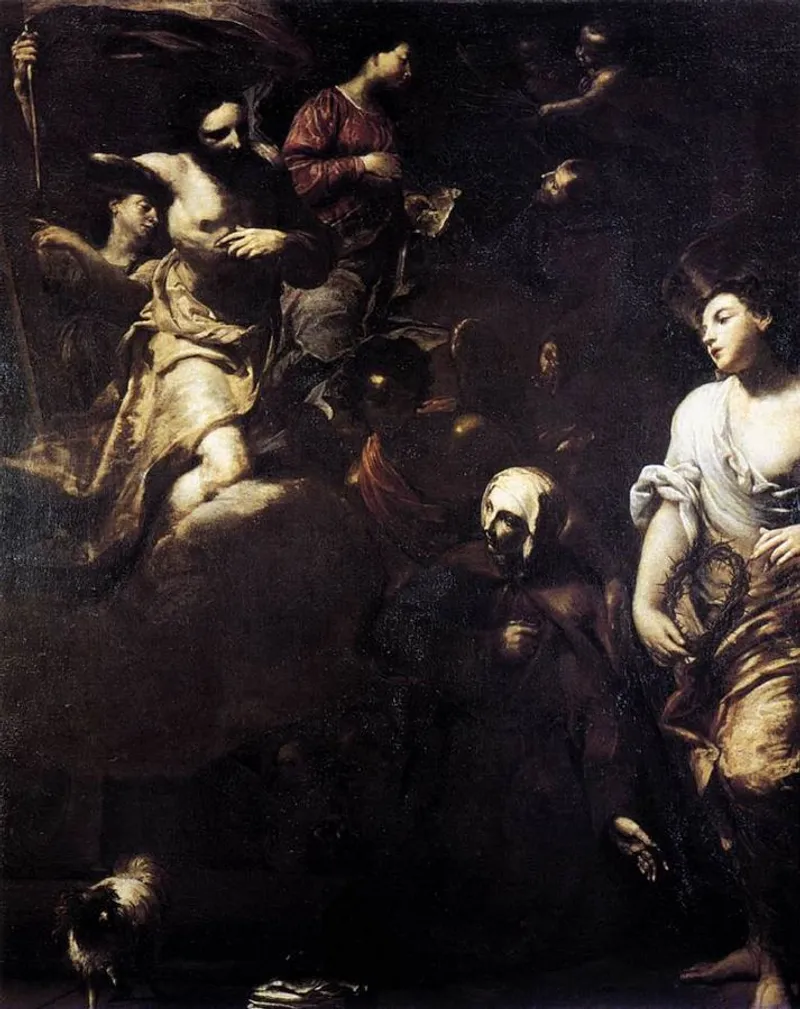
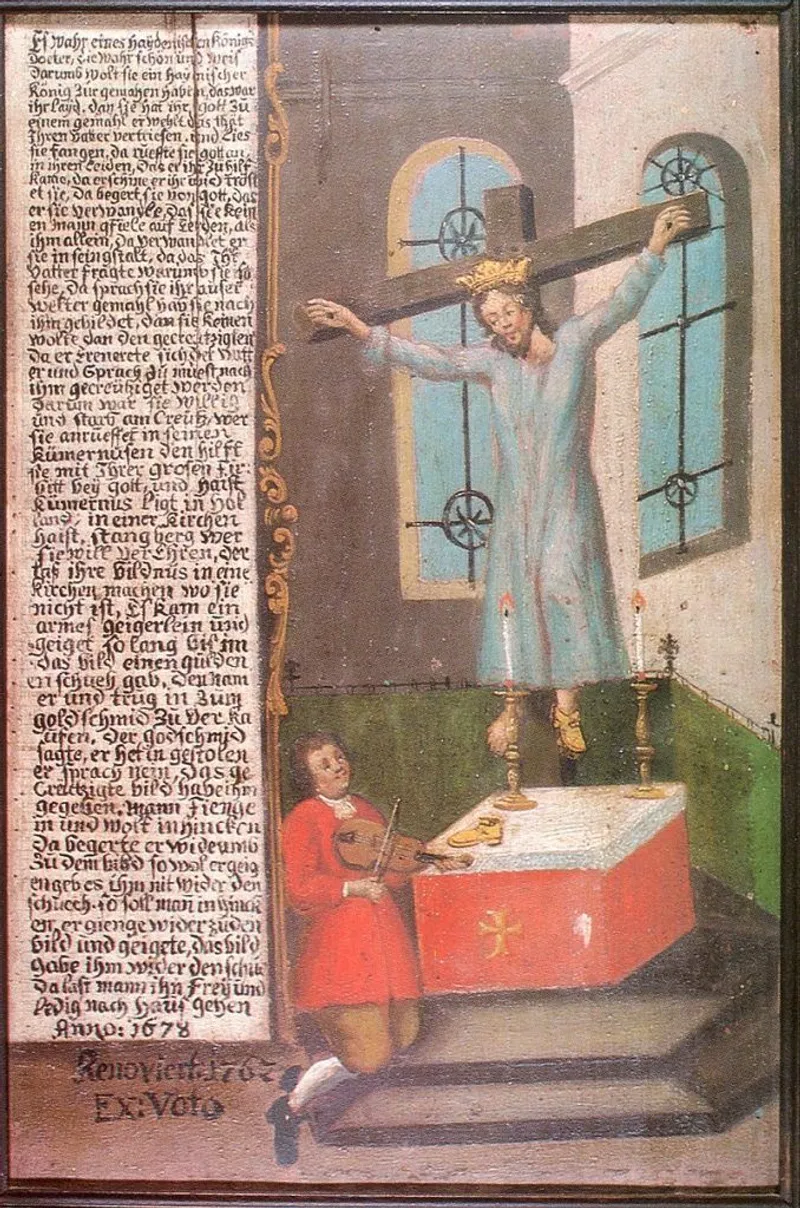
Still, the question remains: why was this more widespread among religious women? Fasting wasn’t exclusive to women, but there are far fewer male saints remembered for anorexia mirabilis. Cultures of piety varied across time and place, but female religiosity was perhaps best illustrated through the relationship to food. For religious men, on the other hand, it was giving up power, wealth, and sex that constituted the main path to the divine, through chastity and poverty. Women and men chose different symbols with which to express their devotion to Christ, depending on religious doctrine as well as expected societal gender roles. In patriarchal Catholicism, men were dominant: renouncing this dominance was best illustrated by letting go of power over others (exemplified by sex and wealth). For women, it was renouncing their roles as wives and mothers that indicated a shift from the worldly to the divine. To do so, these female mystics adhered to strict ascetic practices, which included self-flagellation and interrupted sleep as well as extreme fasting, to experience Jesus’ bodily suffering on the cross: while they renounced their own bodies and sexuality, they identified with the body (and the humanity) of Christ.
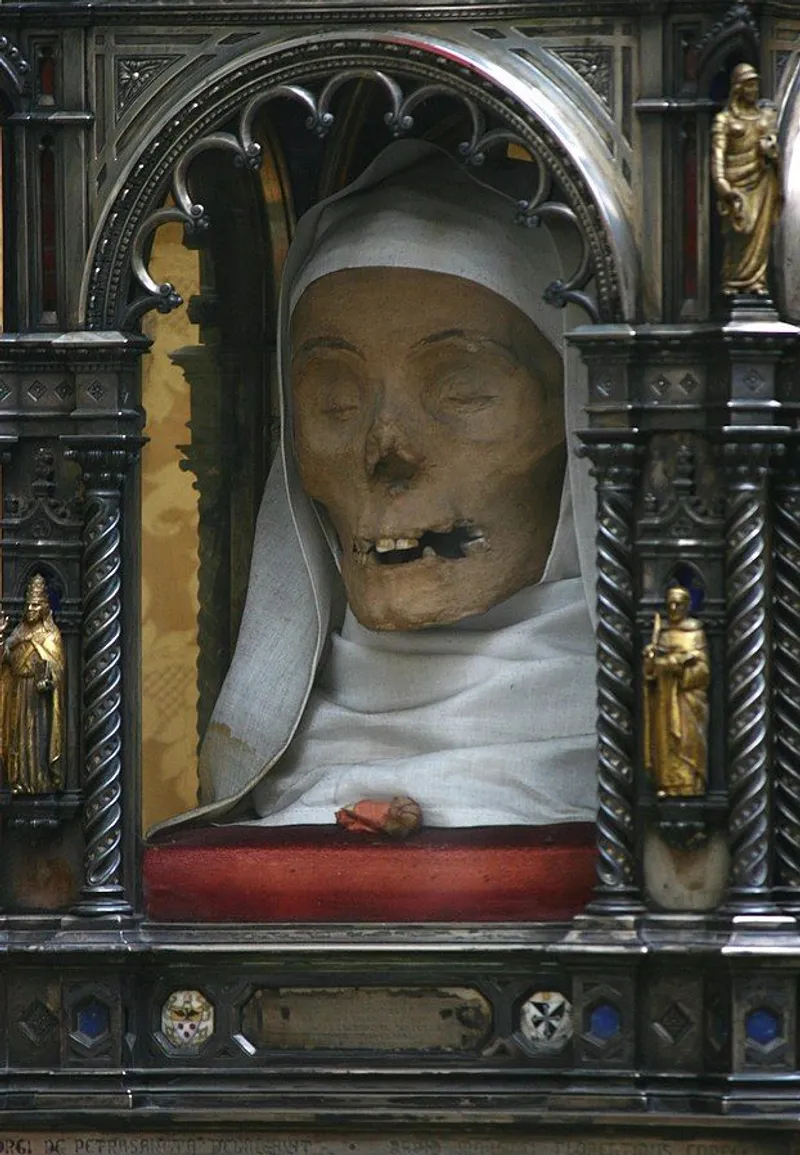
Throughout the centuries, many saintly and mystical women became known for religious fasting. Notable examples, besides the ones mentioned above, include
Yet, regardless of the specific details surrounding someone like
References
The Dialogue of the Seraphic Virgin, Catherine of Siena: Dictated by Her, While in a State of Ecstasy, to Her Secretaries, and Completed in the Year of Our Lord 1370; Together with an Account of Her Death by an Eye-Witness (London: K. Paul, Trench, Trübner, 1907).
Fra Giunta Bevegnati, The Life and Miracles of Saint Margaret of Cortona (1247–1297),(Bonaventure, NY: Franciscan Institute, 2012).
Further Reading
Caroline Walker Bynum, Holy Feast and Holy Fast: The Religious Significance of Food to Medieval Women (Berkeley: University of California Press, 1987).
Rudolph M. Bell, Holy Anorexia (Chicago: University of Chicago Press, 1985).
Ilse E. Friesen, The Female Crucifix: Images of St. Wilgefortis Since the Middle Ages (Waterloo, CA: Wilfrid Laurier University Press, 2001).