 Dr Julia Martins
Can being possessed by the devil ever be a good thing…? Well, for a 17th-century Italian nun who claimed to have seen Jesus Christ, plus literally marrying him, it kind of was. Plus it helped with all the accusations of her having sex… with another nun. Let me tell you a story. The story of Sister
Living in a Renaissance Convent
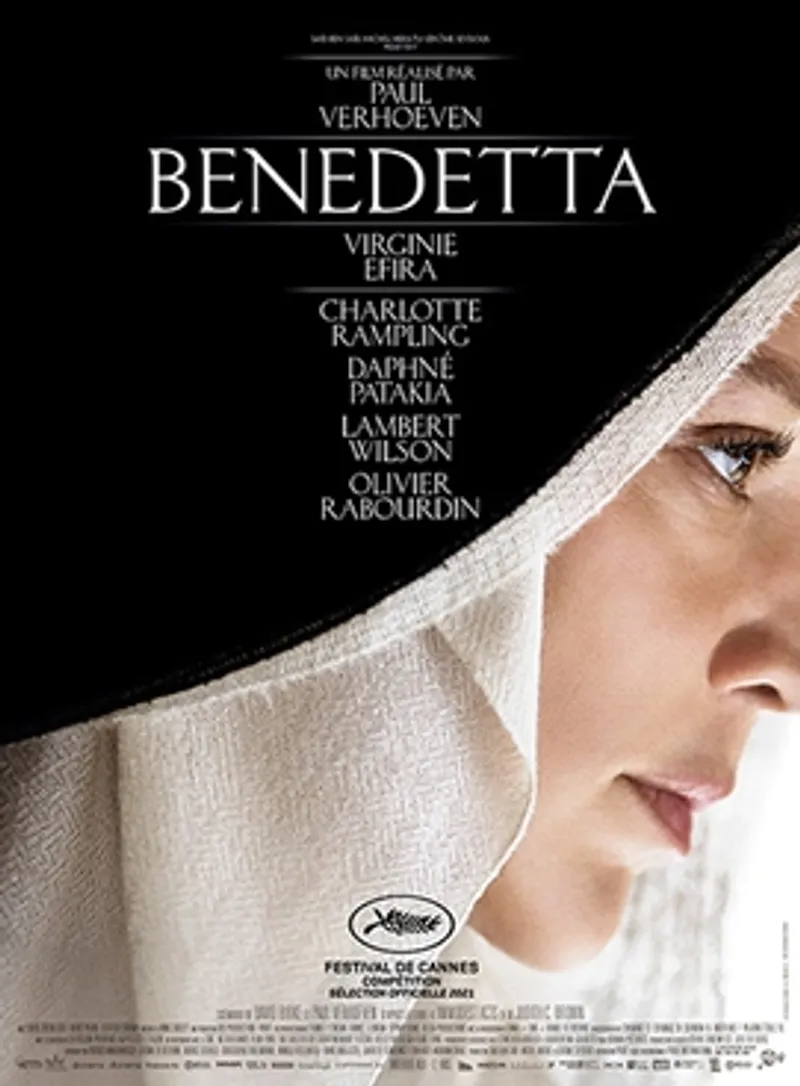
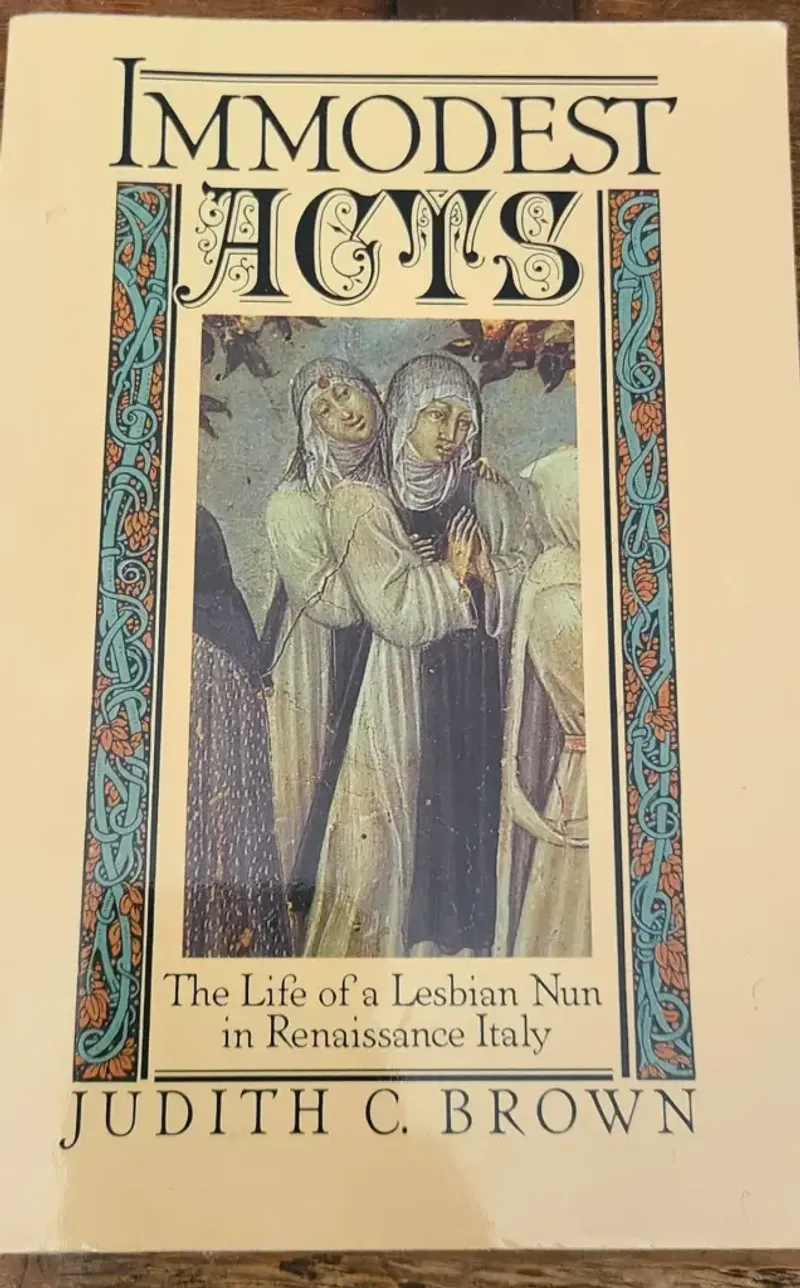
In 2021, when we were all in lockdown, learning how to make sourdough and having meetings on Zoom while our kids ran wild, a new French film was released. It was called Benedetta, and it was – and I can’t stress this enough – VERY loosely based on Immodest Acts, the book written by Judith Brown about Benedetta’s life. It was a highly polemic movie, which enraged many Christians with the lesbian nuns’ storyline, and disappointed many other viewers, myself included. To be fair, this film is unintentionally hilarious, and, although there are some good things in it – I love the hand-stitched costumes, and I’ll watch anything with Charlotte Rambling in it – let’s be charitable and say that it’s just not very good. But this isn’t a review of the film. What I would like to do instead is to think about the history behind Benedetta and what it tells us about
Unhinged as the film might be, Benedetta’s story is arguably even more so. It involved nuns, sex, angels and demons, and it was set in a convent in Tuscany in the late 16th and early 17th centuries. Now, keep in mind that convents were known for loose morals and sexual license, which is hardly surprising. They were homes for women with a strong religious vocation, sure, but they were also places where unwanted women from wealthy families were sent. St Augustine even wrote in a letter to his sister, in 453, so more than a thousand years before Benedetta came along, to mind the other nuns when she joined the convent:
The love which you [the nuns] bear one another ought not to be carnal, but spiritual; for those things which are practiced by immodest women, even with other females, in shameful jesting and playing, ought not to be done even by married women or by girls who are about to marry, much less by widows or chaste virgins dedicated by a holy vow to be handmaidens of Christ.
— (Letter 211 in St Augustine, Letters – The Fathers of the Church, vol. 32)
Let’s rewind to
Life in the convent was typical: communal, with fasting and modest dress, and rigorous religious practices such as mortifying the flesh. Such a homosocial environment created the perfect opportunity for intimate relationships between women, be they platonic or sexual. But ‘special friendships’ were very much discouraged; the nuns should think of nothing but their groom, Jesus. For some women, the convent offered a different kind of refuge—a place to pursue intellectual life, as one nun famously chose it to avoid marriage and read books. Others found themselves drawn to practices like fasting, which blurred the line between religious devotion and bodily control. For years,
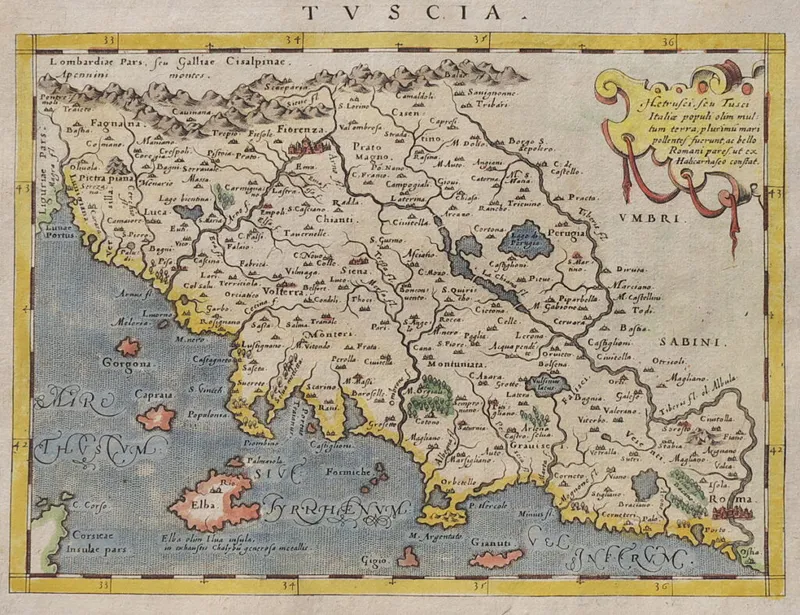
But her story really begins in 1613.
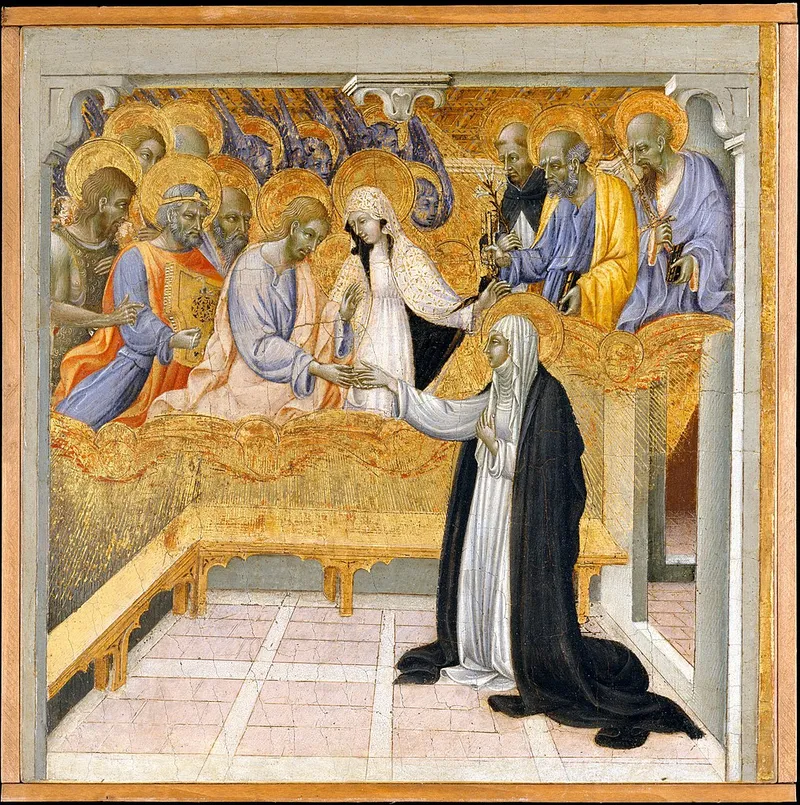
Still, her terror eventually was replaced with happiness. Again, there was nothing unique about this; this narrative mirrors the Virgin’s reaction when told that she would be the mother of god. And it was this feeling of happiness that made
Doubts, Suffering, and Miracles
Guided by her confessor, she would scrutinise her visions. Soon all the other nuns knew about it too, as Benedetta would fall into a trance during prayers. But those around her weren’t sure how to react. Personal revelations and mysticism in general had always been a problematic issue for the Church and regarded with suspicion, especially because they were outside of clerical authority. If the mystic was found to be a fraud, that would put the Church in a rather difficult position. Because all of this happened during the
‘[women] were to be held suspect unless carefully examined, and much more fully than men’s … because they are easily seduced’.
From a medical point of view, not only were women believed to be less rational than men, but they were by nature more lustful. That meant that it would be easier for the devil to seduce them and use them to his diabolical ends. It was according to this reasoning that Benedetta’s confessor told her not to believe what she saw. Believing that you were in direct communication with God could be a sign of extreme vanity. Why would God choose her?
So, Benedetta asked for her faith to be tested, so she could understand the nature of her visions. If she denied them, she might be denying God. But if she accepted them, she might become an instrument of the devil. By 1615, though, she got her wish. Benedetta started having unexplained pains all over her body, especially at night, which left her paralysed for hours. Physicians were baffled, but she was relieved. Illness was a socially and religiously acceptable way to solve the issue. She was suffering because God was testing her; so this holy pain put her on God’s side. This lasted for two years. These visions were often erotic and were accompanied by horrible physical pain. Her screams were so extreme that she was assigned a cell companion, who would help her in her night struggles. Her name was
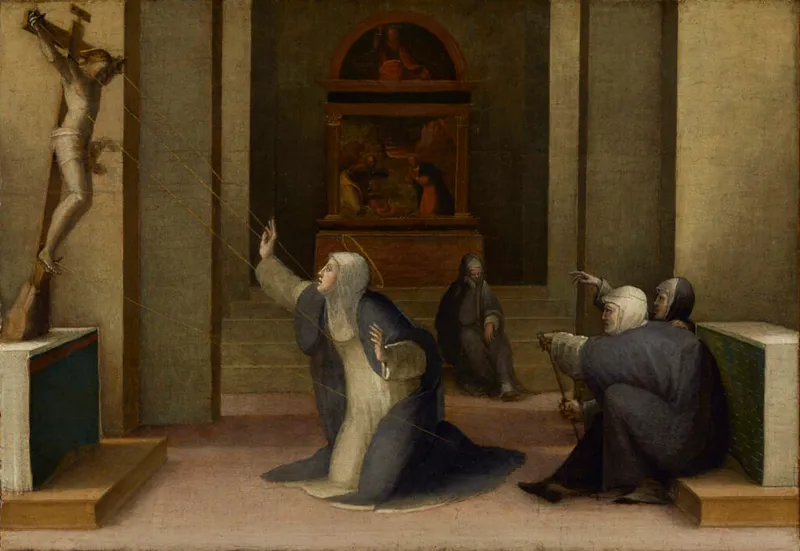
Benedetta’s mystic status within the convent brought her reverence and strengthened the convent’s case for papal recognition, particularly as she began to gain a popular following. There was only one problem. No one had ever seen anything. There was no material proof that Benedetta was communicating with God. But, once more, Benedetta had excellent timing. Just a few months later something happened that marked her out as a ‘true’ mystic. She received the stigmata, the marks of the wounds of Christ, in a painful and blissful event.
A Powerful Miracle-Worker
By 1619, at just 30 years old, Benedetta had been elected abbess. Her influence was growing. She was even allowed to give sermons while in a trance. This is particularly significant because women were not allowed to preach at church, so this was a notable exception in an era when women’s public speech was heavily restricted. This privilege underscored the unique space mysticism provided for women in a male-dominated society. After all, it wasn’t her speaking, but angels. And more miracles were about to happen.
One night, Christ asked Benedetta if he could remove her heart. She agreed, and lived without a heart, allegedly, for three days. And then he placed his own heart inside her chest after that. Again, this may sound outlandish, but it wasn’t unprecedented. St Catherine of Sienna, whom Benedetta greatly admired, had a similar story. Only in Benedetta’s case
The peak of Benedetta’s mystical experiences came when she declared that Jesus wished to formally marry her, providing detailed instructions for the ceremony, including decor and attendee arrangements. This event, however, raised eyebrows even among her contemporaries; Jesus’ personal involvement in the planning of floral arrangements was unprecedented. Still, her confessor and her fellow nuns were on board. Crowds came from nearby villages bearing gifts to witness the heavenly union. But they were disappointed. No one else could see Christ or any angels. No one could see the ring that Benedetta had received but her.
And it got worse. While in a trance, Benedetta spoke at length about her own virtues; or rather, Jesus spoke through her, and threatened the people to punish them if they didn’t obey her. The records state that she said:
…because I want you sinners to know that she [Benedetta] is not a column of iron or marble, but of diamonds. … It was I [Christ] who ordered that she be the abbess of this convent and I have made her a mirror for all the other nuns.
The wedding made people wonder. Why have a public ceremony for no one to be able to witness anything? And so, the following day, an investigation began.
A Mystic Under Investigation
The investigation into Benedetta’s mystical experiences was led by Stefano Cecchi, the Provost of Pescia. Initially focusing on her stigmata, Cecchi conducted thorough examinations and interrogations, cautiously balancing his suspicions with the fear of challenging a potential true mystic. Benedetta’s responses were tactful, emphasising her efforts to doubt her visions and her adherence to Church teachings. The inquiry seemed inconclusive until a nun testified to seeing the wedding ring Christ allegedly gave Benedetta, bolstering her credibility as a mystic and leading to the convent’s papal recognition. All was well for Benedetta. Until she died. And then, she came back from the dead.
Let me explain. As abbess, Benedetta was responsible for the spiritual and material life at the convent; as a mystic, she was frequently in a trance. And, when her father died, she became obsessed with death. She had her grave dug and one day, she told the investigators, she just died. Her Father Confessor called her back to life and, always respectful of the ecclesiastical hierarchy, she obliged, and she used this incident to reinforce her authority over the nuns. And here, frustrating as it might be, there is a gap in the records. But between 1622 and 1623, a papal representative was sent to the convent to reopen the investigations against Benedetta. This was someone removed from her sphere of influence, whose job was to find out if she was a fraud. The report even started with ‘all novelty is dangerous and all unusual events are suspect’.
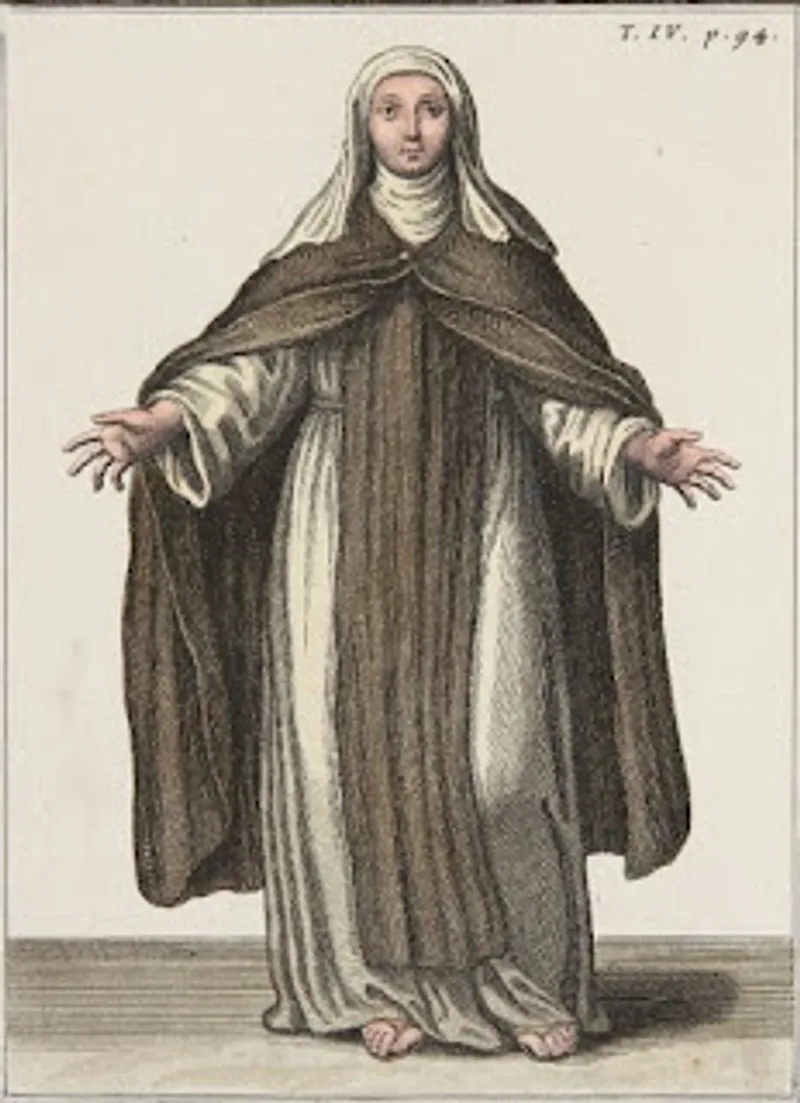
Benedetta seemed too proud to be a true mystic. Even if she was a good Christian, it was likely that Benedetta had been deceived by the devil. The investigators believed things had gotten too far, and Father Ricordati, the confessor, was at fault, as ‘he had been and still is too ready to believe without proof or experience’. All of Benedetta’s miracles started to be questioned, or used to show the devil’s activity. From big things, like her marriage with Christ, which indicated her vanity, to insignificant things, such as Benedetta stealing mortadella and salami from the kitchen after having been forbidden to eat meat by Christ. The tides were turning.
The renewed investigation led to a change in the nuns’ testimonies. Previously, they had either supported or not openly questioned Benedetta’s claims. Four years later, however, they labelled her visions as ‘demonic illusions.’ The reasons for their initial silence are speculative: belief in Benedetta, Bartolomea’s corroboration, fear of divine retribution, or concerns about the convent’s reputation and financial support. Maybe Benedetta grew careless in her deceptions. Still, her popularity and her hierarchical status must have also played a role in the nuns’ silence.
After years of silence, the nuns were now eager to talk: Benedetta didn’t mortify her flesh like the others; she fabricated her miracles: she used her own blood to simulate Christ’s statue bleeding, she crafted a fake star with gold foil to mark where he kissed her forehead, she self-inflicted her stigmata wounds with a needle, feigned death, and even created a yellow ring mark on her finger with saffron. This last bit came from
‘The Sin That Cannot Be Named’
Once the accusations started, there was no stopping them. Benedetta was extremely vulnerable. And Bartolomea’s testimony was highly revealing, and damaging, especially as she was Benedetta’s close companion. Being a fake mystic was bad, of course, but there had been other cases at the time. Forcing
for two continuous years, at least three times a week, in the evening after disrobing and going to bed [Benedetta] would wait for her companion to disrobe, and pretending to need her, would call.
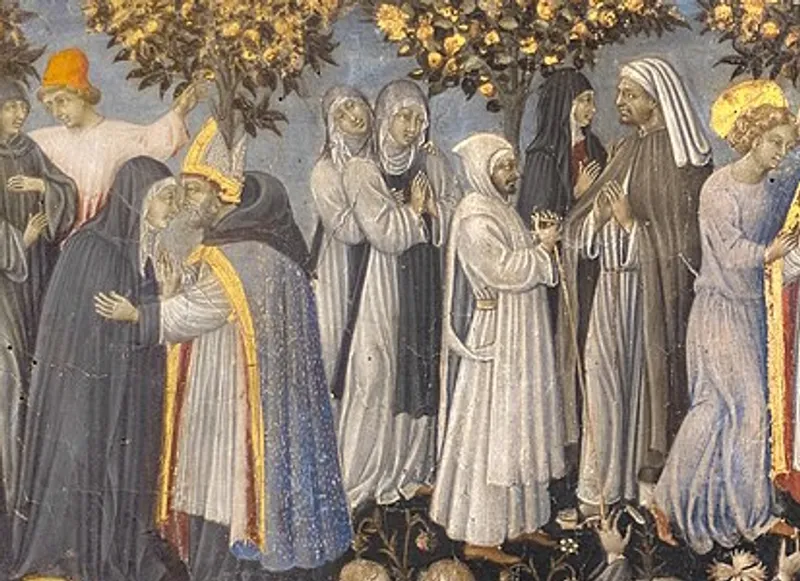
Benedetta would grab her by force and embrace her;
she would put her [Bartolomea] under herself [Benedetta] and kissing her as if she were a man, she would speak words of love to her. And she would stir on top of her so much that both of them corrupted themselves.
By describing Benedetta’s forcefulness, her being on top ‘like a man’ and using her fingers to corrupt her,
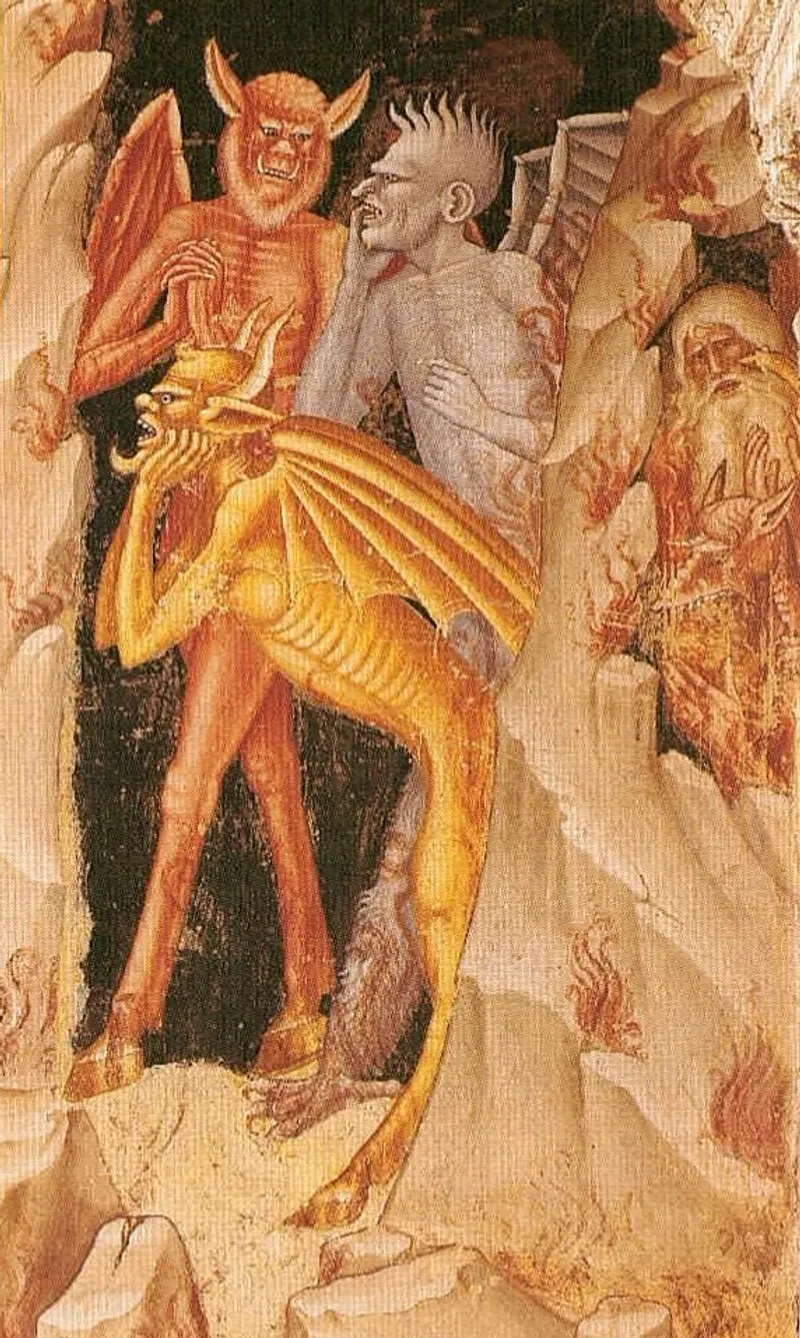
Just to be clear; the problem was not (just) nuns having sex. Women were believed to be more lustful than men at the time, which we can see in many medical, legal and theological texts, stretching as far back as the Bible and
So, the angel always persuaded
Regarding the dynamics of their relationship, Bartolomea’s testimony painted a picture of non-consent or, at best, consent under deception, believing in the angelic and divine personas Benedetta portrayed.
Another thing that we need to keep in mind is the difference between sexual acts and sexuality in the sense of identity. This is a topic for a whole other video but, basically, until fairly recently, say the 19th century, people didn’t really think of themselves in terms of homo or heterosexual, let alone any other categories. Sure, people engaged in same-sex relations, but these acts didn’t define their identities. Following Michel Foucault, many historians think that there was a conceptual shift in the 19th century, with people starting to think about sex differently. This was influenced by the development of the ‘science of sexuality’, changing the way sex was perceived and categorised. But to sum it up, 17th-century people might use words like ‘lesbian’ to describe the sexual act between two women, but not the women themselves. We’re talking about behaviour, not people’s identities, which is why historians try not to label people of the past using contemporary categories. This distinction is crucial when considering historical records, which often used vague terms like ‘unmentionable vice’, ‘unspeakable sin’, and ‘silent sin’. Understanding this helps avoid anachronistically applying modern labels to historical figures and contexts. And it explains how people might be punished differently.
The Supernatural and Punishment
For someone like
Plus, her testimony was of course shaped by what would make her look better and incur the lightest punishment. In the first round of investigations, she had testified that she was happy to help and sometimes put her hand on Benedetta’s breast or embraced her to help her with the pain. By the time of the second investigation, the language is full of violence. In any case, we can’t know if her ambivalence came from an inner conflict or a desire to protect herself. And all we know comes from
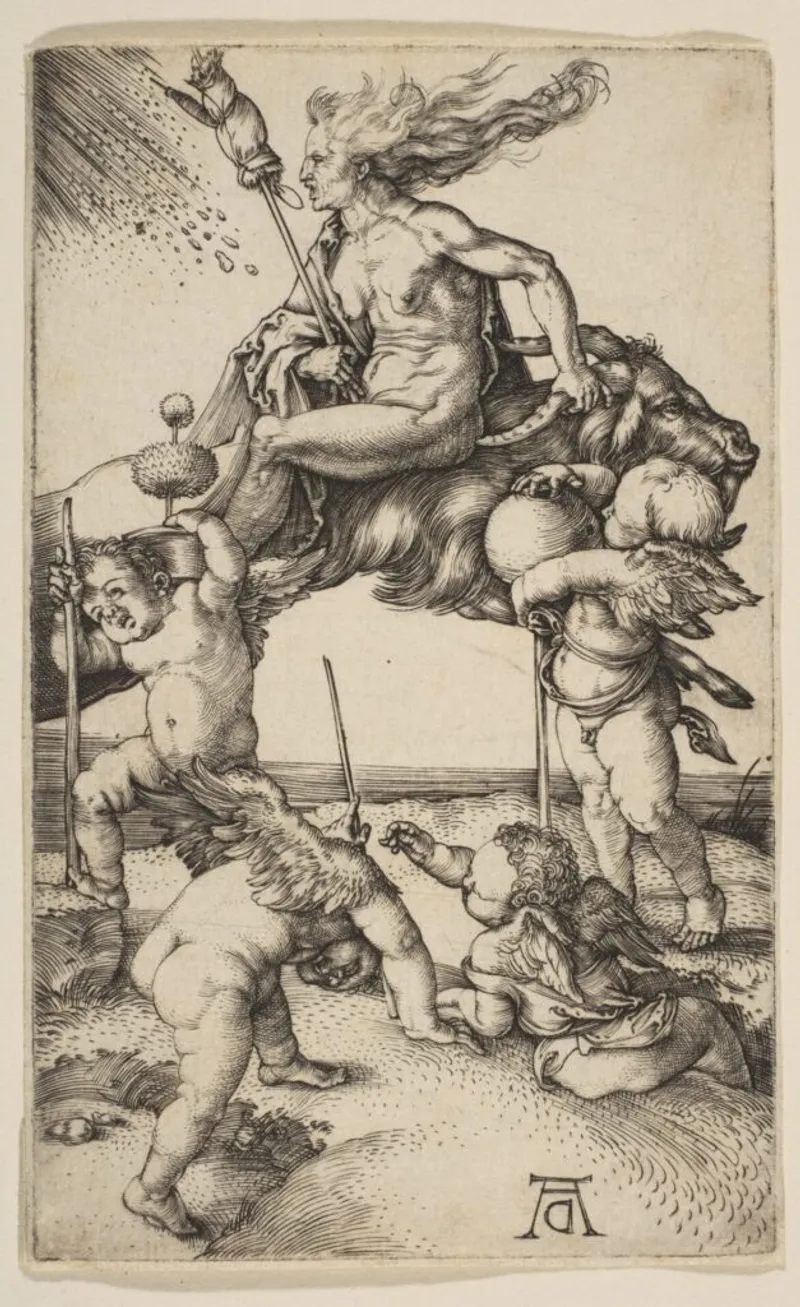
If, however, it was someone else – an angel, a demon – she was in great part exonerated. There was the crucial matter of intent, which was even more important than that of consent. Take witchcraft, for instance. Early modern witch trials often mentioned the witches entering into a pact with the devil voluntarily. There was free will. They might have been seduced by offers of sex or power, but witches were usually seen as having agency. This is very different from being possessed by the devil against your will. In Benedetta’s case, she cleverly told investigators that Splenditello was to blame, not her. We’ll never know what she felt and believed. But besides breaking her vows of chastity, she had transgressed gender and sexual roles.
Still, there was something else at the end of the investigators’ report that is very intriguing – a throwaway accusation of her having been involved with a priest as well. It may be hard for us to imagine, but it was very difficult for the authorities to believe that a woman’s sexual preference might be just other women. So this accusation helped build the case for Benedetta as weak and easily tempted. And the next time the investigators came to the convent to see Benedetta, the stigmata had disappeared, as had the ring. Benedetta had no more visions. Crucially, she now admitted to having been deceived by the devil. In a way, it seems that she chose the lesser of two evils – instead of a sinful woman, she was just a silly one, who had been fooled. That was easy for everyone to believe, and gave her some protection. And so the investigators wrote
all the things that were done in her or by her, not only those which are deemed sinful, but also the other deeds which were held to be supernatural and miraculous were done without her consent or her will, since they were done while she was out of her senses by the work of the devil.
This was quite a quick shift, very likely a strategic choice to mitigate the consequences of her acts. So, Benedetta disavowed her past claims, resigning herself to the role of a woman misled by demonic forces.
Benedetta was replaced as abbess and confined within the convent for life, a sentence that, considering the circumstances, was relatively lenient. She lived there for decades, and in 1661, another nun wrote in her diary how
‘Benedetta Carlini died at age 71 of fever and cholic pains after 18 days of illness. She died in penitence, having spent 35 years in prison [in the convent]’.
In the end, the alleged demonic possession did kind of save Benedetta, sparing her from harsher punishment that would have come with willful deception and coercion. Being possessed by the devil, on the other hand, turned her from a perpetrator into a victim. As for
References
Miscellanea Medicea 376, insert 28 (State Archive of Florence)
J. C. Brown,
Further Reading
D. S. Bailey, Homosexuality and the Western Christian Tradition (1955).
J. Boswell, Christianity, Social Tolerance, and Homosexuality: Gay People in Western Europe from the Beginning of the Christian Era to the Fourteenth Century (1980).
L. Crompton, ‘The Myth of Lesbian Impunity: Capital Laws from 1270 to 1791’, Journal of Homosexuality 6 (1980-1981).
M. B. Duberman, M. Vicinus and G. Chauncey (eds.), Hidden from History: Reclaiming the Gay Lesbian Past (1989).
M. Foucault, The History of Sexuality: An Introduction, vol. 1 (1978).
G. E. Haggerty and M. McGarry (eds.), A Companion to Lesbian, Gay, Bisexual, Transgender, and Queer Studies (2007).
K. M. Phillips and B. Reay, Sex Before Sexuality: A Premodern History (2011).
F. C. Sautman and P. Sheingorn (eds.), Same Sex Love and Desire among Women in the Middle Ages (2001).